
Last updated: August 23, 2026
Key Takeaways
- Custom server rack enclosures support density, thermal, security and environmental demands that standard cabinets cannot handle in AI, telecom and industrial deployments.
- Specification inputs such as equipment list, heat load, clearance, compliance standards, environment and load capacity guide every customization decision.
- Customization spans dimensions, cooling methods, security, power and cable management, materials, seismic ratings, acoustics, outdoor protection, finishing and accessory integration.
- Early DFM collaboration with a vertically integrated fabricator reduces production risk, improves quality and accelerates the move from prototype to full-scale manufacturing.
- Start your custom enclosure specification with Fabcon to address deployment requirements.
Core Inputs That Shape Every Enclosure Spec
Deployment requirements define the enclosure from the start. These inputs guide every downstream decision.
- Equipment list: Server models, GPU chassis, PDUs, CDUs, patch panels and planned additions across the enclosure service life
- Heat load per rack: Total kW dissipated, including peak and sustained loads, to select an appropriate cooling method
- Clearance requirements: Minimum front, rear and side aisle clearances driven by facility layout and door swing
- Compliance standards: Certifications such as NEBS GR-63-CORE, IEC 60297, EIA-310, NFPA 75/76, UL, MIL-STD-810 or RoHS
- Environmental constraints: Indoor conditioned, industrial indoor, sheltered outdoor or exposed outdoor classification
- Load capacity: Static and dynamic weight ratings driven by equipment density and seismic zone
- Security and access requirements: Physical locking, electronic access control and audit-trail logging needs
Start your specification review with Fabcon’s engineering team to translate these inputs into a manufacturable enclosure design.
With these foundational inputs established, the following sections examine each major customization category and how it addresses specific deployment requirements.
1. Rack Dimensions and Rail Choices for Modern Hardware
IEC 60297-3-100 defines the 19-inch rack standard with 482.6 mm width as the interoperability baseline. Custom enclosures must preserve these dimensions to maintain compatibility with standard rail kits and accessories.
Height selection starts with the equipment list and expected growth. Headroom above current equipment needs prevents costly re-racking as deployments expand. Standard heights of 42U, 45U and 48U cover most enterprise deployments, while high-density AI programs often require taller configurations.
Depth is a critical and frequently underspecified dimension. Modern GPU server chassis and cooling distribution units often require extended depths beyond standard cabinets, and rear cable bend radius clearance must remain intact. Width also matters at high densities. Wider cabinets are increasingly specified for high-density network environments because narrow racks force cable routing across airflow paths.
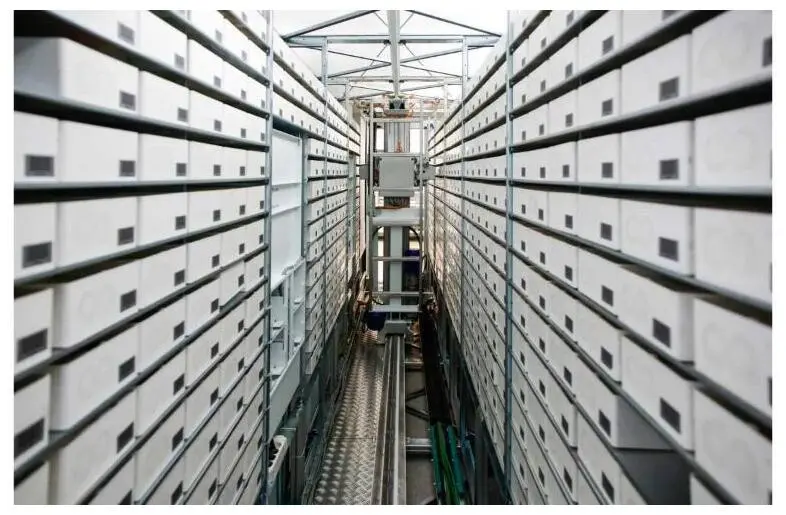
Rail configuration options include fixed, sliding and tool-less designs. Sliding rails improve serviceability for dense GPU servers. Tool-less rails reduce installation time in high-volume deployments. Rail material, load rating and hole pattern must align with both the equipment and the enclosure frame to prevent deflection under full load.
2. Door Styles That Balance Airflow, Security and Visibility
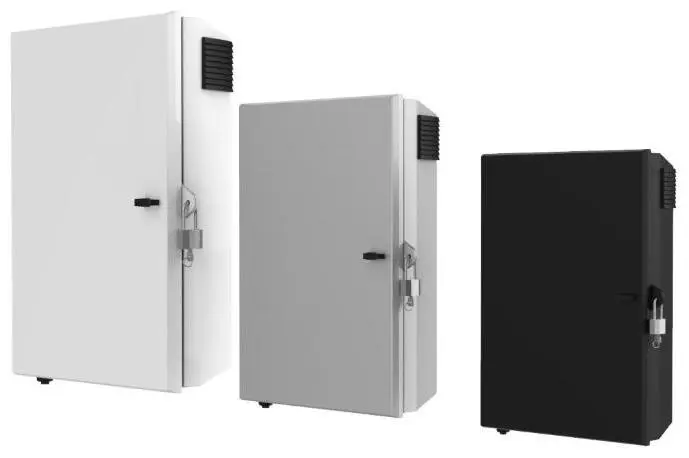
Door selection directly affects airflow, security and access. Perforated steel doors with high open-area ratios support front-to-rear airflow in hot and cold aisle containment environments where thermal management dominates.
When security or noise control takes priority over passive airflow, solid doors provide stronger acoustic dampening and physical protection, while requiring active cooling management to offset reduced ventilation. Glass doors serve a different purpose and appear most often in network operations centers where visual status monitoring outweighs thermal and security tradeoffs.
Hot and cold aisle containment reduces cooling power consumption compared with open aisles, and enclosure door design must support the containment strategy. Blanking panels in unused rack units are mandatory because empty U-spaces without blanking panels raise server inlet temperatures through recirculation.
Outdoor and industrial deployments often use louvered doors with integrated dust filters to provide environmental protection while maintaining airflow. Door style must align with the NEMA or IP rating required by the installation environment, and door swing clearance must match aisle layout before fabrication.
3. Cooling Architectures for High-Density Racks
Cooling method is the most consequential customization decision for modern deployments. Traditional enterprise racks were designed for lower kW loads, but AI and GPU-intensive workloads now demand higher kW per rack, which makes air cooling physically inadequate at the high end of that range. In-rack liquid cooling has moved from niche experimentation to mainstream necessity for AI, HPC and GPU-intensive workloads above certain kW per rack.
Enclosure customization for liquid cooling requires internal space for coolant distribution units, manifold routing, leak-safe architecture and weight capacity for CDU hardware. Specialized liquid cooling components such as leak-proof quick-connect fittings and precision flow control valves can face extended lead times, so early enclosure design decisions protect program schedules.
Rear-door heat exchangers provide the lowest-cost liquid cooling entry point for retrofits and suit mid-density deployments. Direct-to-chip cold plate systems fit hybrid enterprise AI environments. Immersion cooling requires purpose-built tank enclosures rather than traditional rack cabinets. ASHRAE recommends Technology Cooling Systems for purpose-built AI data centers where compute densities routinely exceed high kW per rack.
4. Physical Security and Access Control Features
Physical security requirements vary by deployment context. Colocation facilities, regulated healthcare environments and government installations carry distinct access control mandates. Server rack enclosures help meet physical security requirements for PCI DSS, HIPAA, SOC 2, CJIS, NIST 800-53 and ITAR through controlled access points and audit-trail logging.
Locking door options range from key locks to electronic access control with card readers, keypads and biometrics. Electronic access control integrates with building management systems to provide the audit trail documentation required by compliance frameworks. High-security environments often specify full-height construction and mesh or solid top panels to prevent over-the-wall access.
Enclosure material and construction also influence security. Heavier-gauge steel resists forced entry. Tamper-evident fasteners and intrusion detection sensors add layers of protection for deployments that house sensitive data or classified systems. Telcordia GR-487 addresses requirements for outdoor telecom and network infrastructure.
5. Power Distribution and Cable Management Planning
Cable management affects structure and thermal performance, not just appearance. TIA-942 Rev C defines minimum cabinet width requirements, and enclosure design must reflect these requirements before installation.
Vertical and horizontal cable managers, brush-strip pass-throughs and dedicated cable channels should be specified alongside the enclosure frame. PDU mounting positions, power entry locations and cable routing paths influence airflow and serviceability. Factory-integrated cable management and PDU brackets in purpose-designed enclosures reduce installation time compared with field assembly.
High-density deployments benefit from zero-U PDU mounting in side channels, which preserves rack unit space for compute equipment. Dual power feed entry points support N+1 redundancy configurations. Cable management design must respect bend radius requirements for copper and fiber cabling to prevent signal degradation and physical damage.
6. Materials and Environmental Protection Strategy
Installation environment drives material selection. Cold-rolled steel is standard for indoor conditioned data centers. Stainless steel suits coastal, corrosive or washdown environments. Aluminum supports weight-sensitive deployments such as mobile or airborne systems.
NEMA ratings should match the specific demands of the installation environment. Over-specifying the NEMA type raises cost, reduces natural air exchange and increases internal temperatures without adding functional value.
Fire safety standards including NFPA 75, NFPA 76 and IEC 62208 require enclosures constructed from non-combustible materials, with polymer components that meet UL 94 V-0 or V-1 flammability classifications. RoHS compliance constrains material and substance selection for enclosures sold into regulated markets. The full corrosion-control system must address weld treatment, fasteners, gaskets and dissimilar metal contact, not just the base enclosure material.
7. Seismic and Vibration Performance
Seismic requirements apply to telecom central offices, data centers in active seismic zones and industrial environments with continuous vibration sources. NEBS GR-63-CORE and GR-1089-CORE compliance targets for telecom server racks drive design choices toward stronger physical protection, seismic stability and EMC controls for carrier-grade environments.
A high static load cabinet may carry a lower dynamic load rating under Telcordia GR-63-CORE Zone 4 seismic testing, so both ratings must align with the deployment environment. Seismic-rated enclosures require reinforced frames, anti-tip anchoring and verified rail-to-frame load paths.
Industrial automation environments introduce continuous vibration from motors, conveyors and HVAC systems. Industrial automation end users are adopting vibration-resistant relay rack enclosures, particularly in semiconductor and precision manufacturing environments. MIL-DTL-901E (formerly MIL-S-901D) and MIL-STD-167-1A specify shock and vibration requirements that govern shock mounts and isolation systems for naval shipboard rack applications.
8. Acoustic Treatment for Noise-Sensitive Sites
Acoustic treatment matters for edge deployments in offices, retail spaces and healthcare facilities where fan noise affects occupant comfort. Acoustic foam on interior panels, vibration-dampening mounts for fans and drives, and sealed door gaskets all reduce radiated noise.
Thermal performance changes when acoustic treatments enter the design. Acoustic lining reduces internal volume and can restrict airflow if not coordinated with the cooling strategy. High-density acoustic enclosures require active cooling with carefully routed intake and exhaust paths to prevent hot spots.
Acoustic treatment adds weight and cost, so specifications should reference documented noise requirements rather than general preference. For telecom edge deployments in nontraditional environments, compact, ruggedized relay rack enclosures for retail spaces and remote telecom huts are often specified with integrated acoustic treatment and environmental protection.
9. Outdoor and NEMA-Rated Enclosure Designs
Telecom applications increasingly require outdoor-rated and weatherproof relay rack enclosures for 5G base stations and small cells. Outdoor enclosures integrate sealed cable entries, battery compartments, active thermal management and structural reinforcement that indoor cabinets do not require.
Telcordia GR-487 specifies technical requirements for environmental protection, structural integrity and thermal performance of outdoor enclosures, including extreme temperatures, solar radiation, humidity, dust, wind loads, vibration and seismic forces. GR-487 compliance complements IP and NEMA ratings by providing broader environmental and performance validation.
Thermal management for outdoor enclosures must address solar gain, ambient temperature extremes and the absence of facility HVAC support. Heat exchangers, air conditioners and thermostatically controlled fan systems must match design temperatures rather than average conditions. Condensate management and redundancy strategies protect against thermal shutdown during utility outages at remote sites.
10. Finishing, Coatings and Branding Elements
Finishing supports both function and brand. Powder coating provides corrosion resistance, durability and color consistency across production runs. Wet paint and specialty coatings address specific environmental requirements. ISO 12944-compliant powder coating serves as the standard for enclosures deployed in regulated or harsh environments.
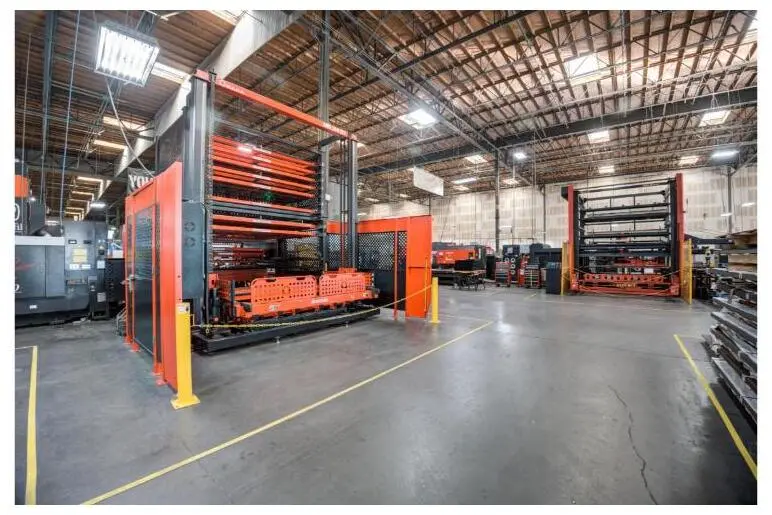
Defense and government programs often require CARC military-grade finishing and mil-spec coatings to meet chemical agent resistance and camouflage requirements. Fabcon’s in-house finishing capabilities include powder coat, wet paint, screen printing and CARC coatings, all applied in the same facility as fabrication to maintain finish consistency and remove inter-vendor transit.
Branding elements such as silk-screened logos, laser-engraved asset tags and custom color matching are defined during the DFM review stage. Integrating branding into the finishing process instead of adding it post-production improves durability and consistency across large production runs.
11. PDU and Accessory Integration at the Factory
PDU selection and mounting position influence power distribution, cable management and serviceability. Vertical zero-U PDUs mounted in side channels preserve rack unit space. Horizontal PDUs consume rack units but provide easier visual monitoring. Metered and switched PDUs add remote monitoring and outlet-level control for managed deployments.
Accessory integration covers cable managers, blanking panels, brush strips, grounding bars and KVM switches. Integrating mounting hardware, cable management accessories, blanking panels and PDUs into ready-to-deploy server rack units reduces installation time and labor costs at the customer’s facility.
Pre-integration of accessories at the fabrication stage, instead of on-site during deployment, improves configuration consistency across locations. Programs that deploy identical rack configurations at scale benefit from factory-integrated accessory kits that reduce field variation and support faster commissioning.
12. DFM Collaboration With a Vertically Integrated Fabricator
Early DFM collaboration supports manufacturability, cost reduction and production risk mitigation before geometry is frozen. This approach prevents issues such as bend radius cracking, hole distortion during forming and missing bend reliefs that cause failures at corners. These issues multiply across production volumes, so early resolution costs less than post-tooling corrections.
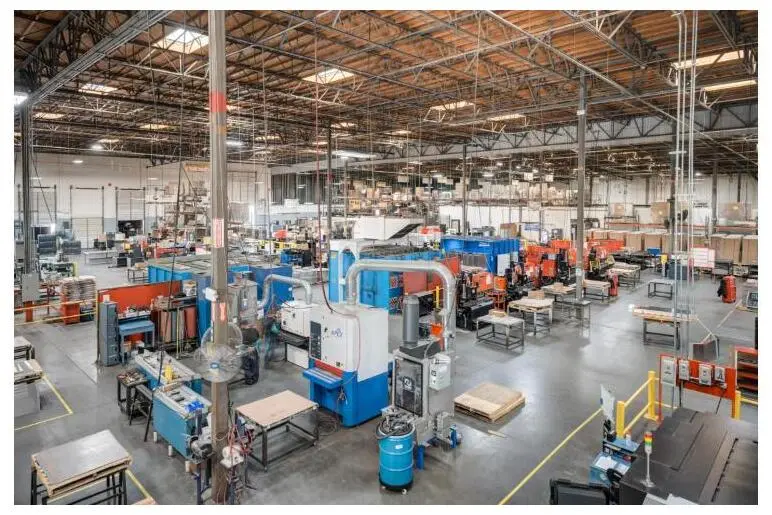
Consolidating metal forming, finishing and sub-assembly under a single vertically integrated supplier provides a single point of accountability, tighter process control and improved part consistency. When fabrication, finishing and assembly occur in separate facilities, tolerance stack-up, finish inconsistency and coordination delays accumulate across vendor handoffs. Fabcon’s engineering and quoting teams engage with customer technical teams before production, reviewing drawings, tolerances and materials to create manufacturing routers that match the production floor and enable direct collaboration between design engineers and process engineers.
Request a DFM consultation to review a custom server rack enclosure design with Fabcon’s engineering team.
Conclusion: Selecting a Custom Enclosure Partner
Evaluating server rack enclosure customization options across all 12 categories, from dimensions and cooling to DFM collaboration, reduces total program risk and accelerates deployment. The selected partner determines how reliably design intent becomes manufactured product.
Strong partners are evaluated across five dimensions. These include technical fabrication capabilities, integration scope across finishing and assembly, quality and compliance certifications, scalability from prototype through production and supply chain reliability. Domestic manufacturing strengthens quality control by giving engineering teams direct oversight and enabling collaboration with production teams during early design stages.
Fabcon provides vertically integrated precision sheet metal fabrication, in-house finishing and light electromechanical assembly under one roof across 220,000 square feet of U.S. manufacturing space. ISO 9001:2015 and AS9100D certified quality systems govern every stage of the build, with full traceability from prototype through production. Programs ranging from mid-volume custom enclosures to high-mix OEM builds benefit from a single accountable partner instead of a fragmented vendor chain.
Get a quote from Fabcon to begin specifying a custom server rack enclosure built to the exact requirements of the deployment environment.
Frequently Asked Questions
How does working with a single vertically integrated fabricator reduce risk compared with multiple vendors?
Fragmented vendor chains for metal fabrication, finishing and assembly create multiple points where delays, quality disputes and design-to-manufacture disconnects can occur. When each vendor operates under a separate quality system and schedule, tolerance stack-up and finish inconsistency accumulate across handoffs.
A vertically integrated partner controls fabrication, finishing and light electromechanical assembly under one roof with a single quality management system. Design changes propagate immediately, quality issues remain contained within one organization and program visibility extends from prototype through production without inter-vendor coordination overhead.
Can a mid-volume custom enclosure program scale without moving to a large contract manufacturer?
Large contract manufacturers often require high minimum volumes, long onboarding processes and rigid production line configurations that do not fit programs with evolving bills of materials or mixed SKU requirements. Fabcon’s agile production cells support mid-volume programs and adapt to changing volumes and configurations without the overhead constraints of large CMs.
Programs can scale from prototype through production runs while maintaining responsiveness and DFM collaboration that large CMs typically reserve for higher-volume work.
What compliance certifications matter when sourcing a custom server rack enclosure fabricator?
Relevant certifications depend on the deployment environment and end market. For general data center and industrial OEM programs, ISO 9001:2015 quality management certification serves as the baseline. Aerospace and defense programs require AS9100D.
Telecom deployments in North America often require NEBS GR-63-CORE and GR-1089-CORE compliance. Military and government programs may require ITAR registration and MIL-STD-810 environmental testing. UL and CSA compliance applies to enclosures sold into North American markets under NFPA 70. Procurement teams should request conformity declarations and quality certifications during the RFQ process rather than relying on supplier statements alone.
At what heat load should an enclosure design account for liquid cooling infrastructure?
Air cooling becomes increasingly inadequate as rack heat loads rise above the 35–50 kW range, depending on containment design and room layout. Structural and spatial requirements for liquid cooling infrastructure, including CDU space, manifold routing and liquid-safe architecture, do not retrofit easily, so enclosures that approach or exceed this threshold should include liquid cooling readiness from the initial design stage.
What information supports an effective DFM review for a custom server rack enclosure?
A DFM review can begin with CAD files in STEP or native format, engineering drawings, intended material and finish, target production volume and application requirements such as environmental conditions or compliance certifications. Sketches and concepts are sufficient when formal drawings are not complete.
Earlier DFM reviews reduce the cost of addressing issues such as bend radius specifications, hole placement relative to bend lines and hardware insertion geometry. Waiting until geometry is frozen increases correction costs and can delay prototype schedules.