
Last updated: April 17, 2026
Key Takeaways for US Precision Sheet Metal Buyers
- The US sheet metal market is growing at 3.0% CAGR through 2035, driven by reshoring, the CHIPS Act, and EV manufacturing.
- Precision fabricators handle laser cutting, CNC forming, welding, and assembly with tight tolerances for complex steel and aluminum assemblies.
- Vertically integrated operations reduce lead times 30–50% versus fragmented supply chains, which supports faster launches and more reliable delivery.
- Key selection criteria include certifications (ISO 9001:2015, AS9100D), DFM support, prototype-to-production scalability, and US-based operations.
- Fabcon leads the mid-tier US segment with 220,000 sq ft of facilities; get a quote today for integrated precision sheet metal solutions.
What a Precision Metal Fabricator Actually Does
A precision metal fabricator transforms flat sheet metal into complex three-dimensional components through a systematic five-step process:
- Laser cutting: Achieves tight tolerances for part geometry.
- CNC punching: Creates holes and features with consistent repeatability.
- Forming/bending: Follows the 4T radius rule to prevent cracking.
- Welding: Joins components with certified processes.
- Finishing/assembly: Delivers powder coating, machining, and electromechanical integration.
Precision sheet metal fabrication relies on specialized equipment and expertise for materials ranging from carbon steel (52% market share) to aluminum and stainless steel. Designers follow rules such as hole-to-edge distances of at least 2 times material thickness and minimum bend radii typically equal to material thickness.
Fabcon applies this precision approach through agile manufacturing cells for EV enclosures, data center racks, and medical assemblies, combining more than 45 years of experience with modern automation. Understanding how these integrated operations work together shows why consolidated services deliver stronger results.
Precision Sheet Metal Fabrication Process: From Laser to Assembly
The precision fabrication process brings multiple operations under one roof to eliminate handoffs and shorten lead times. Core process capabilities include laser and CNC operations, forming and welding, and integrated finishing.
Laser and CNC Operations for Tight Tolerances
Modern fiber laser systems reach cutting speeds up to 866 inches per minute on aluminum and steel. Engineers apply minimum flange lengths of 4 times material thickness so parts stay secure during forming and maintain dimensional accuracy.
Forming and Welding to Structural Requirements
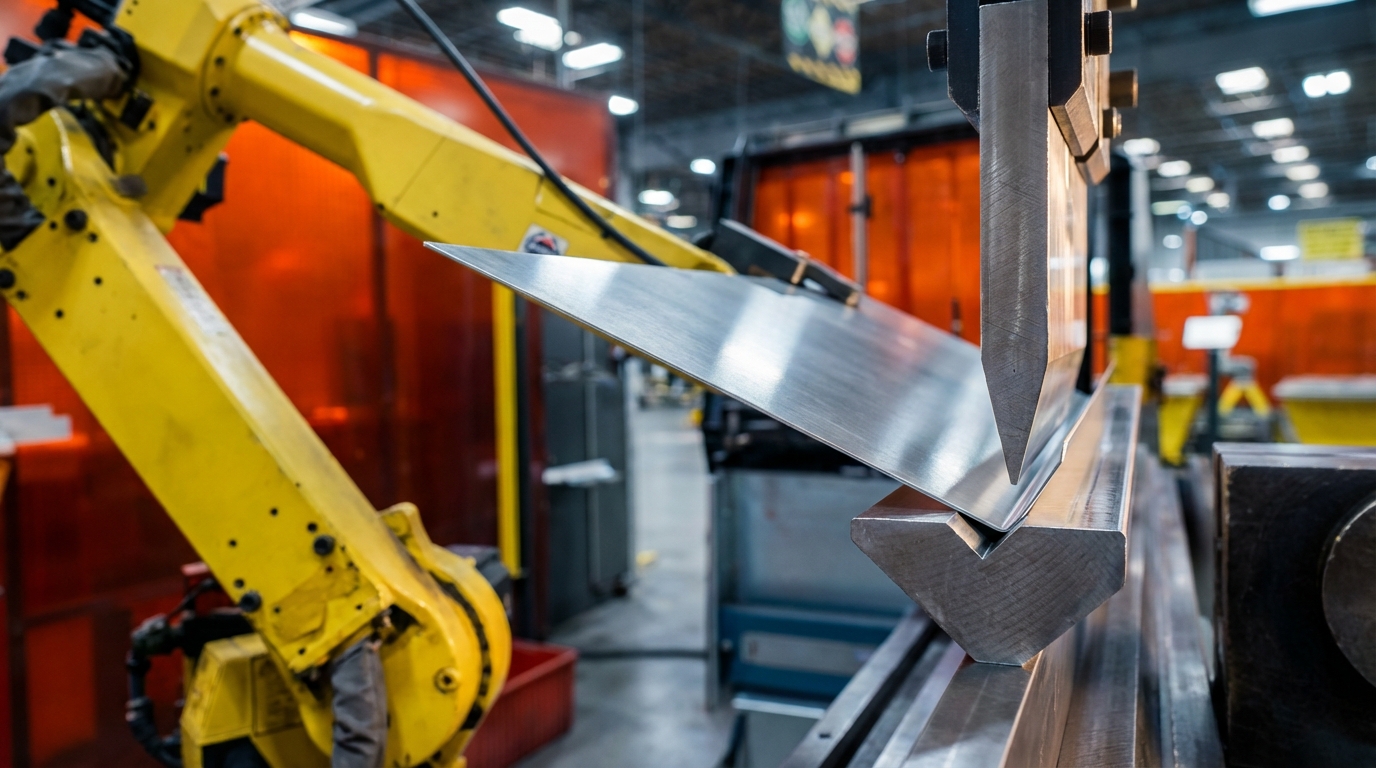
Press brake operations maintain consistent bend angles and repeatable geometry. Certified welding processes then join components to structural specifications. Skilled welders often hold military qualifications along with commercial certifications for TIG, MIG, and stick applications.
Integrated Finishing and Assembly Under One Roof
In-house powder coating, machining, and electromechanical assembly remove the need for external vendors. Vertical integration cuts lead times 30–50% versus fragmented supply chains by improving workflow and reducing queue time between operations.
Fabcon’s 220,000 square feet of Southern California facilities show this integrated approach in practice. The team supports prototype through production volumes while maintaining consistent quality and dependable delivery.
How to Choose the Right US Precision Sheet Metal Fabricator
Buyers can evaluate potential partners more confidently by focusing on five critical factors in a simple framework:
- Capabilities assessment: Verify end-to-end services versus build-to-print-only job shops.
- Certifications: Confirm ISO 9001:2015, AS9100D, and any required industry-specific compliance.
- Scalability: Evaluate prototype-to-production flexibility and the presence of agile manufacturing cells.
- DFM support: Assess engineering collaboration and design improvement capabilities.
- Supply chain: Confirm JIT delivery options, US-based operations, and logistics integration.
The following comparison shows how integration level and scalability differ across fabricator types. Use it to align your volume needs, risk tolerance, and timeline with the right partner category:
| Category | Vertical Integration | Scalability (Proto-Mid Vol) | Lead Times (Proto) | Total Cost Model |
|---|---|---|---|---|
| Job Shops | Low (build-to-print) | Low (1–100 units) | 2–5 days | High per-unit |
| Mid-Tier (Fabcon) | High (laser-assembly) | High (flex cells) | Several weeks | Value (low risk) |
| Big CMs | High | High vol only (10K+) | Extended lead times | Rigid/high MOQ |
Mid-tier fabricators like Fabcon fill the critical middle ground. They provide sophisticated infrastructure and engineering support without the rigidity and high minimums of large contract manufacturers.
Top US Precision Sheet Metal Fabricators: 2026 Rankings
Leading US precision sheet metal fabricators share consistent strengths across capability, quality, and scalability:
- Fabcon: 220,000 sq ft Southern California facilities with full integration serving EV, data center, and medical device markets.
- PEKO: Ohio-based manufacturer focused on complex assemblies.
- EVS Metal: Multi-facility operation with strong engineering support.
- Approved Sheet Metal: California specialist in prototypes and batch production.
- Regional leaders: Specialized fabricators serving local markets in Texas, California, and other manufacturing hubs.
Fabcon ranks first for mid-volume programs that require design collaboration, scalability, and integrated assembly. The company’s ISO 9001:2015 and AS9100D certifications support quality consistency across aerospace, medical, and infrastructure applications.
Get a quote for precision sheet metal fabrication from the leading mid-tier fabricator.
Where Precision Sheet Metal Delivers the Most Value
Precision sheet metal fabricators support critical applications across several high-growth industries.
Data Center Infrastructure
Server racks, cooling enclosures, and cable management systems require tight tolerances and high on-time delivery. These parts support hyperscale deployments and expanding edge computing networks.
Electric Vehicle Components
Battery enclosures, charging infrastructure, and structural assemblies need lightweight designs with crash-safety compliance. Programs also demand high-volume scalability as EV adoption accelerates.
Medical Device Manufacturing
Equipment carts, laboratory furniture, and diagnostic housings require full traceability and biocompatible finishes. Fabricators must also support FDA-compliant manufacturing processes.
Energy Storage Systems
Weatherproof enclosures for commercial and utility-scale deployments need integrated electromechanical assembly and environmental testing capabilities.
Across these application areas, precision fabricators address three major pain points. Engineers cut DFM rework through early collaboration, procurement teams consolidate vendors with single PO solutions, and operations leaders achieve JIT scaling without strict minimum order constraints.
Common Selection Pitfalls, Checklist, and FAQs
Many teams struggle when they choose fragmented suppliers that create coordination delays or skip DFM collaboration. Problems also appear when partners cannot scale with program growth. Fabcon reduces these risks through integrated operations and hands-on engineering support.
Evaluation Checklist
- ISO 9001:2015 and AS9100D certifications verified.
- Tight tolerance capabilities confirmed.
- In-house assembly and finishing services available.
- Prototype-to-production scalability demonstrated.
- DFM engineering collaboration offered.
- US-based operations and logistics in place.
- Industry-specific experience validated.
- Quality metrics and delivery performance tracked.
- Flexible manufacturing cells for mixed volumes.
- Integrated supply chain management provided.
Why Choose Fabcon as Your Precision Sheet Metal Partner
Fabcon brings more than 45 years of precision manufacturing experience across two Southern California facilities with complete integration. These quality certifications ensure consistency, while agile production cells support prototype through mid-volume production without the constraints of large contract manufacturers.
The company’s end-to-end capabilities support data centers, electric vehicles, medical devices, and energy storage systems. Engineering collaboration, integrated assembly, and US-based operations provide the reliability and responsiveness required for compressed launch schedules.
Get a quote for precision sheet metal fabrication and experience the Fabcon advantage.
Final Guidance for Selecting a Precision Sheet Metal Fabricator
Successful programs start with a fabricator that aligns capabilities, certifications, scalability, and supply chain integration with your requirements. Use this framework to find partners that reduce fragmentation, accelerate time-to-market, and support long-term program growth.
Partner with Fabcon: get a quote today for precision sheet metal fabrication that delivers measurable results.
Frequently Asked Questions
What is a precision metal fabricator?
A precision metal fabricator is a specialized manufacturer that transforms flat sheet metal into complex three-dimensional components using laser cutting, CNC forming, welding, and assembly. These companies hold tight tolerances and serve industries such as aerospace, medical devices, and data centers. Unlike basic job shops, precision fabricators often provide design collaboration, finishing, and electromechanical assembly in one place.
What is the difference between job shops and integrated fabricators?
Job shops typically handle 1–100 units with build-to-print-only services focused on cutting and forming. They offer flexibility but require customers to manage separate vendors for finishing and assembly. Integrated fabricators like Fabcon provide end-to-end services under one roof, including engineering support, finishing, and light assembly. This integrated approach shortens lead times, improves quality consistency, and simplifies supply chain management.
What are typical lead times for precision sheet metal prototypes?
Lead times vary by fabricator type and part complexity. Job shops can deliver simple prototypes in 2–5 days using standard materials. Mid-tier integrated fabricators usually need a few weeks for prototypes that include finishing and assembly. Large contract manufacturers often require several weeks or more because of rigid processes and high minimum volumes. Consolidated operations reduce lead times by removing handoffs between multiple suppliers.
What is the 4T rule in sheet metal design?
The 4T rule defines minimum flange length requirements in sheet metal bending. Flanges should be at least 4 times the material thickness so the machine can grip the part properly during forming. This rule prevents bending failures and supports consistent part quality. Designers also maintain bend radii roughly equal to material thickness and keep holes at least 2 times material thickness away from bend lines to avoid distortion.
Why isn’t Fabcon the cheapest option?
Fabcon focuses on total cost of ownership rather than the lowest unit price. Initial quotes may be higher than basic job shops, but integrated operations reduce downstream costs through faster delivery, consistent quality, and less vendor coordination. The company’s engineering collaboration prevents costly design rework, and its consolidated services remove markup from multiple suppliers. Customers achieve the faster launch timelines mentioned earlier along with reduced program risk, which creates stronger overall value than fragmented low-cost alternatives.