
Last updated: August 6, 2026
Key Takeaways for Precision Sheet Metal DFM
- DFM principles for precision sheet metal manufacturing reduce forming failures, tolerance mismatches and assembly rework when applied early in the design process.
- Uniform material thickness, consistent bend radii and proper bend reliefs are foundational rules that reduce setup changes and first-article scrap.
- Respecting minimum hole diameters, flange lengths and feature-to-bend distances prevents distortion, edge deformation and costly rework during forming.
- Standardizing hardware, specifying tolerances only where they matter and choosing formable alloys such as 5052-H32 streamline procurement and keep production predictable from prototype to mid-volume runs.
- Fabcon’s vertically integrated fabrication, finishing and assembly model turns these DFM principles into measurable reductions in program risk. Request a DFM review of your next project.
1. Maintain Uniform Material Thickness
Uniform material thickness keeps brake setups simple and reduces failure points during forming. Mixing gauges within a single part forces multiple brake setups, separate tooling qualifications and additional inspection steps.
- Specify one gauge per part wherever function permits, which eliminates setup changes and keeps brake tooling consistent.
- When thickness transitions are unavoidable, document them explicitly on the 2D drawing with a clear callout so the fabricator can plan separate setups and avoid nesting errors.
- Confirm that the selected gauge is compatible with the planned hardware insertion and finishing sequence because some fasteners require minimum sheet thickness and coatings add measurable thickness.
Consistent thickness lets a fabricator process an entire part on a single brake setup and reduces fit-up variation before assembly.
2. Apply Consistent Bend Radii
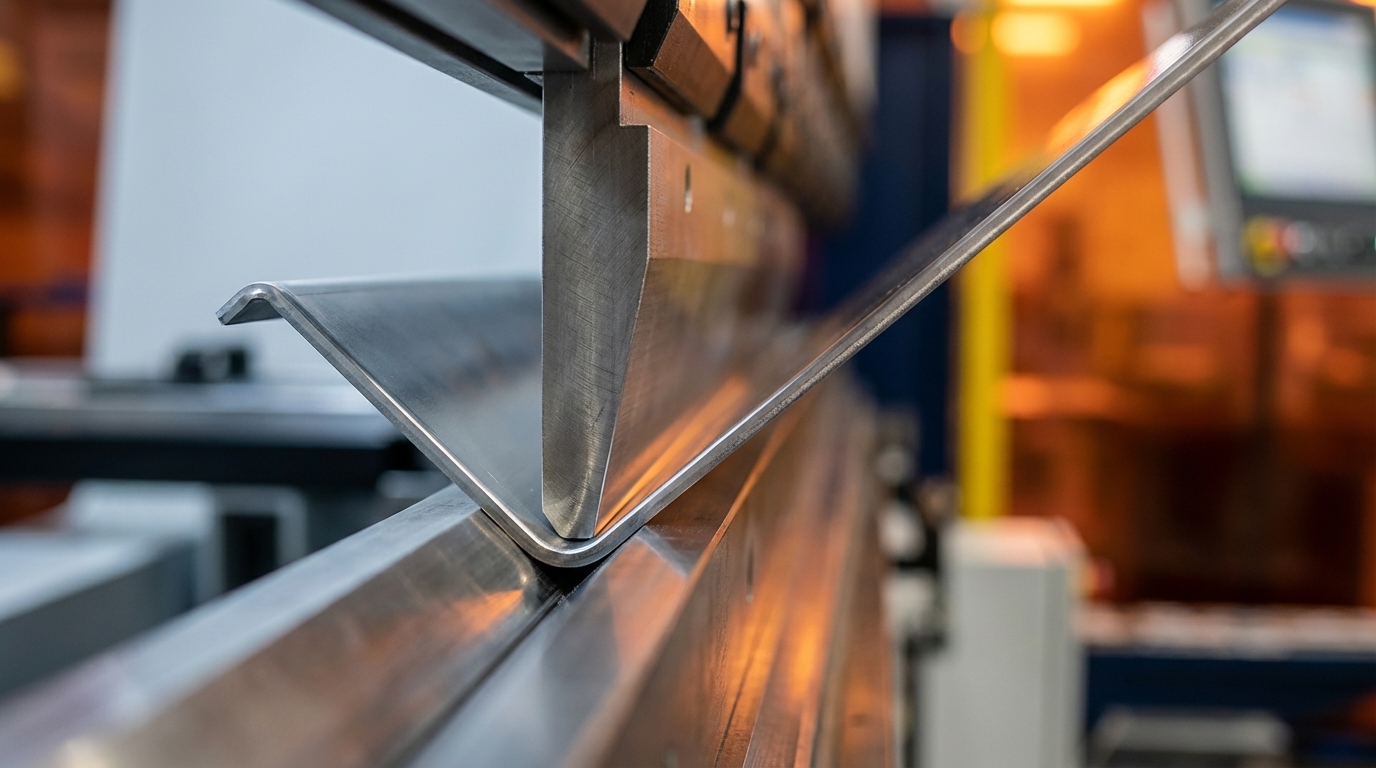
Correct bend radius selection controls cracking risk, springback and tooling cost. A radius that is too tight for the alloy and temper produces outer-fiber cracking. A radius that varies across a part multiplies setup changes.
- For 5052-H32 aluminum, a minimum inside bend radius of 1T is a recommended starting point.
- For 6061-T6 aluminum, larger minimum inside bend radii are required to avoid cracking.
- Standardize on one inside radius value across the part wherever geometry allows to keep tooling consistent.
- Internal bend radii for harder alloys such as austenitic stainless steels should typically be at least 1.5–2 times the material thickness to prevent cracking.
Consistent radii allow processing on a single brake setup, which lowers fit-up variation and reduces the number of tool changes required per run.
2.1. Design Proper Bend Reliefs
Once bend radii are set, bend reliefs protect flange intersections and bends that terminate near edges or features. Bend reliefs prevent tearing at these locations and reduce first-article scrap.
- Extend bend reliefs at flange intersections beyond the bend tangent line to prevent tearing.
- Add relief cuts at the ends of bends that terminate near edges or other features to prevent tearing or distortion during forming.
- Model reliefs in the 3D file and confirm they appear correctly in the flat pattern before releasing drawings.
Proper bend relief geometry removes a common first-article failure mode and keeps forming predictable across production volumes.
3. Respect Minimum Hole Diameter
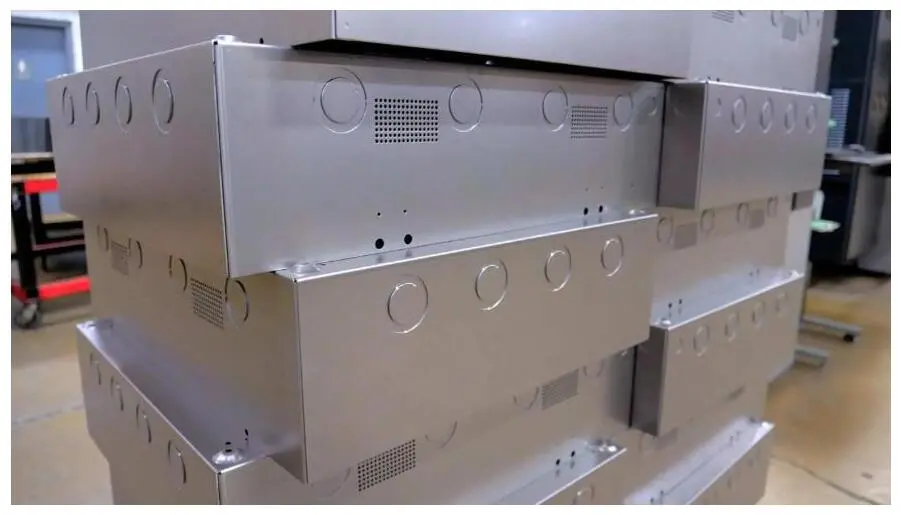
Correct hole sizing and placement protect tooling and prevent distortion. Holes punched or laser-cut too small relative to material thickness deflect tooling, produce ragged edges and create stress risers that can crack during forming.
- Set minimum hole diameter to at least the material thickness for punched features.
- Place holes at least 2 times material thickness away from edges to prevent edge deformation.
- For holes greater than 25 mm in diameter, keep the minimum hole-to-bend distance at least 2.5 times thickness plus the bend radius from the bend tangent line to avoid distortion.
- Use recommended clearances between features such as holes and bend lines in sheet metal of typically 2.5x to 3x the material thickness.
Correct hole sizing and placement remove a leading cause of distortion-related rework and keep laser cutting parameters within standard process capability.
4. Observe Flange Length Rules
Flange length directly affects angle control and part acceptance on the press brake. Short flanges are a frequent source of angle drift and part rejection because the die lacks enough material to grip and form without slipping.
- Use a minimum flange length of 6 times material thickness for reliable press brake bending on standard tools, or plan for special tooling.
- Set flange lengths at least 1/16 inch above the calculated minimum to provide a safety margin during bending.
- Add stiffening hems, ribs or gussets on long flanges to reduce warping from uneven springback.
- Confirm minimum flange lengths against the specific alloy and thickness combination because values vary by material.
5. Locate Features Away from Bends
Feature placement relative to bends controls distortion risk. Features placed inside the distortion zone deform during forming and create out-of-spec holes, slots and bosses that require rework or scrap.
- Define the distortion zone as a portion of the minimum flange length for a given material, thickness and 90 degree bend angle.
- Keep the distance from any bend line to the nearest edge of the bent flange at or above the minimum requirement for that material and thickness.
- Move slots, embossed features and countersinks outside the distortion zone before releasing drawings.
- Use a relief slot to isolate a feature from forming stress when it must remain near a bend.
6. Standardize Hardware and Features
Standardized hardware simplifies supply chains and keeps assembly predictable. Non-standard hardware multiplies procurement lead times, increases inventory complexity and introduces insertion variables that slow assembly.
- Choose hardware such as PEM nuts, standoffs and studs that matches the sheet thickness and is readily available to reduce procurement delays.
- Limit fastener types and sizes to the smallest practical set across the assembly.
- Minimize custom brackets, spacers and adapters that add sourcing complexity without supporting function, fit or safety.
- Standardize hole patterns and thread sizes across related parts to enable common tooling and consistent assembly.
- Specify hardware part numbers, installation side, orientation and coating sequence on the drawing to keep insertion repeatable and quote-ready.
Standardized hardware reduces vendor count, simplifies the BOM and shortens the quoting cycle, which supports scaling from prototype to mid-volume production.
6.1. Plan Hardware Insertion Sequencing
Hardware insertion planning connects specification details to real-world installation. PEM-style fasteners, standoffs, nuts and studs require specific sheet conditions to install correctly and retain load.
- Provide adequate surrounding material for pressed-in hardware and keep it away from bends and edges so the sheet can support installation force without deforming.
- Place tapped or PEM insert features away from the bend for the same reason, and add clearance when the insert is taller than the sheet to prevent tool interference.
- Avoid installing self-clinching fasteners in aluminum panels before anodizing or finishing because the process can degrade clinch strength.
- Account for powder coating thickness at the drawing stage so a designed slide fit does not become an interference fit.
- Match hardware ratings to the specific sheet material and thickness to avoid insertion failures and weak retention.
Sequencing hardware insertion before finishing and verifying clearances in the fully assembled state removes a common source of hardware-related rework.
7. Specify Tolerances Only Where They Matter
Targeted tolerances control cost while protecting function. Applying tight tolerances uniformly across a sheet metal drawing is a common and costly DFM error and a leading cause of avoidable manufacturing cost in custom sheet metal fabrication, according to NIST guidelines.
Reserve tight tolerances for features that directly affect fit, function or safety. Apply standard fabrication tolerances everywhere else to keep processing and inspection efficient.
8. Choose Formable Alloys
Material selection determines whether a design can be formed reliably at volume. Strength and formability trade off, and the wrong alloy for a bend-intensive design produces cracking, scrap and schedule delays.
- Use 5052-H32 for heavily formed sheet metal parts because it resists cracking during bending better than 6061-T6.
- Rely on 5052 aluminum for many prototype and production sheet metal applications because its ductility supports tight radii, hems and offsets.
- Consider 6061-T4 as an intermediate option when higher strength is required and formability must remain manageable.
- Form 6061 in O or T4 temper followed by aging when T6 strength is required in the finished part but tighter bends are necessary.
- Select stainless steel 304 or 316 for higher strength or corrosion resistance in humid, marine or chemical environments and plan for higher forming force and springback compensation.
Three Precision-Specific Additions
The eight principles above cover fundamentals that apply to most sheet metal fabrication. Precision work introduces additional variables such as grain direction, springback behavior and assembly integration that require explicit design decisions.
9. Grain-direction control. Grain direction affects cracking risk and minimum bend radius. Bends oriented with the grain typically require a larger minimum inside radius than bends oriented across the grain in aluminum alloys and stainless steels. Orienting bend lines perpendicular to the rolling grain direction is the most effective measure to prevent cracking in aluminum alloys. When a part contains bends in two perpendicular directions, prioritize the tightest or most critical bend for across-grain orientation and increase the inside radius on the remaining with-grain bends. Constraining grain direction on drawings reduces nesting flexibility and can increase per-part material cost on high-volume runs.
10. Springback compensation. Springback varies by alloy and temper. 6061-T6 generally experiences more springback than 5052 aluminum, and stainless steels also show significant springback during forming. Fabricators must overbend accordingly and may need individual test bends for accurate compensation. Call out target angles on the drawing and confirm the fabricator’s compensation approach before first article.
11. Self-locating assembly features. Self-locating and self-fixturing features such as tabs, slots, chamfers and lead-ins reduce reliance on fixtures and improve repeatability in welded assemblies and hardware-integrated builds. Laser-cut tabs and slots in sheet metal weldments improve alignment, reduce fixturing requirements and speed assembly while minimizing stress concentrations when properly designed.
12. Design for Assembly Integration
Assembly integration DFM connects part design to the full build sequence. A sheet metal part that forms correctly but assembles poorly introduces a different category of program risk.
- Design mounting features such as slots, standoffs and datum surfaces into the sheet metal structure so downstream assembly steps do not require shimming or adjustment.
- Plan cable routing paths and wire management features at the design stage to avoid field modifications during electromechanical integration.
- Use mechanical fasteners primarily for clamping force rather than alignment and verify tool access in the fully assembled state.
- Reduce unnecessary fasteners and secondary operations to lower part count, handling, inventory complexity and vendor handoffs.
- Standardize hardware across the assembly to reduce the number of tools required on the line and simplify the supply chain.
- Review actual build order, tool access for screws, rivets and welds and inspection access before releasing drawings to prevent slow or impossible assembly sequences.
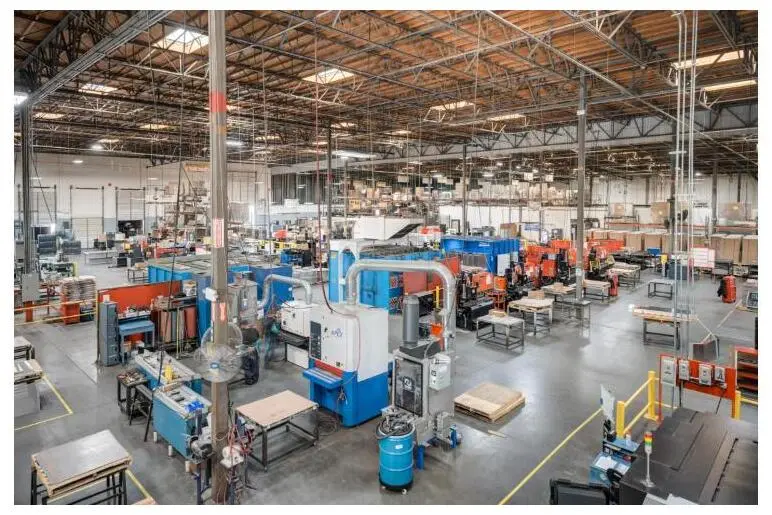
When fabrication, finishing and light electromechanical assembly share one facility, assembly integration DFM issues surface during quoting rather than during production. That structure reduces rework risk and supports smoother launches.
Review your assembly sequence with Fabcon’s engineering team to catch integration issues before production.
12-Point DFM Checklist
Use this checklist before releasing drawings for quoting or first-article production. Each item corresponds to one of the twelve core principles covered above.
- Principle 1 – Uniform Material Thickness: Uniform gauge specified across the part. Thickness transitions documented on the 2D drawing.
- Principle 2 – Bend Radii: Inside bend radii meet minimum values for the selected alloy and temper. Consistent radius used throughout. (Atlas Manufacturing bend radius guide)
- Principle 2.1 – Bend Reliefs: Bend reliefs added at all flange intersections and at bends terminating near edges. (Baosheng Industry DFM guide)
- Principle 5 – Feature Location: All holes and slots located outside the distortion zone. Minimum hole-to-bend distance of 2.5T plus bend radius confirmed. (CNC Fabworks bend guide)
- Principle 4 – Flange Length: Flange lengths meet or exceed 4 times material thickness or the process-specific minimum. (DRAmetal DFM checklist)
- Principle 6 – Hardware Standardization: Hardware part numbers, installation side, orientation and coating sequence specified on the drawing. (MTSPI DFM guide)
- Principle 6.1 – Hardware Sequencing: PEM and self-clinching hardware insertion sequenced before finishing. (Inside Metal Fab supplier guide)
- Principle 7 – Tolerances: Tight tolerances applied only to functionally critical features. Standard fabrication tolerances used elsewhere. (EVS Metal tolerances guide)
- Principle 9 and 10 – Grain and Springback: Grain direction called out on drawings for critical bends. Springback compensation confirmed with the fabricator. (DRAmetal grain direction guide)
- Principle 11 and 12 – Assembly Integration: Self-locating tabs, slots and datum features included. Tool access verified in the fully assembled state. (Fictiv assembly design guide)
- Principle 3 – Hole Sizing: Minimum hole diameters and edge distances meet process guidelines for the selected material and thickness.
- Principle 8 – Alloy Selection: Alloy and temper support required bend radii and forming complexity at the planned production volume.
Frequently Asked Questions
What is the difference between standard and precision sheet metal tolerances, and when does tightening them add cost?
Standard sheet metal fabrication tolerances cover most industrial applications without secondary operations. Precision fabrication applies tighter tolerances selectively on cut features where fit or function demands it while using standard tolerances on formed dimensions. Tightening tolerances beyond what the process naturally holds requires slower cutting parameters, more frequent tool verification, dedicated fixtures or secondary machining after forming. Each step adds processing time, inspection burden and scrap risk. The most cost-effective approach identifies functionally critical features, applies tight tolerances only to those and leaves everything else at standard.
Why is 5052-H32 aluminum recommended over 6061-T6 for bend-intensive sheet metal designs?
5052-H32 offers significantly better formability than 6061-T6. Its lower yield strength and higher elongation support tighter bend radii without outer-fiber cracking, which suits complex flanges, hems and offsets. 6061-T6, while stronger, has limited ductility in the T6 temper and requires larger minimum bend radii to avoid cracking, particularly when bends run parallel to the rolling grain. When 6061-level strength is required, forming in the O or T4 temper followed by aging to T6 is a common workaround. For many enclosure, bracket and chassis applications with complex forming, 5052-H32 reduces scrap risk and keeps production predictable.
What causes hardware insertion failures in precision sheet metal assemblies, and how can they be prevented?
Common causes include insufficient material surrounding the insert, hardware placed too close to a bend or edge, mismatched hardware ratings for the sheet material and thickness and insertion performed after finishing. When a PEM nut or standoff sits too close to a bend, the sheet cannot support the installation force, which leads to deformation or weak retention. Installing hardware after powder coating or painting risks cracking the finish around the insert and can compromise clinch strength. Prevention requires specifying hardware part number, installation side, orientation, hole size and coating sequence on the drawing before quoting. Sequencing insertion before finishing and verifying clearances in the fully assembled state removes most hardware-related rework.
How does a vertically integrated fabrication partner reduce DFM-related rework compared to a fragmented vendor model?
A fragmented model surfaces DFM issues at each vendor transition between the fabricator, the finishing shop and the assembly house. Each handoff introduces a new opportunity for a tolerance mismatch, a hardware sequencing error or a cosmetic rejection. A vertically integrated partner reviews the drawing once against the full build sequence, including forming, finishing and assembly, before production begins. Issues that would otherwise appear as rework charges or schedule delays at a downstream vendor are caught during quoting. This approach supports programs moving from prototype to mid-volume production, where design changes remain possible and early issue detection costs far less than late corrections.
Ready to Release Production-Ready Prints?
Fabcon’s engineering and quoting teams review drawings against the full build sequence of fabrication, finishing and light electromechanical assembly before production begins. Programs that enter production with DFM-reviewed prints move faster, scale more reliably and generate fewer cost surprises. Fabcon is ISO 9001:2015 and AS9100D certified, with integrated quality assurance spanning every stage of the build.
Submit your production prints for review and receive a quote within 48 hours.