
Last updated: August 19, 2026
Key Takeaways for Enclosure Buyers
- Custom precision enclosures require evaluation across five areas: technical capabilities, integration scope, quality and compliance, scalability and flexibility, and supply-chain simplicity.
- Job shops, large global CMs, and mid-tier vertically integrated fabricators each present distinct risks. Mid-tier partners often balance engineering depth with production flexibility for mid-volume programs.
- Early DFM collaboration reduces rework, cost overruns and schedule delays by catching tolerance, bend-sequence and finish issues before production begins.
- Consolidating fabrication, finishing and assembly under one roof removes multi-vendor coordination costs, shortens lead times and places accountability with a single partner.
- Start a DFM review with a U.S.-based, ISO 9001:2015 and AS9100D-certified partner to consolidate the enclosure supply chain.
Comparing Job Shops, Mid-Tier Fabricators and Large or Global CMs
The U.S. custom enclosure market relies on three broad provider archetypes, each with distinct capabilities and gaps. Understanding those tradeoffs helps match program needs to the right structure.
Low-complexity job shops operate on a make-to-order basis where each job follows its own routing across shared fabrication resources. They handle discrete, short-run work with skill, but they typically stop at the metal shell. Engineering depth for design-for-manufacturability review, in-house finishing and electromechanical assembly usually sit outside their scope. Buyers who rely on job shops for complex programs manage multiple vendors for coatings, wiring and assembly, which creates handoff delays and diffuses accountability for quality.
Large and global contract manufacturers offer scale and broad certification portfolios. Their production models focus on high-volume, stable programs. Minimum order quantities, lengthy onboarding processes and rigid production lines often conflict with the high-mix, mid-volume programs common in infrastructure and technology sectors. Engineering changes and evolving bills of materials become difficult to absorb without schedule and cost consequences.
Mid-tier vertically integrated fabricators occupy the space between these extremes. They combine fabrication, finishing and assembly under one roof with engineering support and quality systems that satisfy regulated industries. This structure addresses the fragmentation risk of job shops and the rigidity risk of large contract manufacturers.
Reshoring pressure reinforces the case for domestic mid-tier partners. The Reshoring Initiative’s 2024 Annual Report recorded 244,000 announced U.S. manufacturing jobs through reshoring and foreign direct investment. Section 232 tariffs on steel, aluminum and derivative products have made total landed cost comparisons between domestic and offshore suppliers a standard part of sourcing decisions. Once a buyer identifies the right provider archetype, the next critical decision point is how that provider supports engineering collaboration before production.
Engineering Concerns: Closing the DFM Disconnect
Design-to-manufacturing disconnects create some of the most common sources of rework, schedule loss and cost overrun in custom enclosure programs. These disconnects occur when a supplier receives a drawing and fabricates to it without flagging tolerance stack-ups, bend sequence conflicts or finish incompatibilities that could have been resolved before production.
The Sheet Metal Enclosure Design Guide (updated 2026-07-27) recommends starting DFM collaboration by defining the product envelope, mounting interfaces, service access, environment and validation owner before selecting enclosure geometry. It also states that every numeric DFM value should be treated as a supplier-dependent screening value, not a universal rule, and must be checked against the actual grade, temper, thickness, grain direction, tooling and bend sequence.
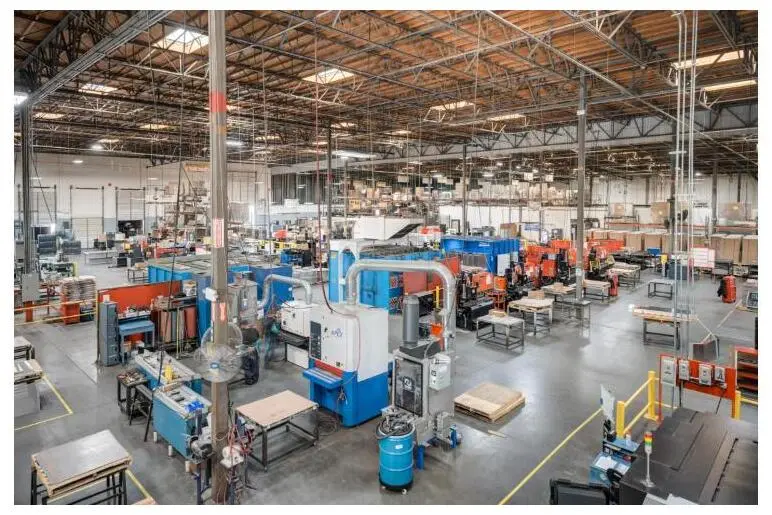
Fabcon’s engineering and quoting teams engage with customers before production begins, reviewing drawings, tolerances and materials to build manufacturing routers tuned for the production floor. This early collaboration reduces rework, improves cost efficiency and confirms that the design can run at scale. ISO 9001:2015 and AS9100D certified quality systems govern every stage of the build and provide full traceability across fabrication, finishing and assembly within a 220,000 sq. ft. U.S. manufacturing footprint. That integration ensures that engineering decisions made upfront carry through consistently in production.
NEMA ratings and IP ratings also require careful handling during DFM. The Sheet Metal Enclosure Design Guide warns against translating IP, NEMA and UL labels into one another and against claiming a rating before the complete assembly is tested or evaluated. Seams, gaskets, latches, fastener spacing, cable glands, vents, drains, coatings and installation all affect whether a fabricated shell earns its stated rating.
Supply-Chain Concerns: Reducing Fragmentation and Lead-Time Risk
Multi-vendor enclosure programs carry structural cost and schedule risk that unit pricing does not capture. Hidden costs such as multi-vendor coordination, quality documentation, inventory carrying and scrap can add beyond the quoted unit price when the supply chain for custom metal parts is not integrated. An integrated supply chain that combines fabrication, finishing and light assembly under one roof reduces the vendor handoffs typical in multi-vendor enclosure programs, each of which can add administrative and shipping costs per lot.
Lead-time drivers compound this risk. Schedule risk in custom enclosure programs is often tied to front-end engineering quality and supplier coordination. Drawing completeness, material availability, outside finishing steps and revision control all affect when a program ships.
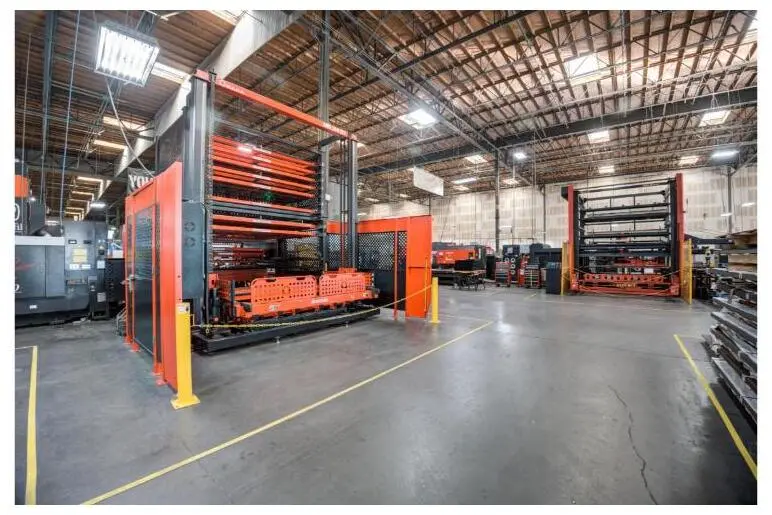
Fabcon consolidates fabrication, finishing and light electromechanical assembly under one roof. One purchase order covers the full scope. Internal control over each process stage removes dependency on third-party schedules and eliminates the coordination overhead that increases total program cost in fragmented supply chains.
Eliminate vendor handoffs and place full accountability with one integrated partner for the next enclosure program.
Operations Concerns: Scaling Programs Without Rigidity
Program managers and operations leaders at infrastructure and technology firms often face a binary choice between job shops that cannot scale and large contract manufacturers that impose high minimums and slow onboarding. That choice rarely supports the evolving bills of materials and mixed-SKU programs common in innovation-led sectors.
The same DFM principles that prevent rework also drive cost and schedule efficiency. Eliminating non-functional tolerances, simplifying geometry and selecting the right process for the required volume reduce manufacturing costs and lead times. Early DFM changes such as increasing internal corner radii, relaxing non-functional tolerances and consolidating features to fewer setups can reduce manufacturing costs and lead times.
Fabcon’s agile production cells adapt to changing volumes, mixed SKUs and evolving bills of materials without the overhead rigidity of large contract manufacturers. This structure supports programs from prototype through mid-volume production with the same engineering team and quality system in place at every stage.
Industry-Specific Uses for Custom Precision Enclosures
Fabcon serves mid-sized to large enterprises across several infrastructure and technology verticals, and each sector brings distinct enclosure requirements.
- Data center infrastructure: Modular, rack-mounted enclosures and structural systems that support cooling, cable management and integration for hyperscale and edge deployments.
- Energy storage and power distribution: Weatherproof, customizable enclosures with electromechanical integration for commercial and public deployments.
- Aerospace and defense: Mission-critical assemblies built under AS9100D controls and ITAR registration, with full traceability and tight tolerances from prototype through production.
- Medical devices: Fabricated assemblies and finished products including carts, lab equipment and medical furniture with precision assembly and full traceability.
- Traffic safety and transportation: Durable, precision-fabricated metal solutions for infrastructure-grade components engineered for compliance and consistency.
Fabcon’s certification stack provides the compliance foundation that regulated industries require. ISO 9001:2015 and AS9100D guide quality management and traceability, while ITAR registration supports defense-related programs. AS9100-certified manufacturers track management-review metrics including on-time delivery, corrective-action status, supplier performance, nonconformance trends, scrap and rework rates and calibration compliance. These metrics align with the scorecards that aerospace and defense procurement teams use to evaluate suppliers.
Common Questions on Enclosures, Ratings and Assembly Scope
What types of custom enclosures does a vertically integrated fabricator produce?
Vertically integrated fabricators produce cabinets, chassis, racks, structural frames, brackets and custom housings across a range of sizes and material grades. The defining characteristic is that fabrication, finishing and assembly occur within one facility under a single quality system rather than across multiple vendors.
What do NEMA ratings mean for custom enclosure buyers?
NEMA ratings define the environmental protection a complete enclosure assembly provides against dust, water, corrosion and other conditions based on standardized test criteria. A fabricated shell does not earn a NEMA rating by appearance alone. The final rating depends on the complete assembly, including how seams are sealed, how hardware is installed and how the enclosure is deployed in the field. Buyers should confirm that the complete assembly, not just the metal shell, has been evaluated or tested to the claimed standard before production release.
What is the difference between build-to-print and integrated assembly?
Build-to-print means the manufacturer fabricates to the buyer’s drawing without contributing engineering input or performing downstream operations like finishing or wiring. Integrated assembly extends the scope to include finishing, hardware insertion, wiring and electromechanical assembly under the same quality system. Integrated assembly reduces vendor count, compresses lead time and places accountability for the complete build with one partner rather than distributing it across multiple suppliers.
How does DFM collaboration affect enclosure program cost and schedule?
DFM collaboration at the quoting stage allows the manufacturer’s engineering team to identify tolerance stack-ups, bend sequence conflicts, material incompatibilities and finish issues before production begins. Resolving these issues early reduces rework, shortens the path from prototype to production release and improves cost efficiency across the program. The greatest DFM leverage occurs before drawings are finalized, which makes early supplier engagement a key advantage for mid-volume programs.
What quality certifications should buyers require from a custom precision enclosure partner?
ISO 9001:2015 provides the baseline quality management framework for precision fabrication. AS9100D extends that framework with aerospace-specific requirements for traceability, configuration management and risk mitigation. ITAR registration is required for programs involving defense-related technical data. UL and CSA compliance matters for enclosures deployed in regulated electrical environments. Buyers in aerospace, defense, medical and energy storage should confirm that certifications cover the full scope of work, including fabrication, finishing and assembly.
Addressing Cost, Scalability and Existing-Supplier Concerns
Total cost of ownership for a custom enclosure program extends beyond unit price. Vendor coordination overhead, quality documentation, rework and schedule recovery all carry real cost that does not appear on a fabrication quote. A supplier that consolidates fabrication, finishing and assembly under one roof removes the administrative and logistical costs that accumulate across a multi-vendor program.
Scalability concerns often arise when teams evaluate mid-tier fabricators. The relevant question is whether the supplier’s production structure can absorb volume changes and bill-of-material revisions without a new onboarding cycle. Agile production cells, rather than fixed production lines, provide that flexibility for mid-volume programs.
Buyers with existing metal fabrication suppliers often find that their current vendor handles the metal shell but not finishing, wiring or assembly. Adding those capabilities through a single integrated partner reduces vendor count, improves system-level quality control and shortens the time between design release and shipment.
Vendor-Selection Readiness Checklist and Next Steps
Teams can move faster with a new custom precision enclosure partner when the following items are in place.
- Drawings are revision-controlled with critical dimensions, material grade and finish requirements clearly marked.
- The supplier’s quality certifications cover the full scope of work, including finishing and assembly.
- DFM review is offered before production release, not after first-article inspection.
- The supplier can support prototype, low-volume and mid-volume production without separate onboarding cycles.
- Fabrication, finishing and assembly are performed under one roof by one accountable partner.
- NEMA or IP ratings are validated on the complete assembly, not assumed from the metal shell alone.
- The supplier holds ITAR registration if the program involves defense-related technical data.
Fabcon supports DFM reviews and facility tours for qualified programs. Engineering and quoting teams engage from the start to confirm manufacturability, reduce risk and align production scope to program requirements.
Request a quote, DFM review or facility tour with Fabcon’s engineering team to evaluate fit for upcoming enclosure programs.