

Last updated: August 17, 2026
Key Takeaways for Selecting a Sheet Metal Partner
- Mid-volume infrastructure programs need a fabricator that manages DFM, quality systems, finishing and scalability, not only build-to-print work.
- Vertically integrated shops shorten lead times and reduce quality risk by keeping cutting, bending, welding, finishing and assembly in one facility.
- ISO 9001 and AS9100D certifications with documented FAI and traceability support aerospace, data center and energy storage programs.
- Early DFM collaboration, in-house finishing and flexible production cells signal strong control of cost, quality and delivery at scale.
- See how Fabcon’s integrated approach consolidates vendors and reduces program risk for the next infrastructure build.
Step 1: Define Program Requirements and Constraints
Clear program requirements create a common baseline for internal teams and fabricators. Document the full scope before issuing an RFQ, including the bill of materials, target volumes by phase, regulatory requirements and any tolerance stack-up limits driven by assembly fit or field performance.
Shared technical language keeps RFQs and evaluations aligned. DFM, or design for manufacturability, reviews part geometry, material selection and process feasibility before production and shapes cost and quality discussions. Tolerance stack-up describes the cumulative dimensional variation across bends, welds or assembled components and directly affects assembly fit. A quality management system, or QMS, defines how a fabricator controls processes, inspections and corrective actions and becomes a key evaluation point in later steps.
Inputs at this stage include 2D drawings with GD&T callouts, 3D STEP or IGES models, material specifications, surface finish standards and target delivery dates. These inputs feed two outputs. One is a program requirements document that defines what the fabricator must deliver. The other is a vendor evaluation scorecard framework that defines how candidates will be assessed.
Step 2: Map Required In-House Processes Versus Subcontracted Work
With requirements documented, the next step is to decide which processes must stay in-house and which can be subcontracted. This decision shapes total landed cost and quality consistency.
Integrated in-house fabrication compresses delivery timelines compared with models that rely on external shops, because communication between engineering and production stays direct. Consolidating cutting, bending, welding, finishing and assembly under one fabricator often cuts lead time by removing queues and transport between vendors.
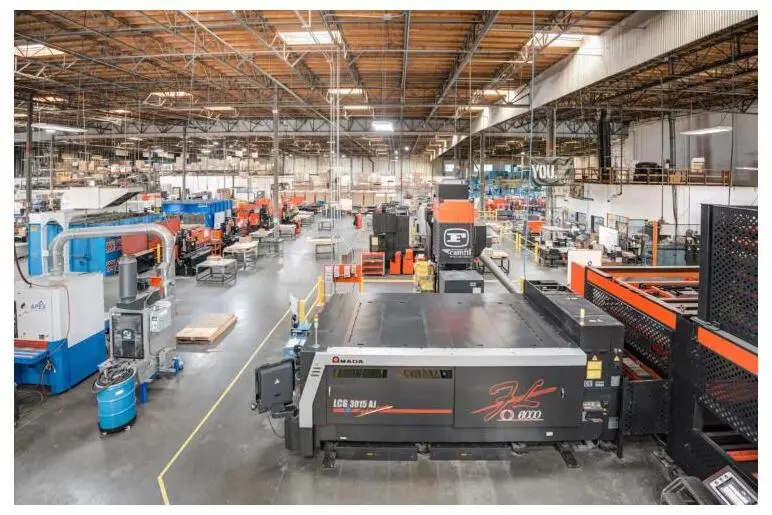
Vendor process maps reveal risk. Ask which processes occur on-site and which rely on subcontractors. Shops that manage engineering review, fabrication and finishing in one workflow catch tolerance risks earlier because fewer handoff gaps exist. Subcontracted finishing, welding or machining adds handoff points where delays and quality issues often start.
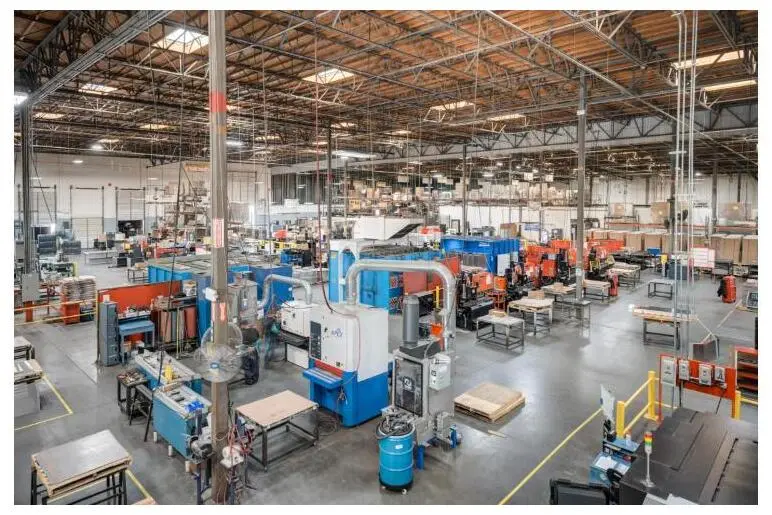
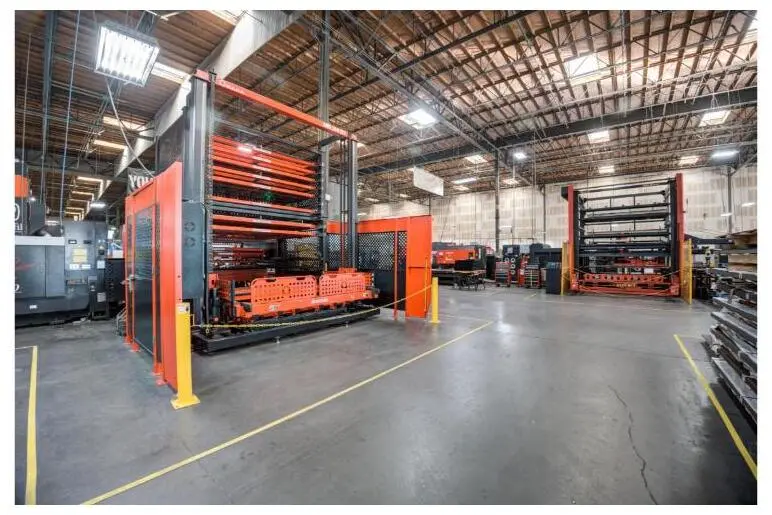
Fabcon operates across 220,000 square feet of manufacturing space with laser cutting, CNC punching, forming, welding, CNC machining, finishing and electromechanical assembly performed in-house. One purchase order covers the full build.
Step 3: Verify Quality Systems and Traceability
Quality system certification sets the minimum bar for participation. The key questions involve which standard fits the program and whether the certification scope covers the required processes.
ISO 9001 is the international baseline quality management standard for any industry and requires defined processes for document control, nonconformance and corrective action, calibration, supplier control and management review. AS9100 builds on ISO 9001 and adds aerospace requirements such as First Article Inspection, configuration management, counterfeit-part prevention, product safety controls and formal operational risk management.
AS9100D certification supports infrastructure programs in aerospace and defense and aligns with standard prime contractor requirements. Many aerospace primes, including Boeing, Lockheed Martin and Northrop Grumman, list AS9100 as a minimum supplier qualification. ISO 9001:2015 with documented FAI and traceability practices supports data center, energy storage, medical device and traffic safety programs.
Certification scope must match the work. If an AS9100 scope excludes certain sites, processes or services, ISO 9001 coverage is also excluded for those activities. Request the certificate, confirm it through the OASIS database for AS9100 and review sample FAI reports and CMM inspection documentation.
Fabcon holds ISO 9001:2015 and AS9100D certifications and is ITAR registered. Quality controls span every stage of the build with full traceability.
Request Fabcon’s certification documentation and start a quality systems evaluation.
Step 4: Evaluate DFM Collaboration Practices
Strong DFM collaboration signals a manufacturing partner rather than a transactional vendor. Structured DFM reviews before drawings release catch issues when changes cost less and support lower first-production unit cost.
A DFM review for sheet metal should address design elements that affect manufacturability, cost and quality. Key topics include:
- Bend radii and reliefs, confirming radii match standard tooling and reliefs prevent cracking at bend terminations
- Hole placement, keeping holes clear of bend distortion zones that cause stretching or positional shift after forming
- Weld necessity, replacing welds with formed tabs, rivets or clinch features where structure allows to reduce labor and heat distortion
- Tolerance rationalization, holding tight tolerances only where they protect fit or function and relaxing noncritical dimensions
- Hardware standardization, using stock PEM nuts, studs and standoffs to avoid sourcing delays and minimum-order issues
- Flat-pattern nesting efficiency, designing parts to nest within standard sheet sizes to reduce material waste
Past examples reveal real capability. Ask the fabricator to walk through a previous DFM project, the changes made and the measurable outcome. Vendors that cannot show this evidence usually operate as build-to-print shops.
Fabcon’s engineering and quoting teams collaborate with client technical teams before production, reviewing drawings, tolerances and materials to create manufacturing routers tuned for the production floor.
Step 5: Assess Finishing and Light-Assembly Integration
Finishing and assembly often create fragmentation in mid-volume programs. A fabricator that ships bare metal parts forces separate vendors for powder coating, painting, hardware insertion, wiring and electromechanical assembly, which adds delays and quality interfaces.
Evaluation should confirm whether the fabricator offers:
- In-house powder coat, wet paint and specialty coatings such as CARC or mil-spec finishes
- Hardware insertion and mechanical assembly
- Light electromechanical assembly including wiring and component integration
- Fulfillment and logistics support for just-in-time delivery
Finishing operations such as powder coating, plating or hardware insertion can change part dimensions, so the finished condition must appear in tolerance planning. A fabricator that manages finishing in-house can account for coating thickness during design instead of discovering conflicts after production.
This integrated approach extends to finishing at Fabcon. Powder coat, wet paint, screen printing, CARC and mil-spec coatings run in the same facility as fabrication and assembly.
Step 6: Test Scalability and Lead-Time Reliability
Consistent performance across repeat orders shows that processes are standardized. A fabricator that holds tolerances and schedules on prototypes but struggles on production often lacks stable methods.
Reshoring and vendor consolidation trends shape how OEM buyers approach scalability. Many OEMs now favor integrated manufacturing solutions over fragmented networks that add transport costs, excess WIP inventory, longer lead times and higher administrative expense. Tariffs, supply chain volatility and incentive programs drive this shift toward U.S. production.
Scalability reviews should cover several topics:
- How production cells handle mixed SKUs and evolving BOMs
- How minimum order quantity changes across volume tiers
- How capacity is allocated between existing and new programs
- What the onboarding timeline looks like from first RFQ to production release
Large contract manufacturers provide scale but often require high minimums, long onboarding and rigid structures. Job shops provide flexibility but may lack infrastructure for sustained mid-volume work. Fabcon’s agile production cells support changing volumes, mixed SKUs and evolving BOMs without the overhead of large contract manufacturers.
Step 7: Score and Compare Vendors
A weighted scorecard brings structure to the final vendor decision. One effective framework assigns Quality at 25 percent, Engineering and DFM support at 20 percent, Delivery and lead-time reliability at 20 percent, Price at 15 percent, Communication at 10 percent and Capacity at 10 percent.
Each candidate should receive scores on a consistent scale using documented evidence, not verbal assurances. Useful evidence types include:
- Certification certificates verified through OASIS or the issuing registrar
- Sample FAI reports with measured values for every drawing dimension
- Batch-level CMM inspection reports from production runs, not only first articles
- References from programs at comparable volume and complexity
- A completed DFM review on a representative part from the program
Total landed cost provides a stronger basis for price scoring than piece price alone. Total landed cost includes per-part price, tooling, freight and the hidden costs of rejects, rework and late deliveries. A fabricator with a low piece price but subcontracted finishing, undisclosed welding outsourcing and no DFM capability often drives higher total program cost.
Apply this scorecard framework to Fabcon and review performance across all seven dimensions.
Common Challenges and Troubleshooting
Several recurring pitfalls disrupt fabricator evaluations and early production runs.
Incomplete drawings cause many quoting delays and post-award changes. Before releasing an RFQ, confirm that CAD and drawings match, material and thickness are realistic, bend radii and reliefs are manufacturable and critical tolerances are separated from standard dimensions.
Unclear tolerances often create inspection disputes that appear as manufacturing errors. Inspection method, including datum choice, free-state versus constrained measurement and tool selection, frequently drives disagreement on whether tolerances are met. Align on datums and measurement methods before production.
Late design changes after production release raise cost. Design revisions move faster when engineering and fabrication teams share an organization, while outsourced fabrication triggers new quotes, new production slots and extra freight for each change. Freezing the design before release and routing changes through a formal engineering change order process controls this risk.
Underestimated validation needs, especially in aerospace and medical programs, extend timelines when FAI requirements are not planned from the start. First Article Inspection reports in aerospace programs follow AS9102 and document measured values for every drawing dimension along with tools used, material certificates and process parameters. Building FAI into the schedule from day one keeps launches on track.
Measuring Success Over Time
Early indicators of a strong fabricator relationship include RFQ cycle time, first-article inspection outcomes and on-time delivery for the first production release. A standardized process supports consistent FAI results and on-time delivery without expediting.
Long-term metrics include first-pass yield, on-time delivery across multiple runs, field reliability data and total program cost versus the original estimate. Statistical process control with X-bar and R charts, combined with documented out-of-control action plans, enables intervention before parts drift out of tolerance. Access to SPC data and Cpk reporting should form part of the ongoing supplier relationship.
Quarterly reviews with the fabricator’s program management team keep performance visible. Fabricators that cannot provide this data operate without the process discipline needed for infrastructure-critical programs.
Advanced Considerations for Complex Programs
High-mix programs with multiple SKUs, evolving BOMs or frequent engineering changes benefit from flexible manufacturing cells. Fixed production lines tuned for a single part family struggle with this variation and often require costly retooling and longer lead times.
Supplier integration depth grows more important as programs mature. A fabricator with in-house engineering, ERP-linked scheduling and real-time production visibility can participate in S&OP and provide accurate capacity commitments. Fabricators without these systems create planning uncertainty that compounds at scale.
Data-driven continuous improvement separates stable suppliers from those that fade after initial approval. Batch-level CMM inspection reports, backed by SPC and structured corrective action, help prevent quality fade where suppliers quietly change materials or skip steps after the first batch.
Phased rollout, where the fabricator first qualifies on a single SKU, reduces transition risk. This approach provides a controlled environment to validate process capability before committing full production volume.
Start with a phased rollout and qualify Fabcon on a single SKU before scaling program volume.
Frequently Asked Questions
What is the difference between ISO 9001 and AS9100 for sheet metal fabricators?
ISO 9001 provides the baseline quality management framework for manufacturing sectors and requires documented processes for nonconformance, corrective action, calibration, supplier control and management review. AS9100 incorporates ISO 9001 and adds aerospace-specific requirements such as First Article Inspection per AS9102, configuration management, counterfeit-part prevention, product safety controls and formal operational risk management. For aerospace and defense programs, AS9100D certification aligns with standard prime contractor expectations. For data center, energy storage, medical device and traffic safety programs, ISO 9001:2015 with documented FAI and traceability practices provides an appropriate baseline. See Step 3 for a detailed comparison and guidance on standard selection.
What does DFM collaboration look like in practice for sheet metal programs?
DFM collaboration starts before drawings reach production. The fabricator’s engineering team reviews part geometry, material selection, bend radii, hole placement, tolerance strategy, weld necessity and hardware specifications. The output is a set of recommended changes with functional trade-off explanations that the buyer’s engineering team reviews and approves before production. A fabricator that provides only a price quote without a DFM review operates as a build-to-print vendor. Fabcon’s engineering and quoting teams conduct DFM reviews as a standard part of quoting and produce manufacturing routers and work instructions tuned for the production floor.
How does vendor consolidation affect total program cost for sheet metal programs?
Vendor consolidation reduces total landed cost beyond piece price by removing inter-facility freight, lowering WIP inventory and safety stock, simplifying quality management and cutting the administrative work of multiple purchase orders, invoices and audits. Fragmented supply chains also introduce tolerance misalignment at vendor interfaces, where a dimension in spec at the fabricator may fall out of spec after finishing at a separate shop. Consolidating fabrication, finishing and assembly under one partner removes these interface risks and creates a single accountable contact for quality and delivery.
What questions should be asked when evaluating a sheet metal fabricator's scalability?
Scalability evaluations should cover how production cells handle mixed SKUs and evolving BOMs, how minimum order quantity shifts across volume tiers, how capacity is allocated between existing and new programs and what the onboarding timeline looks like from first RFQ to production release. References from programs at comparable volume and complexity provide further proof. A fabricator that cannot provide references from mid-volume production programs has not demonstrated the process standardization needed for infrastructure-critical work. Fabcon’s agile production cells support mid-volume programs and adapt to changing volumes and SKUs without the rigidity of large contract manufacturers.
When should a supplier change be considered for an existing sheet metal program?
A supplier change becomes appropriate when first-pass yield trends downward across multiple runs, on-time delivery declines without documented root cause and corrective action, the fabricator cannot support engineering changes within a reasonable timeline or the program outgrows the fabricator’s capacity or certification scope. Quality fade, where a supplier delivers strong first articles but drifts on later batches, often signals weak process control. Before transferring the full program, qualify the new fabricator on a single SKU and complete a full FAI to reduce transition risk.