
Last updated: August 14, 2026
Key Takeaways for Mid-Volume Sheet Metal Programs
- U.S. precision sheet metal fabrication demand is rising in 2026 from reshoring, semiconductors, data centers and defense, yet mid-volume programs sit between inflexible large contract manufacturers and under-equipped job shops.
- Integrated U.S. fabrication and assembly partners close that gap by combining engineering collaboration, in-house process breadth and certified quality systems under one roof, which removes vendor handoff delays and quality finger-pointing.
- Key evaluation criteria include ISO 9001:2015 and AS9100D certifications, documented on-time delivery above 90%, in-house finishing and assembly and proven ability to scale from prototype to mid-volume production without requalification.
- Integrated partners reduce total cost of ownership by consolidating coordination, logistics and quality verification under a single accountable supplier instead of relying on fragmented vendor networks.
- Contact Fabcon to evaluate how its vertically integrated precision fabrication and assembly capabilities can support the next mid-volume program.
The Problem: Why Common Options Fall Short for Mid-Volume Work
The U.S. sheet metal fabrication market splits into two categories that each fail mid-volume programs in distinct ways.
Small job shops built for prototypes often lack the systems, tooling and workflows needed for repeat mid-volume runs. That gap creates inconsistent quality, fluctuating lead times and unpredictable output that disrupts OEM schedules. These shops operate as build-to-print vendors. Design-for-manufacturability collaboration, light electromechanical assembly and integrated finishing sit outside their scope.
When a program needs coating, wiring and hardware insertion alongside fabricated metal, customers must coordinate those steps across separate vendors. Each vendor brings its own schedule, quality standard and purchase order, which increases risk and internal workload.
Large high-volume contract manufacturers prioritize rigid automation and stable, unchanging designs. That priority creates communication gaps, limited engineering collaboration and minimal guidance on manufacturability for mid-volume customers. These providers require high minimum volumes and long onboarding cycles. Programs with evolving bills of materials or mixed SKUs rarely fit their production model.
The reshoring environment intensifies both problems. The ISM Manufacturing PMI rose to 54.0 in May 2026, with new orders strengthening, backlogs rising and customer inventories remaining tight. ISM views that combination as likely to intensify supplier lead-time pressure. Regulatory expectations around domestic sourcing, traceability and compliance add further weight. Engineering, procurement and operations leaders need a fabrication partner that can absorb that complexity, not redistribute it.
The Solution: Integrated U.S. Precision Fabrication and Assembly Partners
That complexity-absorbing partner exists in integrated U.S. precision fabrication and assembly operations. An integrated U.S. precision fabrication and assembly partner combines engineering collaboration, in-house process breadth and certified quality systems under one roof. Mid-volume fabrication success depends on process knowledge, cross-functional collaboration and engineering support for design-for-manufacturability, not raw production capacity alone.
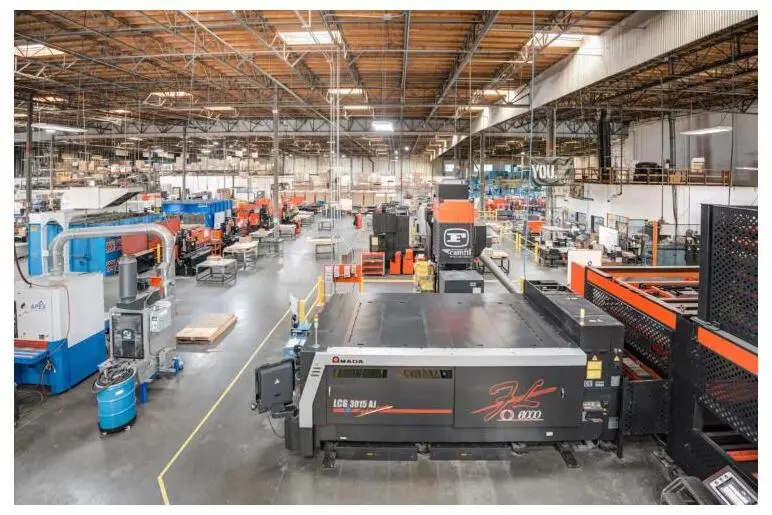
The operational model follows a clear sequence. Engineering teams engage early and review drawings and tolerances before production begins. Fabrication, finishing and assembly occur in the same facility. Quality systems govern every stage of the build.
When a program transitions from prototype to ramp-up to steady-state production, the partner adjusts volume and cell configuration. That flexibility removes the need to requalify a new supplier during growth.
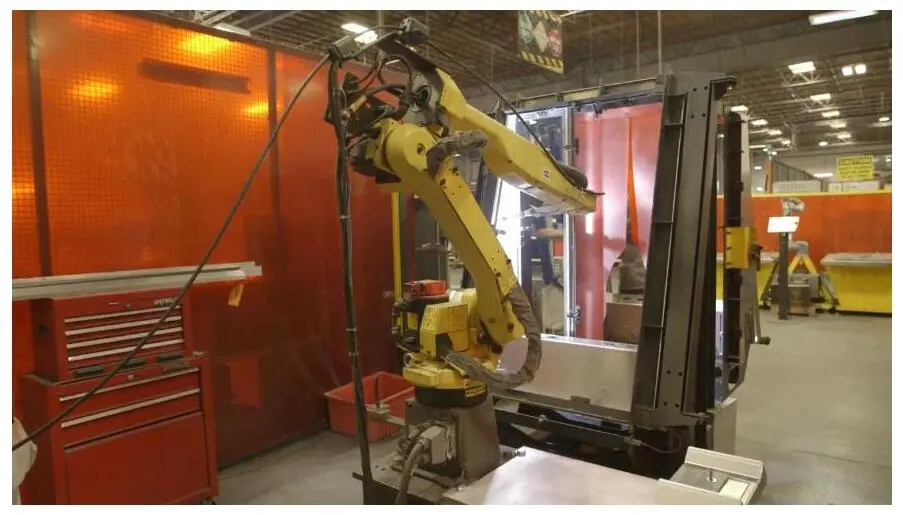
Contract manufacturers in this category manage multi-process work including cut, form, weld, finish, hardware insertion and assembly in one location. They deliver documented results from a single accountable supplier. That single-supplier accountability removes vendor handoff delays and quality finger-pointing that fragment multi-vendor programs.
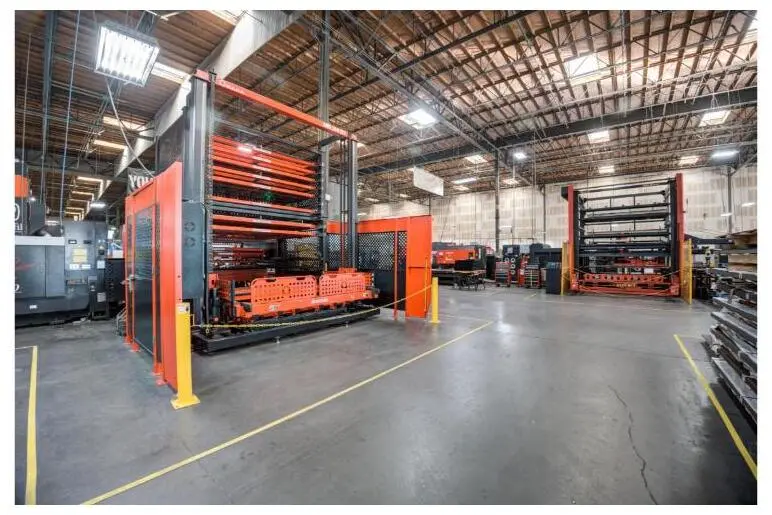
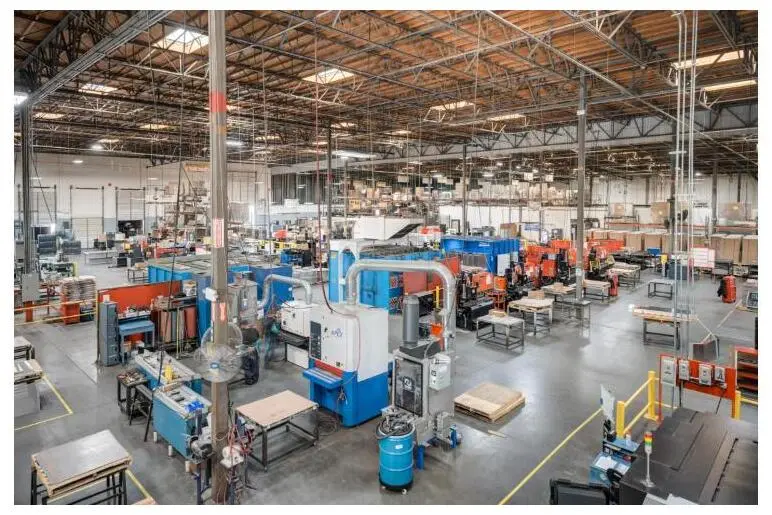
Fabcon operates within this category. Founded in 1977 and operating across 220,000 square feet of manufacturing space in two Southern California facilities, Fabcon provides precision sheet metal fabrication, CNC machining, certified welding, in-house finishing and light electromechanical assembly under one roof. Programs move from prototype through production without changing partners.
Proof Points That Indicate Reliability and Scalability
Certifications set the baseline for evaluating fabrication partners in regulated industries. For commercial and industrial sheet metal fabrication, ISO 9001 is the essential baseline certification. For aerospace and defense programs, AS9100 represents an audited, third-party-verified quality management system. AS9100 adds aerospace-specific requirements including risk management, configuration management, first article inspection and more stringent process control requirements on top of ISO 9001.
Fabcon holds ISO 9001:2015 and AS9100D certifications and is ITAR registered. These certifications require documented quality systems at every stage of the build, so Fabcon maintains full traceability across materials, revisions and inspection records.
Delivery performance benchmarks provide a practical lens for operational reliability. On-time delivery for U.S. metal fabrication is benchmarked at 84% industry average and 90% or above for top-quartile performers, per the FMA Financial Ratios and Operational Benchmarking Survey. Scrap and rework rates average 1.4% of sales across the industry, with top-quartile performers running under 1.0%. Partners operating at or above top-quartile thresholds signal lower downstream risk for programs with tight launch windows.
Audit readiness offers another indicator. Partners with documented change control, first-article inspection records and material certifications tied to specific job lots can support PPAP-style submissions and satisfy regulatory requirements in medical, aerospace and energy applications.
How Integrated Partners Address Common Sourcing Challenges
Design-for-manufacturability and engineering alignment. DFM applied early during concept and initial design stages prevents costly redesigns later in development by building manufacturability into the product from the beginning. Integrated partners review drawings before production begins and identify tolerance issues, material substitutions and feature modifications that prevent rework downstream. Evaluation criterion: ask whether the partner’s engineering team participates in preproduction design review or only receives finalized drawings.
Vendor fragmentation versus integrated execution. In custom parts sourcing, a significant share of total cost emerges not in manufacturing price but in the coordination required to manage multiple supplier interfaces, including technical alignment, tolerance interpretation, quality verification, logistics coordination and commercial clarification. Integrated partners consolidate those interfaces into one purchase order and one accountable point of contact. Evaluation criterion: confirm that fabrication, finishing and assembly are performed in-house, not subcontracted.
Quality compliance and traceability. ISO 9001:2015 quality systems enable reconstruction of material lot, print revision and inspection records for any shipped part. For infrastructure-critical industries, that traceability is mandatory. Evaluation criterion: request sample first-article inspection reports and material certifications before awarding a program.
Scaling from prototype to production. Mid-volume OEMs require fabrication partners that can adapt to shifting volumes and design iterations through cross-trained teams and in-house capabilities rather than facing bottlenecks from limited scalability. Flexible production cells that reconfigure for changing volumes and mixed SKUs support that requirement. Evaluation criterion: ask how the partner handles BOM revisions mid-program and what the requalification process includes.
Lead times and launch pressure. Internal integration compresses the production cycle. When fabrication, coating and assembly occur in the same facility, programs avoid third-party schedules and inter-facility shipping. AI demand expanded in Q2 2026 into connectors, MLCCs, relays, thermal management solutions and electromechanical products, creating pockets of extreme tightness even in previously stable categories. Partners with in-house electromechanical assembly reduce exposure to that component-level volatility. Evaluation criterion: ask for documented lead-time performance across recent programs, not estimates.
Total cost of ownership versus unit price. Total cost of ownership in custom parts sourcing should include supplier interfaces, coordination effort, logistics cost, administrative overhead, quality risk and delay impact rather than quoted unit price alone. A lower unit price from a fragmented supplier network often produces higher total cost through rework, expediting and coordination overhead. Evaluation criterion: model the full cost of managing multiple vendors against the cost of a single integrated partner before making a sourcing decision.
Comparison of Common Provider Types in Sheet Metal Fabrication
Three provider types serve the U.S. precision sheet metal market, and each has a distinct operational profile.
Job shops offer transactional, build-to-print execution. Engineering support is limited or absent. Service scope covers basic fabrication without integrated finishing or assembly. Volume fit skews toward low quantities and one-off orders. Compliance maturity varies and rarely reaches AS9100D. Geographic proximity is often local. The cost model reflects low overhead but ignores coordination costs that customers absorb.
Mid-tier integrated fabricators provide engineering collaboration including DFM review, in-house fabrication, finishing and light electromechanical assembly. Volume fit spans prototype through mid-volume production runs. Compliance maturity includes ISO 9001:2015 and, for aerospace programs, AS9100D. Geographic proximity is domestic. The cost model reflects consolidated execution and reduced coordination overhead.
Large and global contract manufacturers offer broad scale and deep automation. Engineering support exists but typically serves high-volume, stable programs. Flexibility remains limited, so evolving BOMs and mixed SKUs create friction. Volume fit requires high minimums. Onboarding timelines run long. The cost model includes overhead structures that do not align with mid-volume programs.
Realistic Constraints and Due Diligence Checklist for Integrated Partners
Integrated mid-tier fabricators carry real constraints that buyers should evaluate directly. Capacity is finite, so a partner operating at high utilization may not absorb a large program on short notice. Regional concentration, such as Fabcon’s Southern California footprint, creates geographic dependency that supply chain leaders should include in risk models. Single-partner dependence, while operationally efficient, requires confidence in the partner’s financial stability and continuity planning.
Onboarding requires investment from both sides. DFM review, first-article inspection and quality system alignment take time upfront. Programs that need immediate production without a qualification phase may not align with this model.
The following checklist supports due diligence when evaluating integrated fabrication partners:
- Confirm ISO 9001:2015 certification with current certificate and registrar name
- Confirm AS9100D certification if the program involves aerospace or defense applications
- Confirm ITAR registration if the program involves controlled technical data
- Request sample first-article inspection reports and material certifications
- Ask for documented on-time delivery performance across recent programs
- Verify that finishing and assembly are performed in-house, not subcontracted
- Review the change control process for BOM revisions mid-program
- Request customer references from programs of similar volume and complexity
- Conduct a site visit to assess facility condition, cell organization and quality documentation practices
- Evaluate financial stability and capacity headroom relative to program requirements
Frequently Asked Questions
What types of programs fit an integrated precision fabrication and assembly partner?
Programs that involve multiple processes such as fabrication, finishing and assembly benefit most from an integrated partner. Mid-volume production runs with repeat orders, evolving bills of materials or light electromechanical assembly requirements align well with this model. Programs that need a single accountable supplier for quality, traceability and delivery also fit. Very high-volume, fully stable programs with no assembly requirements may align better with a dedicated high-volume manufacturer.
How does DFM collaboration work in practice and when should it begin?
DFM collaboration delivers the strongest results when it begins before drawings are finalized. An integrated partner’s engineering team reviews designs for bend radii, tolerance stack-ups, material selection and feature placement relative to bends. The goal is to identify issues that would cause rework or cost overruns before tooling investment occurs. Early engagement compresses the overall development timeline and improves cost efficiency across the production run.
What certifications should a precision sheet metal fabricator hold for aerospace, data center and energy programs?
The certifications discussed earlier, ISO 9001:2015 for commercial work and AS9100D for aerospace programs, form the baseline. ITAR registration is necessary when programs involve controlled technical data. For data center and energy applications, UL and CSA compliance are relevant for powered assemblies and enclosures. Buyers should request current certificates and verify registrar credentials rather than relying on self-reported claims.
How does an integrated partner reduce total cost of ownership compared with a fragmented supplier network?
Fragmented supplier networks generate costs that do not appear in unit pricing. Coordination effort, quality verification across multiple vendors, logistics between facilities and rework caused by handoff errors all add to total program cost. An integrated partner consolidates those costs under one contract and one quality system. The reduction in coordination overhead, combined with fewer quality escapes and shorter lead times, often produces a lower total cost even when the unit price is not the lowest available.
What does the prototype-to-production transition look like with an integrated fabrication partner?
The transition begins with DFM review and first-article inspection during the prototype phase. Process documentation, work instructions and quality records established at prototype carry forward into production. Volume scales through flexible production cells rather than requiring a new supplier qualification. The customer maintains a single point of contact throughout, which preserves institutional knowledge about the program and reduces the risk of quality regression during ramp-up.
Conclusion: Using This Framework to Select a Fabrication Partner
Mid-volume precision sheet metal programs operate in a sourcing environment defined by reshoring momentum, lead-time pressure and compliance demands that neither job shops nor large contract manufacturers are structured to absorb. The integrated U.S. fabrication and assembly partner category closes that gap through engineering collaboration, in-house process breadth and certified quality systems that span prototype through production.
This model fits programs that require multiple processes under one roof, need DFM support before production begins, operate in regulated industries with traceability requirements or scale from prototype to mid-volume with evolving BOMs. It does not align as well with very high-volume, fully stable programs with no assembly requirements or with programs that need immediate production without a qualification phase.
The evaluation framework remains straightforward. Verify certifications with current certificates. Confirm in-house scope for finishing and assembly. Review documented delivery performance. Conduct a site visit. Model total cost of ownership rather than unit price. Apply the due diligence checklist above before awarding a program.
Fabcon has operated as a vertically integrated precision fabrication and assembly partner since 1977, serving infrastructure and technology-driven industries from two Southern California facilities. ISO 9001:2015, AS9100D and ITAR registration underpin every program.