

Last updated: August 11, 2026
AS9100D Sheet Metal Fabrication at a Glance
-
AS9100D certification establishes rigorous traceability, configuration management and risk controls that aerospace and defense OEMs require for sheet metal fabrication.
-
Material and process genealogy must be fully documented from raw-material receipt through final inspection to satisfy AS9100D audit requirements.
-
AS9102 First Article Inspection (FAI) provides complete verification that production-intent parts meet every print specification before volume manufacturing begins.
-
ITAR registration is mandatory when controlled defense articles or technical data are involved, and a single U.S.-based partner simplifies compliance.
-
Explore how vertically integrated, AS9100D-certified sheet metal fabrication and assembly can reduce supplier risk and lead times for an aerospace or defense program.
Material Traceability Requirements for AS9100D Programs
Traceability forms the backbone of AS9100D compliance for sheet metal fabrication. AS9100 requires manufacturers to integrate data across ERP, MES, PLM, QMS and supplier systems so auditors can reconstruct what was built, with what materials, by whom, when and under which controls. This reconstruction capability depends on capturing specific genealogy data at each stage of production.
Material and component genealogy must include detailed records that connect every part to its source. Required data includes:
-
Raw material heat and lot numbers linked to specific work orders and serial numbers
-
Certificates of conformance (COCs) and supplier identifiers
-
Special material attributes such as alloy grade and temper
-
Purchase order numbers and receiving inspection results
-
Material issue transactions traceable to production routing
Traceability also depends on accurate work order and routing execution records. These records must capture:
-
Planned versus actual operation timestamps
-
Operator and inspector IDs linked to serial numbers and revision levels
-
Required process parameters and digital traveler identifiers
-
Gage IDs with current calibration status
-
Nonconformance, MRB and corrective action records traceable to specific work orders and operations
Special processes such as welding, chemical conversion coating or CARC finishing require additional documentation. Records must show process qualification status, any NADCAP approvals and expiry dates, and sub-tier processor data for outsourced operations. These traceability records form the foundation for verifying that production parts meet specifications, which sets up the role of First Article Inspection.
First Article Inspection (FAI) in AS9100D Sheet Metal Work
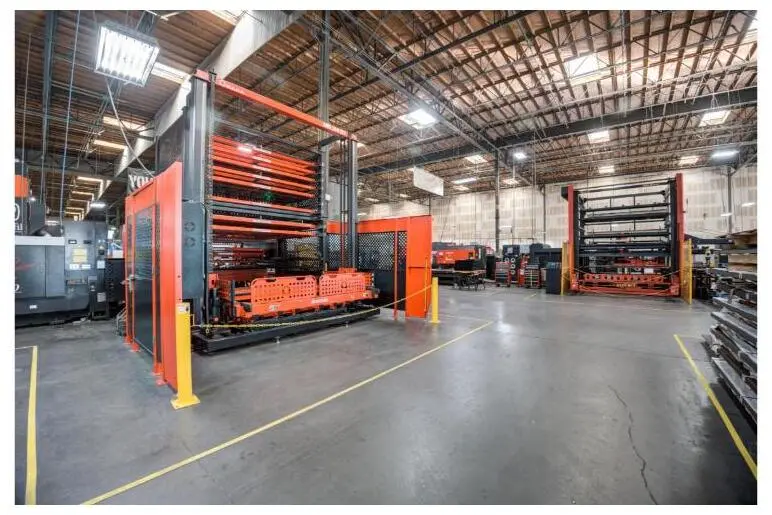
First Article Inspection confirms that the production-intent process can produce parts that meet every print requirement. A First Article Inspection per AS9102 provides complete verification that a part produced by the intended production process meets every print requirement. The standard structures FAI documentation across three forms: Form 1 for part-number accountability, Form 2 for material and process certifications and Form 3 for characteristic accountability with ballooned dimensions.
A compliant AS9102 FAI follows a defined sequence that ties directly into the traceability records described earlier. The typical process includes:
-
Balloon all dimensions and notes on the engineering drawing to create a characteristic index.
-
Complete Form 1 to document part number, revision level, drawing number and manufacturing source.
-
Complete Form 2 to record material certifications, special process approvals and COCs linked to the production lot.
-
Measure every ballooned characteristic and record actual values on Form 3, including key characteristics flagged by the customer.
-
Document functional test results and gage calibration status for all measurement equipment used.
-
Submit the FAI package for customer review and retain records in the quality management system for the program lifecycle.
FAI connects the documented process, material genealogy and inspection results into one package. That package proves that the controlled workflow governed by AS9100D can repeatably produce conforming parts.
ITAR Compliance in AS9100D Sheet Metal Fabrication
The International Traffic in Arms Regulations (ITAR) govern the export and transfer of defense-related technical data, hardware and services. For AS9100D sheet metal fabrication serving aerospace and defense programs, ITAR registration with the U.S. Department of State becomes a baseline requirement when controlled articles or technical data are involved.
ITAR obligations shape how an AS9100D fabricator manages information and suppliers. Key compliance obligations include:
-
Restricting access to controlled technical data, including drawings, specifications and process instructions, to U.S. persons only unless an export license is obtained
-
Maintaining documented access controls for digital and physical records containing ITAR-controlled information
-
Flowing ITAR requirements down to any sub-tier suppliers handling controlled materials or processes
-
Retaining transaction records for the period required by regulation
U.S.-based fabrication under a single accountable partner simplifies ITAR compliance by eliminating cross-border data transfers and reducing the number of entities with access to controlled technical information. Buyers should verify that a sheet metal fabricator holds current AS9100D and ITAR registrations whose scope covers the specific work being placed. That verification ensures alignment between quality requirements and export-control obligations.
How AS9100D Shapes the Entire Production Workflow
AS9100D governs the full production workflow, not only the fabrication cell. Core controls in an aerospace quality management system span document control, configuration management, traceability and records management across materials, components, processes and inspection results. That scope covers every stage from RFQ through final assembly.
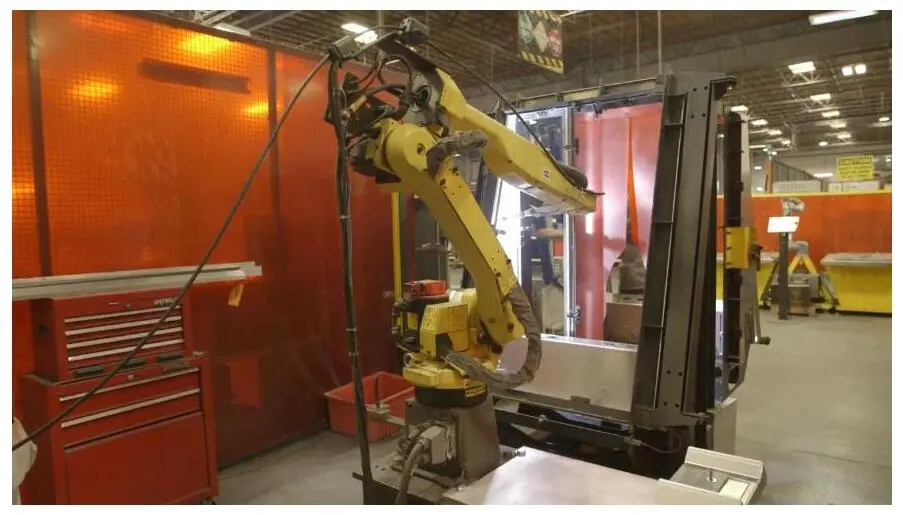
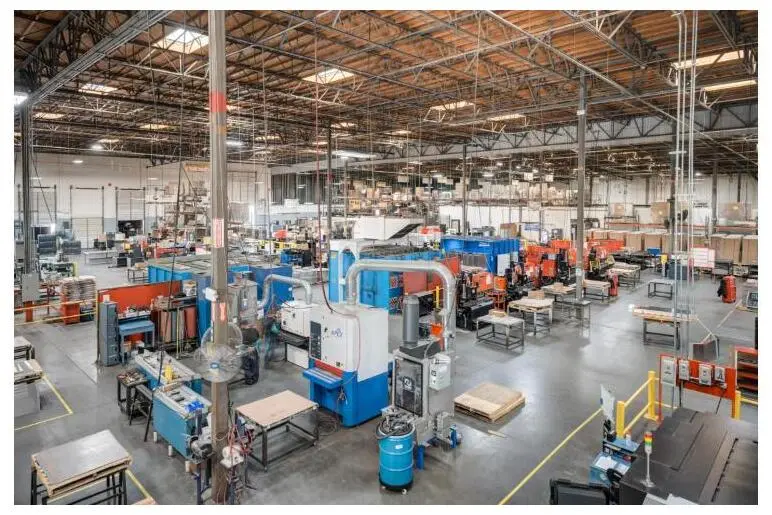
At Fabcon, the AS9100D quality system governs each phase of the workflow in a connected way. Early stages focus on manufacturability and configuration control, while later stages focus on process discipline and complete documentation.
-
RFQ and DFM: Engineering and quoting teams review drawings and tolerances before production begins, identifying manufacturability issues early to reduce rework and cost.
-
Prototyping: Parts run on production-intent materials and routing so FAI data reflects the actual process.
-
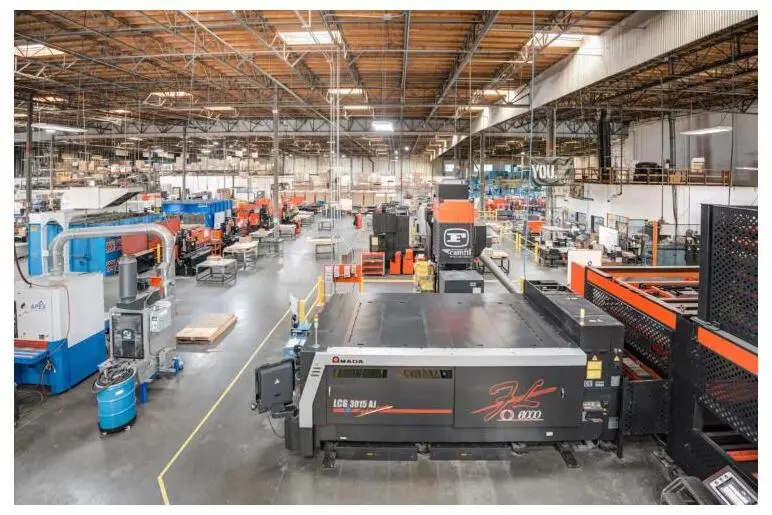
Fabrication: Laser cutting, CNC punching, forming and certified welding operate under controlled work instructions with full traveler traceability.
-
Finishing: In-house powder coat, wet paint, CARC military-grade finishing and mil-spec coatings are documented as special processes with qualification records.
-
Light electromechanical assembly: Hardware insertion, wiring and component integration run under the same quality system, which reduces handoff risk between a fabricator and a separate assembler.
This end-to-end approach ties traceability, FAI and ITAR controls into one quality framework that supports aerospace and defense programs from first article through production.
Evaluating AS9100D-Certified Sheet Metal Partners
Procurement and engineering stakeholders face a fragmented supplier landscape where certification alone does not predict program success. An OEM buyer framework assigns the highest weights to quality, engineering and DFM support and delivery reliability when evaluating sheet metal fabrication partners, providing a structured way to assess capability beyond credentials.
Effective partner evaluation focuses on how a supplier executes work within the AS9100D framework. Key evaluation criteria for AS9100D-certified fabrication partners include:
-
Certification scope: Confirm that AS9100D registration covers the specific processes and product types being sourced, not just a subset of operations.
-
Vertical integration: Keeping core processes under one roof removes handoff points that cause delays and quality gaps.
-
Prototype-to-production continuity: A supplier’s ability to handle prototype-to-production continuity using the same facility, processes and team minimizes fit and quality problems that arise when switching suppliers between phases.
-
ITAR registration: Required for programs involving controlled technical data or defense articles.
-
DFM collaboration: Suppliers that review drawings and flag manufacturability issues before quoting support stronger program execution.
-
Production flexibility: Mid-volume aerospace programs benefit from a partner that can scale without the high minimums and rigid onboarding of large contract manufacturers.
-
Total cost of ownership: Total landed cost including rejects, rework, delays, supplier management effort and freight is a more reliable decision criterion than unit price alone.
The reshoring trend reinforces these criteria. Many global businesses are adopting reshoring strategies to optimize, diversify and politically de-risk supply chains amid geopolitical uncertainty and tariff volatility. 51% of executives identify managing and mitigating risks and geopolitical uncertainties as a top supply chain transformation objective over the next one to three years, driven by the desire for greater operational control. A U.S.-based, vertically integrated AS9100D partner directly addresses those drivers.
Frequently Asked Questions
Does AS9100D certification cost more than standard ISO 9001 fabrication?
AS9100D-certified fabrication carries additional overhead, including audits, documentation, traceability systems and process controls that a basic ISO 9001 or uncertified shop does not maintain. This overhead increases unit price, but unit price does not reflect the full economic impact. The relevant comparison is total cost of ownership, which includes the hidden costs of fragmented supply chains such as rework, quality escapes, vendor coordination delays and compliance risk that accumulate over a program’s life. A single AS9100D-certified partner that manages fabrication, finishing and assembly under one roof reduces those downstream costs and simplifies the audit burden for the OEM.
Can a mid-volume aerospace program scale from prototype to production with the same partner?
Prototype-to-production continuity represents a major risk factor in aerospace program management. When a supplier changes between prototype and production phases, fit issues, process deviations and FAI discrepancies often appear. Fabcon’s agile production cells support mid-volume programs that evolve over time. The same facility, processes and engineering team support the program from first article through production runs, which maintains configuration control and traceability continuity without re-sourcing.
What are the limitations of using a job shop or large contract manufacturer for AS9100D sheet metal fabrication?
Job shops typically operate as build-to-print-only vendors. They lack the engineering depth for DFM collaboration and cannot manage downstream processes like finishing, wiring or electromechanical assembly. This structure forces OEMs to manage multiple vendors for a single finished assembly, multiplying the handoff risk discussed earlier. Large contract manufacturers offer scale but impose high minimum volumes, long onboarding timelines and limited flexibility for high-mix or evolving BOMs. Fabcon occupies the middle ground, combining integrated capabilities similar to a large contract manufacturer with the responsiveness and program agility that mid-volume aerospace programs require.
What traceability documentation should an OEM expect from an AS9100D-certified fabricator?
An AS9100D-certified fabricator should provide material certifications, including certificates of conformance and mill test reports linked to specific work orders and serial numbers. Documentation should also include AS9102 FAI packages with ballooned drawings and characteristic accountability, in-process and final inspection records, special process qualification documentation and nonconformance and corrective action records. These records must be retained for the period specified by the customer or applicable regulation and must be retrievable for audit at any point in the program lifecycle.
How does ITAR registration interact with AS9100D certification for sheet metal programs?
AS9100D and ITAR function as separate but complementary requirements. AS9100D governs the quality management system, including traceability, configuration control, risk management and supplier oversight. ITAR governs the export and transfer of defense-related technical data and hardware. A fabricator can hold AS9100D certification without ITAR registration, but programs involving controlled defense articles or technical data require both. Fabcon holds AS9100D certification and is ITAR registered, which provides a single accountable U.S. partner for programs that carry both quality and export-control obligations.
When an Integrated AS9100D-Certified U.S. Partner Fits Best
Aerospace and defense programs with mid-volume production requirements, evolving BOMs and strict traceability obligations often struggle with either end of the current supplier landscape. Job shops cannot deliver the engineering collaboration, finishing or assembly integration that complex programs require. Large contract manufacturers impose structural rigidity that conflicts with the pace of infrastructure-driven development programs.
The case for a vertically integrated U.S. partner connects directly to the risk-management priorities driving supply chain transformation. A partner that combines AS9100D certification, ITAR registration and integrated fabrication, finishing and assembly helps reduce geopolitical exposure, coordination overhead and quality risk.
Fabcon’s 220,000 square feet of vertically integrated U.S. manufacturing space, AS9100D and ITAR registrations and 45-plus years of precision fabrication experience position the company to serve aerospace and defense OEMs that need certified quality, full traceability and end-to-end execution without the constraints of a rigid large contract manufacturer.
Review current and upcoming aerospace or defense programs and identify where an integrated AS9100D-certified U.S. partner could consolidate suppliers, strengthen traceability and support long-term risk reduction.