
Last updated: August 17, 2026
Key takeaways for aerospace sheet metal buyers
- Aerospace sheet metal programs carry structural risk from fragmented supply chains, multiple vendor handoffs and compliance gaps that extend lead times and increase quality escapes.
- Integrated U.S. partners bring engineering, fabrication, finishing and light electromechanical assembly under a single AS9100D and ITAR-registered quality system, which reduces configuration drift and vendor count.
- Procurement and engineering teams should verify certification scope, traceability depth, change-control maturity and in-house finishing or assembly before awarding work to protect regulatory and program compliance.
- Flexible production cells that support prototype through mid-volume without high minimums or re-qualification support high-mix, evolving-BOM aerospace programs.
- Contact Fabcon to consolidate aerospace sheet metal work under one accountable U.S. partner and reduce program execution risk.
The problem: fragmented vendors and rising compliance pressure
Aerospace procurement teams often manage separate vendors for raw material, fabrication, finishing and assembly. Each handoff creates a compliance gap, a scheduling dependency and a point of quality ambiguity. Disruptions in supply chains, geopolitical tensions or trade restrictions can hinder material availability and directly affect manufacturing timelines, which compounds the risk already embedded in fragmented vendor structures.
Ongoing aerospace and defense vendor consolidation, driven by active private-equity roll-up platforms completing multiple aerospace-specific transactions between 2024 and 2026, is reducing the number of independent options available to mid-volume sheet metal buyers. As independent shops join platforms, supply chain managers face fewer responsive, mid-tier alternatives.
The consequences remain concrete. Configuration control in aerospace manufacturing requires enforcing the correct revision of work instructions, drawings and specifications at the point of execution to prevent configuration drift that can lead to rework, audit findings or customer escapes. When multiple vendors each manage separate revision records, configuration drift becomes a structural risk rather than an isolated incident.
In July 2026, Airbus and Boeing chartered the Antonov An-124 to airlift aerostructure assemblies, which exposed thin buffer stocks and ongoing supply-chain fragility that threaten production ramp-ups for both manufacturers. The lesson for mid-volume buyers is clear: supply chain fragility at the prime level amplifies risk at every tier below it.
Integrated U.S. fabrication and assembly as the structural solution
These structural risks point to a single direction: consolidation of the supply chain under one accountable partner. An integrated U.S. precision fabrication and assembly partner brings engineering collaboration, in-house fabrication, finishing and light electromechanical assembly under one quality system and one purchase order. This model supports prototype through mid-volume production without forcing buyers to re-qualify vendors as programs scale.
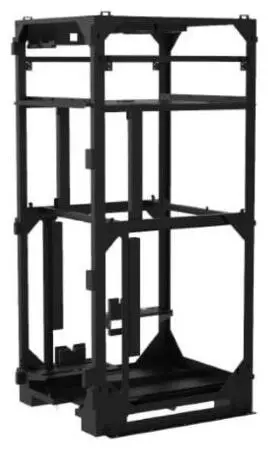
Consider a representative aerospace enclosure program. A program manager needs a structural chassis with powder coat, hardware insertion and wiring integration. Under a fragmented model, that work flows through a fabricator, a coating shop and an assembly house, which creates three schedules, three quality records and three points of accountability. Under an integrated model, the same scope moves through a single facility with unified change control, one FAI package and one delivery record. Integrated assemblies enable real-time management of design revisions under one roof, which prevents a separate supplier from continuing to produce outdated components while the design advances to the next revision.
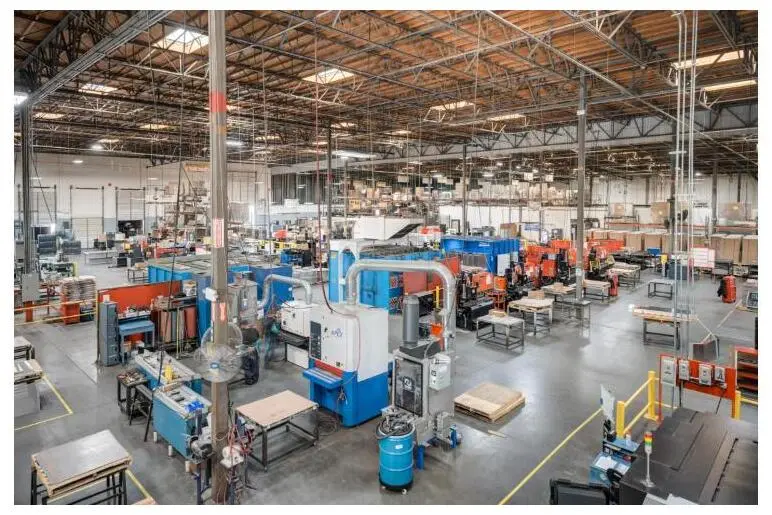
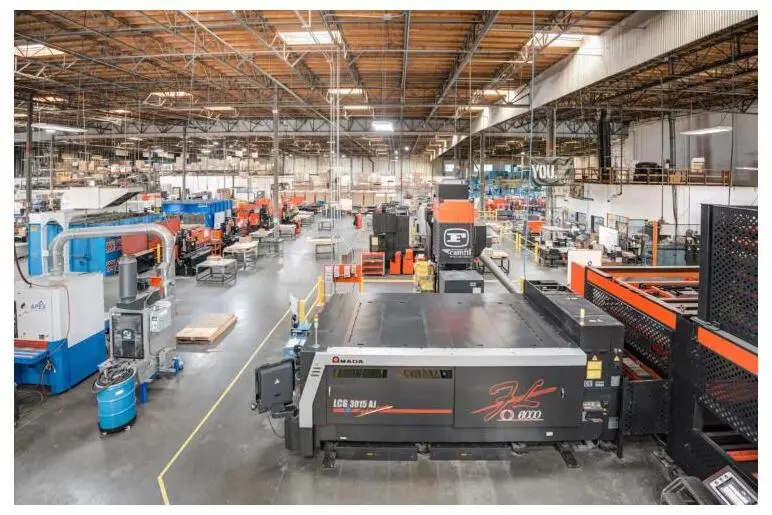
Fabcon operates from 220,000 square feet of vertically integrated manufacturing space across two U.S. facilities. Operations combine laser cutting, CNC punching, forming, welding, CNC machining, in-house finishing and light electromechanical assembly under AS9100D and ITAR registration. Programs move from prototype to production without changing partners or re-establishing quality flow-downs.
Discuss aerospace sheet metal requirements with Fabcon’s engineering team.
Evidence signals that confirm aerospace readiness
Procurement and engineering teams should verify specific evidence signals before awarding aerospace sheet metal work. These signals fall into three groups: regulatory compliance, operational maturity and performance history.
Regulatory compliance comes first. AS9100D certification verifiable in the IAQG OASIS database. AS9100 certification must be issued by a UKAS-accredited certification body recognized under the IAQG/OASIS scheme, and certificate status must be verifiable in the OASIS database for prime contractor acceptance. ITAR registration. Many aerospace and defense programs require suppliers to maintain ITAR compliance to ensure adherence to U.S. regulations governing defense-related products and controlled technical information.
Operational maturity follows. Full material and process traceability. AS9100D expects every component to be traceable from delivery back to the raw material batch, process records and inspection certificates at batch level. Documented change-control procedures. The 9100 series covers program planning, configuration and change management, supplier quality, production assurance, nonconformance and audit and improvement.
Performance history completes the picture. Consistent on-time delivery metrics should be supported by internal production records and customer references that match aerospace expectations.
Pain point 1: early DFM alignment to cut rework
Design-for-manufacturability collaboration before production begins acts as a structural differentiator, not a simple value-add. DFM reduces cost by minimizing unnecessary tolerances, simplifying geometry, reducing setups, improving material selection, lowering labor costs, reducing material waste and shortening machining time.
Buyers evaluating a partner’s DFM capability should focus on specific behaviors during qualification.
- The engineering team reviews drawings before quoting, not only after award.
- Tolerance callouts receive review for functional necessity rather than blanket acceptance as drawn.
- The partner generates manufacturing routers and work instructions from DFM output.
- DFM feedback is documented and traceable to the engineering revision record.
Fabcon’s in-house engineering and quoting teams collaborate with customer technical teams before production begins. They review drawings, tolerances and materials, then create manufacturing routers tuned for the production floor.
Pain point 2: removing vendor handoffs with integrated finishing and assembly
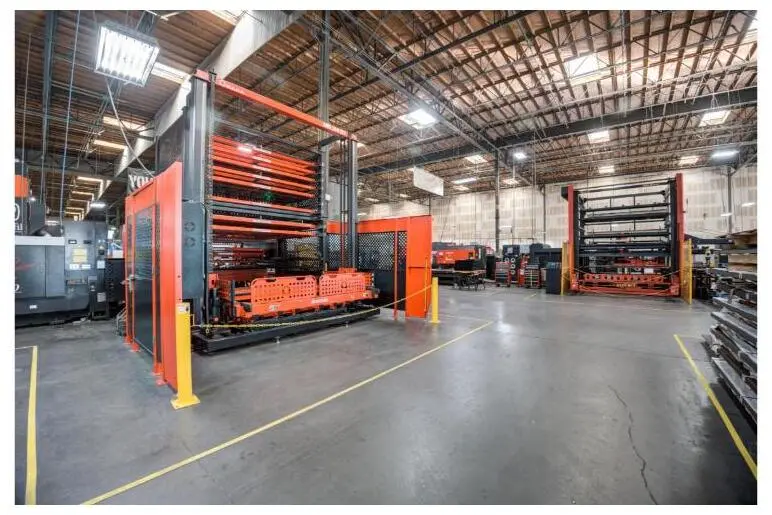
Buyers should evaluate integration depth by confirming that key capabilities exist within a single facility.
- In-house finishing such as powder coat, wet paint and mil-spec or CARC coatings where required
- Hardware insertion and mechanical assembly
- Light electromechanical assembly including wiring and component integration
- Unified quality records spanning fabrication through final assembly
Pain point 3: quality and traceability that stand up to audits
The configuration control requirements described earlier extend into full product genealogy. AS9100 places significant emphasis on process control, risk management, traceability, configuration management and documented evidence, and requires suppliers to provide auditable proof of how product conformance was achieved rather than only demonstrating the conformance itself.
IAQG guidance identifies Clause 8 (Operation) as the clause generating the highest volume of findings in AS9100 surveillance audits due to the complexity of aerospace production controls including FAI packages, configuration records and supplier qualification. Partners with mature Clause 8 controls reduce audit risk for the programs they support.
Fabcon’s AS9100D-certified quality system governs every stage of the build. Integrated QA spans fabrication, finishing and assembly to support traceability requirements across aerospace and defense programs.
Review Fabcon’s AS9100D audit history and traceability framework with internal quality teams.
Pain point 4: scalable production cells without rigid minimums
Large contract manufacturers often impose high minimum order quantities, long onboarding timelines and rigid production structures that do not support the high-mix, evolving-BOM programs common in aerospace and defense. Low-complexity job shops lack the infrastructure to scale at all. Neither model serves mid-volume aerospace programs effectively.
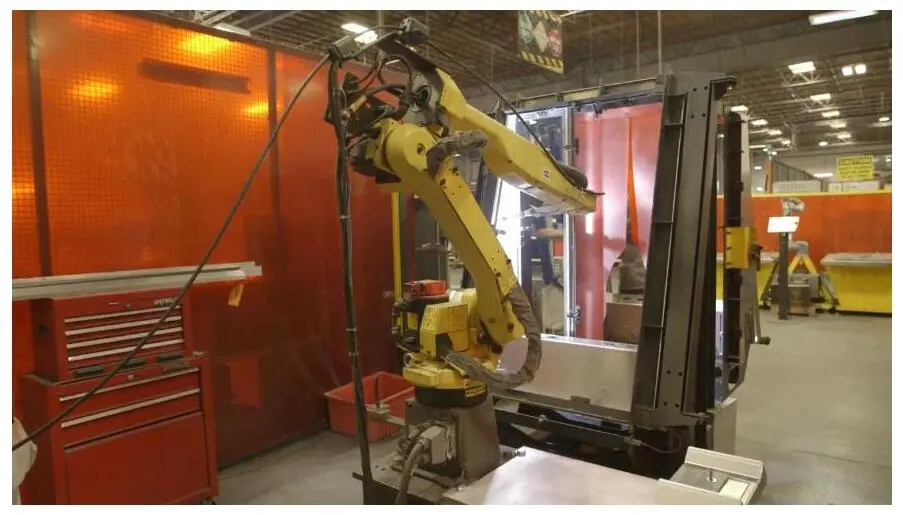
Flexible production cells configured for specific program requirements and reconfigurable as volumes or SKUs change address this gap. Building a new facility and obtaining AS9100 certification can take years, while partnering with an already-certified manufacturer provides immediate access to certified aerospace and defense production capacity.
Buyers evaluating scalability should confirm several points before award.
- The partner supports prototype, low-volume and mid-volume runs within the same quality system.
- Production cells can handle BOM changes without full re-qualification.
- Onboarding timelines are defined and documented rather than open-ended.
- The partner has demonstrated scaling on comparable aerospace programs.
How provider types compare for mid-volume aerospace work
Three provider types serve the aerospace sheet metal market, and each carries structural characteristics that determine fit for mid-volume, compliance-intensive programs.
Low-complexity job shops operate as transactional, build-to-print vendors. They handle basic sheet metal geometries but lack engineering depth for DFM, cannot manage finishing or electromechanical assembly in-house and do not maintain AS9100D certification. Buyers that use job shops must manage separate vendors for every downstream process.
Mid-tier fabricators offer broader capability than job shops and may hold AS9100D certification. Their scale and vertical integration vary. Some provide finishing and assembly, while others stop at fabricated parts. Buyers must evaluate each mid-tier partner individually against the full scope of program requirements.
Large and global contract manufacturers provide scale and infrastructure but often impose high minimums, long onboarding cycles and rigid production structures. They are tuned for high-volume, stable-BOM programs and often misalign with the prototype-through-mid-volume agility that aerospace development and production programs require.
Fabcon occupies the integrated mid-tier position. The company is AS9100D and ITAR registered, vertically integrated across fabrication, finishing and assembly, and purpose-built for mid-volume programs that require responsiveness and compliance depth at the same time.
Due-diligence checklist for aerospace sheet metal partners
The following checklist supports structured evaluation of U.S. aerospace sheet metal fabrication partners during source selection. Items 1 through 3 function as mandatory qualifiers. Any partner that cannot meet these requirements should exit consideration. Items 4 through 8 act as differentiators that help rank qualified candidates.
Mandatory qualifiers:
- Certification scope: Verify AS9100D certification in the IAQG OASIS database and confirm ITAR registration is current. Confirm the certificate covers the manufacturing site, not only a parent entity.
- Process maturity: Review Clause 8 audit history. Request evidence of FAI packages, configuration records and supplier qualification procedures.
- Traceability depth: Confirm the partner can provide lot, serial and genealogy traceability from raw material through final assembly for every deliverable.
Differentiators among qualified partners:
- Sample-part evaluation: Request a first article inspection report on a representative part. Evaluate dimensional results, material certifications and process documentation completeness.
- Change-control documentation: Request a sample engineering change order to confirm revision control is documented and enforced at the point of execution.
- Integration breadth: Confirm finishing and assembly capabilities exist in-house rather than through subcontractors to preserve single-source accountability.
- Scaling evidence: Request references from programs that moved from prototype to production with the same partner and quality system.
- Site audit: Conduct or schedule a facility audit before award. Evaluate production cell configuration, quality lab capability and records management systems.
Frequently asked questions about Fabcon and integrated partners
Is an integrated U.S. fabricator more expensive than separate vendors?
Total cost of ownership provides the relevant metric, not unit price. Fragmented vendor models generate costs that do not appear on individual purchase orders, including coordination overhead, handoff delays, rework from configuration drift and quality escapes that reach the customer. An integrated partner with AS9100D-certified quality systems and in-house finishing and assembly can reduce these downstream costs. Fabcon is positioned to reduce total program cost by limiting delays, quality issues and vendor complexity.
Can a mid-tier fabricator handle the volume requirements of a growing aerospace program?
Fabcon’s agile production cells are designed to scale with program demand without the high minimums or rigid onboarding common at large contract manufacturers. Programs that begin at prototype quantities can move to mid-volume production within the same facility and under the same quality system without re-qualification. The 220,000-square-foot manufacturing footprint across two U.S. locations supports capacity growth as program requirements evolve.
What happens to existing supplier relationships during consolidation?
Vendor consolidation does not require removal of all existing suppliers at once. Most programs transition incrementally and start with the scope where fragmentation creates the most risk, often finishing and assembly coordination. Fabcon’s engineering team works with customer procurement and engineering leads during onboarding to map current supplier scope against in-house capabilities and define a consolidation sequence that reduces risk without disrupting active production.
How does ITAR registration affect program onboarding and data handling?
ITAR registration means Fabcon operates under U.S. Department of State regulations that govern defense-related products and controlled technical information. For aerospace and defense customers, this means technical data, drawings and program information shared during quoting and production stay within a compliant framework. Buyers should confirm that any fabrication partner’s ITAR registration is current and that the partner maintains documented procedures for controlling access to export-controlled information throughout the program lifecycle.
What materials does Fabcon support for aerospace sheet metal programs?
Aerospace sheet metal programs use a range of materials selected for strength-to-weight performance, corrosion resistance and temperature requirements. Fabcon works with materials and processes that meet the durability and reliability expectations of aerospace and defense programs. Material selection receives review during DFM collaboration to balance performance with manufacturability.
Conclusion: choosing a U.S. partner for mission-critical sheet metal
Supply chain fragmentation, compliance pressure and mid-volume scaling challenges create structural risk in aerospace sheet metal programs. The integrated U.S. precision fabrication and assembly model addresses these pressures by consolidating engineering collaboration, certified fabrication, in-house finishing and light electromechanical assembly under a single AS9100D and ITAR-registered quality system.
Buyers that apply the due-diligence criteria above, including verification of certification scope, traceability depth, change-control maturity and integration breadth, can identify partners that reduce vendor count and execution risk across the full program lifecycle.
Fabcon has supported precision fabrication and assembly programs since 1977. Operations span 220,000 square feet of vertically integrated U.S. manufacturing space with AS9100D certification, ITAR registration and in-house capabilities across fabrication, finishing and electromechanical assembly.
Connect with Fabcon’s engineering and production team to review aerospace sheet metal program needs.