
Key Takeaways
- Precision laser cutting holds tolerances of ±0.001″ without heat-affected zones, ideal for PCBs, sensors, and electronics enclosures.
- US-based services like Fabcon support ITAR compliance, rapid iteration, and avoid supply chain risks tied to overseas vendors.
- Fabcon’s vertical integration combines laser cutting, CNC machining, DFM, and assembly in 220,000 sq ft facilities for complete electronics builds.
- Typical costs range from $0.50 to $2.00 per inch with no tooling fees, often delivering 20-30% savings for low-to-mid volume runs.
- Choose Fabcon for reliable US precision fabrication backed by ISO certifications and fast prototyping.
How Precision Laser Cutting Supports Electronics Manufacturing
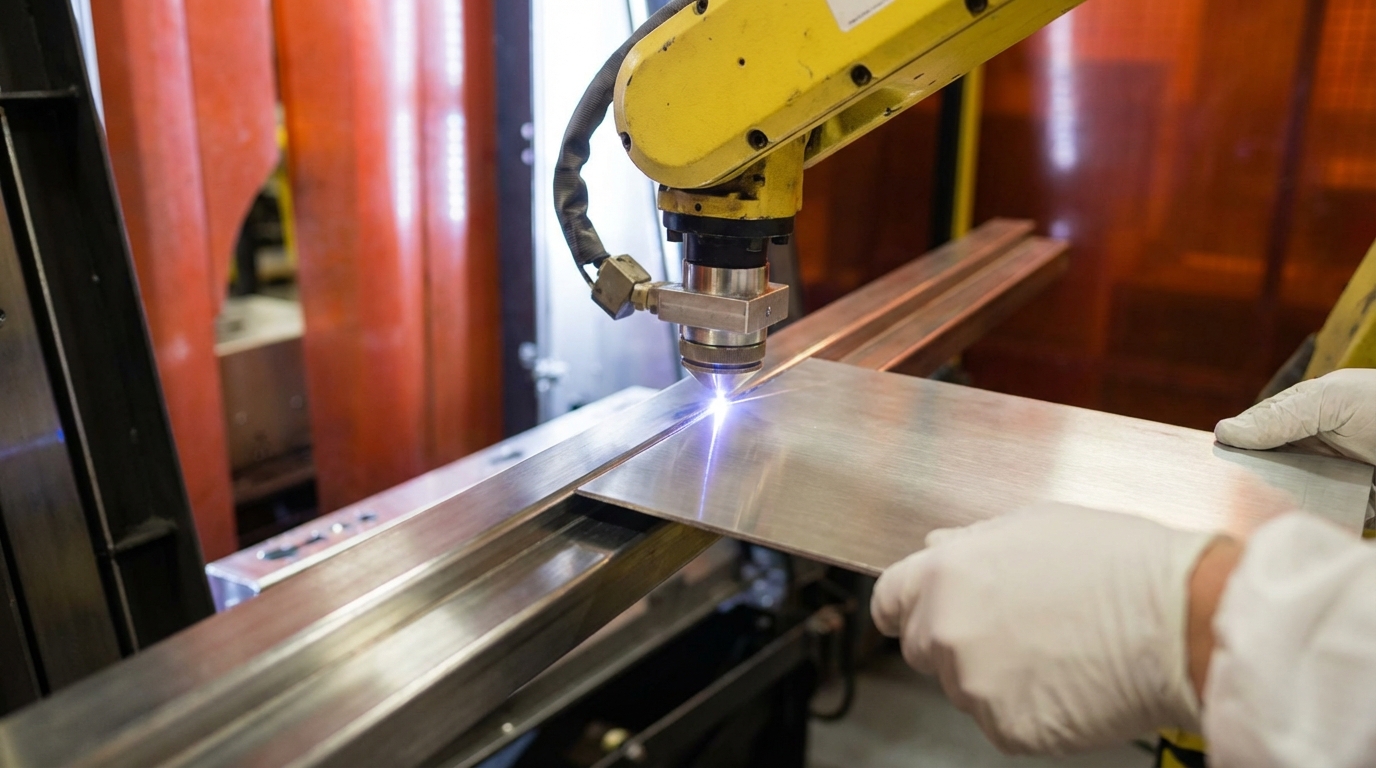
Precision laser cutting for electronics uses high-powered fiber, ultrafast, or specialized wavelength lasers to hit micron-level accuracy of ±0.001″ to ±0.025 mm on electronic components without tooling or heat-affected zones. Integration of AI in laser cutting process control enables real-time adjustments and advanced capabilities like bevel cutting, reducing part cycle times by more than 25%. The technology delivers kerf widths under 0.005″ for thin sheet applications such as chassis slots, sensor mounting brackets, and PCB enclosures. GZTECH launched solid-state ultrafast lasers (femtosecond) in 2025, advancing from nanosecond to picosecond to femtosecond for high stability, long lifespan, and multi-wavelength in micro/nano processing of electronics components.
Laser Precision Requirements in Electronics
Precision laser cutting for electronics routinely achieves tolerances of ±0.001″ with zero thermal damage to sensitive materials. Modern laser systems achieve tight tolerances of ±0.025 mm on various materials, and fiber lasers achieve tolerances as low as ±0.001 inches for metals. These capabilities support miniaturized components and dense electronics packaging.
Common Materials for Electronics Laser Cutting
|
Material |
Advantages |
Challenges |
Fabcon Capability |
|
Stainless Steel |
Durable, conductive |
Oxidation risk |
Precision fabrication |
|
Aluminum |
Lightweight |
Reflective properties |
Precision fabrication |
|
Plastics |
Insulating properties |
Melting concerns |
Precision fabrication |
|
Ceramics |
Heat-resistant |
Brittle nature |
Precision fabrication |
|
Copper |
High conductivity |
Spatter issues |
Precision fabrication |
See Fabcon’s precision specifications for your electronics project requirements.
Why Electronics Teams Choose US-Based Fabcon
US-based precision laser cutting gives electronics teams proximity, faster iteration, ITAR compliance, and tighter supply chain control compared with overseas options that add IP theft risk and shipping delays. US export controls and Chinese mineral restrictions introduced supply chain fragmentation in semiconductors, compounding constraints with December 2024 HBM export controls to China, which accelerate reshoring trends. Fabcon’s 45+ years of experience, ISO 9001:2015 and AS9100D certifications, and 220,000 square feet of integrated facilities support laser cutting combined with CNC machining, DFM engineering, and electromechanical assembly for complete rack enclosures with wiring harnesses.
This vertical integration removes the vendor handoffs that limit A-Laser’s cutting-only model and supports mid-volume production agility without the rigidity of large contract manufacturers. Riverside Manufacturing’s integration of advanced electronics assembly, including PCB fabrication and metal fabrication, enabled a throughput increase from 100,000 to over 300,000 components per hour. Fabcon follows a similar integrated approach for electronics customers.
Request Fabcon’s DFM review to refine your electronics design for efficient manufacturing.
Fabcon Electronics Applications and Capabilities
Fabcon’s precision sheet metal fabrication, including laser cutting, supports critical electronics applications across multiple industries. Typical projects include PCB enclosures with integrated mounting features, sensor housings requiring environmental sealing, and data center rack systems with cable management. Fabcon also builds EV power component chassis with thermal management, telecom equipment enclosures with EMI shielding, medical device frames that support regulatory compliance, and custom kiosks with integrated wiring harnesses.
The fabrication process, combined with integrated assembly capabilities, supports complete cabinet builds that include hardware insertion and wiring integration for clients like Jabil and Teladoc. This approach shortens lead times and simplifies supplier management for engineering teams.
|
Performance Metric |
Fabcon Achievement |
Industry Standard |
|
Tolerance |
Tight tolerances |
±0.005″ |
|
Heat-Affected Zone |
Minimized |
0.1-0.5 mm |
|
Prototype Lead Time |
Fast turnaround |
3-4 weeks |
Explore Fabcon’s electronics case studies showcasing integrated manufacturing solutions.
Precision Laser Cutting Cost Guide for Electronics
Precision laser cutting for electronics typically costs between $0.50 and $2.00 per linear inch, depending on material type, thickness, and production volume. Material type affects costs significantly, with stainless steel and aluminum requiring inert gas assistance, while copper and brass need advanced optics due to reflectivity. Laser cutting removes tooling costs completely and often delivers 20-30% savings compared with stamping or punching for low-to-medium volume electronics production.
Key cost drivers include laser power requirements from 1 to 4 kW, assist gas consumption, and material handling complexity. Part nesting efficiency and design simplicity also influence the final price per part.
|
Component Type |
Material/Thickness |
Volume |
Cost per Inch |
|
PCB Enclosure |
Aluminum/0.030″ |
100 pieces |
$0.75 |
|
Sensor Housing |
Stainless Steel/0.020″ |
500 pieces |
$1.20 |
|
EV Component |
Copper/0.010″ |
1,000 pieces |
$1.80 |
Fabcon’s transparent quoting process and vertical integration reduce total cost by eliminating vendor handoffs and cutting project management overhead.
Get your custom Fabcon quote with a detailed cost breakdown and delivery timeline.
Fabcon vs. A-Laser and Typical Job Shops
Fabcon’s vertically integrated approach outperforms competitors like A-Laser by offering comprehensive manufacturing capabilities that extend well beyond basic laser cutting. Electronics teams gain a single partner for cutting, machining, finishing, and assembly.
|
Capability |
Fabcon |
A-Laser |
Typical Job Shops |
|
Service Integration |
Laser + DFM + CNC + Assembly |
Cutting-only |
Basic fabrication |
|
Volume Capability |
Prototype to mid-volume |
Limited scaling |
Low volume only |
|
Tolerance Achievement |
Tight tolerances |
±0.002″ |
±0.005″ |
|
On-Time Delivery |
High reliability |
95% |
Variable |
Fabcon’s fast prototype lead times and full traceability through ISO 9001:2015 and AS9100D certifications provide supply chain reliability that single-service providers cannot match.
Electronics Laser Cutting FAQs
What precision tolerances can laser cutting achieve for electronics components?
Fabcon achieves tight tolerances for electronics components through advanced precision sheet metal fabrication with full traceability documentation. Modern fiber laser systems can reach tolerances as tight as ±0.025 mm on various materials, and specialized UV lasers can reach ±0.0005″ for miniaturized electronics parts. Material thickness, laser power stability, and CNC motion control precision all influence the final tolerance.
What does laser cutting cost for electronics components?
Laser cutting for electronics components usually ranges from $0.50 to $2.00 per linear inch, depending on material, thickness, and production volume. Fabcon offers volume discounts for mid-volume production runs and removes tooling costs entirely. Total project cost often comes in lower than traditional methods because of reduced secondary operations, minimal scrap, and faster delivery.
What are the best US laser cutting services for PCBs near me?
Fabcon operates Southern California facilities that provide integrated laser cutting, CNC machining, and electromechanical assembly for PCB-related components. Unlike competitors that focus only on cutting, Fabcon delivers complete enclosure solutions with wiring integration and hardware insertion, which creates a comprehensive alternative to fragmented suppliers like A-Laser.
What alternatives exist to A-Laser for electronics manufacturing?
Fabcon serves as a strong alternative to A-Laser by combining precision laser cutting with DFM engineering, CNC machining, and electromechanical assembly under one roof. While A-Laser focuses exclusively on cutting services, Fabcon delivers complete system integration that includes powder coating, hardware insertion, and wiring harnesses for ready-to-deploy electronics assemblies.
How does Design for Manufacturability work with laser cutting?
DFM collaboration improves part designs before production begins and reduces material waste, secondary operations, and risk at scale. Fabcon’s engineering team reviews drawings early in the design cycle and recommends feature changes, material choices, and tolerance adjustments that improve quality and cost while preserving functional requirements.
Conclusion and Next Steps with Fabcon
Fabcon removes common electronics manufacturing pain points through US-based precision sheet metal fabrication, including laser cutting, combined with DFM, CNC machining, and electromechanical assembly. The company’s 220,000 square feet of Southern California facilities, ISO certifications, and 45+ years of experience provide supply chain reliability that fragmented vendors cannot match. Key advantages include tight tolerances, minimized heat-affected zones, fast prototype delivery, and full system integration from PCB enclosures to complete rack assemblies with wiring harnesses.
Electronics teams benefit from suppliers that hold tight tolerances, support integrated DFM and assembly services, and maintain ISO 9001:2015 and AS9100D certifications. Fabcon meets all these requirements while maintaining the agility and responsiveness that large contract manufacturers often lack.
Partner with Fabcon today and upload your drawings for instant fabrication analysis and a comprehensive manufacturing evaluation.