
Last updated: March 9, 2026
Key Takeaways for Faster CNC Lead Times
- Complex assembly manufacturers face 12-18 month equipment delays in 2026, which can double or quadruple CNC lead times through vendor handoffs and coordination issues.
- Early DFM collaboration, smart fixturing, and multi-axis machining can cut lead times by 30-50% by reducing setups and cycle times.
- Vertical integration removes supply chain fragmentation and enables parallel processing, delivering assemblies up to 62% faster, as shown in EV chassis projects.
- Automation, AI toolpaths, and predictive maintenance keep throughput consistent and prevent downtime in high-mix CNC production.
- Partner with Fabcon’s vertically integrated facilities to reduce CNC lead times across fabrication, machining, and assembly.
Core Concepts That Drive CNC Setup and Cycle Time Reductions
Lead time reduction starts with clear definitions of setup time and cycle time. Setup time covers all non-cutting activities such as fixture changes, tool preparation, and part alignment. Cycle time covers the actual machining operations from the first cut to the final pass. Complex assemblies also introduce tolerance stack-up, where small dimensional variations across multiple components accumulate and create fit issues.
High-mix production with many SKUs and changing Bills of Materials (BOMs) works better in flexible manufacturing cells than in rigid production lines. Vertical integration brings fabrication, machining, and assembly into one facility, which removes handoff delays between separate suppliers. These fundamentals create a solid base for the systematic approach described in the next sections.
10 Proven Steps to Slash CNC Lead Times for Complex Assemblies
1. Early DFM Collaboration
Design parts so critical features are accessible from as few sides as possible. This approach reduces fixture changes and non-cutting time. Fabcon’s engineering team engages during the design phase to improve manufacturability and reduce rework through targeted design changes.
2. Smart Fixturing for Faster CNC Setups
Standardized workholding with quick change plates, subplates, and common zero points can cut setup time by up to 50%. Fabcon uses modular fixturing systems so teams can swap fixtures as complete units. This approach shortens alignment time and improves repeatability from run to run.
3. Tooling and Multi-Axis Machining Optimization
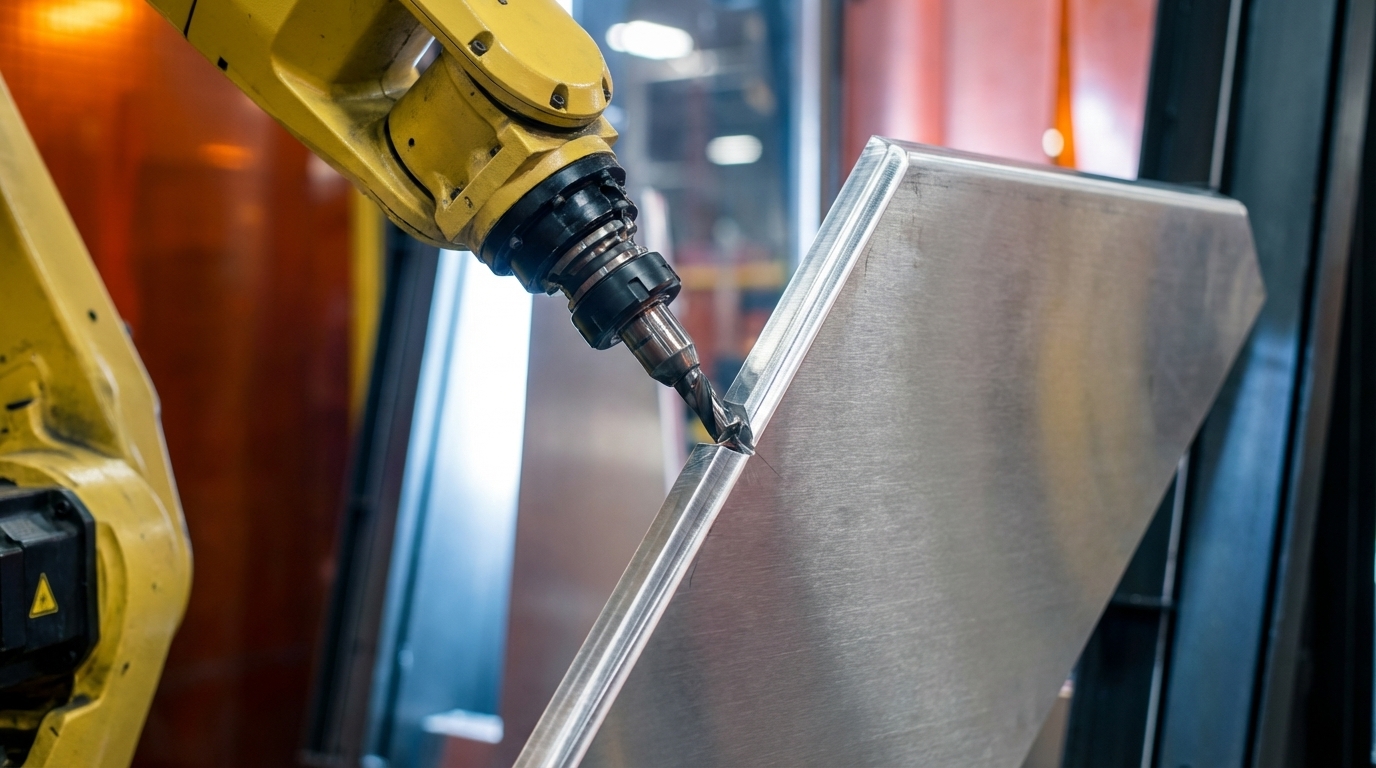
AI-powered toolpath optimization delivers about 15% faster cycle times while also reducing tool wear. Multi-axis machining completes complex geometries in fewer setups, which improves accuracy and boosts throughput.
|
Strategy |
Savings % |
Fabcon Proof |
Technology |
|
AI Toolpaths |
15% |
Cycle time reduction |
Real-time optimization |
|
5-Axis Machining |
40% |
Setup elimination |
Multi-axis capability |
|
Combination Tools |
25% |
Tool change reduction |
Integrated operations |
4. Parallel Processing and Smart Batching
Overlapping fabrication, CNC machining, and assembly compresses total lead time. Fabcon’s integrated workflow supports simultaneous processing across departments, which removes the sequential bottlenecks that often appear in fragmented supply chains.
5. Automation and Robotics for High-Mix CNC Production
CNC automation supports lights-out operation and reduces unplanned downtime for complex parts. Automated loading and inspection systems keep throughput steady during long production runs and overnight shifts.
Get a quote today to see how Fabcon’s automated systems can accelerate your complex assembly production schedule.
6. Predictive Maintenance Programs for CNC Uptime
AI-based monitoring tools flag potential equipment failures before they stop production. Planned preventive maintenance then keeps machines available and protects tight delivery commitments from surprise downtime.
7. Vendor Consolidation and Vertical Integration Gains
Vertical integration removes outsourcing delays and quality disputes by keeping the full production process in one organization. Fabcon shortens lead times by removing handoffs between separate fabrication, machining, and assembly vendors.
8. Practical Cycle Time Reduction Tactics
Combination tools remove many tool changes and can improve cycle time by 25-30%. Careful feed rate tuning and refined toolpaths further reduce machining time while still meeting quality and surface finish requirements.
9. Scaling Production with a Quality-First Mindset
ISO 9001:2015 and AS9100D certifications support consistent quality as volumes increase. Integrated quality systems catch issues early and prevent rework that would otherwise extend lead times and raise total cost.
10. Agile Logistics and Just-in-Time Delivery
Streamlined fulfillment and disciplined inventory management support just-in-time delivery programs. Fabcon’s logistics integration helps finished assemblies ship on schedule and align with customer production plans.
DFM Checklists and EV Chassis Case Study
Process Failure Mode and Effects Analysis (PFMEA) highlights potential assembly issues before production starts. Early DFM feedback improves manufacturability and reduces secondary machining and lead times through coordinated operations.
EV chassis enclosure projects show how this works in practice. Traditional multi-vendor models required about 8 weeks from raw material to finished assembly. Fabcon’s integrated process delivers the same specifications in about 3 weeks. This 62% reduction comes from removing handoff delays, aligning schedules under one plan, and assigning single-point accountability.
Contact Fabcon for a free DFM review and uncover specific lead time reduction opportunities in your complex assemblies.
Common CNC Pitfalls in Complex Assemblies and How Fabcon Solves Them
Late design changes create some of the largest lead time disruptions in complex assembly programs. Tolerance stack-up between components often appears during final assembly and can trigger expensive rework. Fabcon’s in-house CNC and assembly teams support rapid iteration and fit checks, which prevents the downstream delays that often affect multi-vendor projects.
Communication gaps between fabrication and assembly teams also cause specification errors and missed expectations. Integrated operations at Fabcon remove these issues through unified project management, shared data, and common quality systems.
Get a quote to experience complex assembly production without vendor coordination headaches.
How to Track CNC Lead Time Improvements
Tracking a few key metrics shows whether lead time reduction efforts are working. On-time delivery (OTD), first-pass yield, and lead time variance provide a clear picture of performance. Fabcon supports full transparency and accountability across the manufacturing process so teams can see progress and refine plans.
2026 CNC Technologies That Cut Cycle Times
Digital twins simulate entire machining processes before the first part runs. Pairing these simulations with AI optimization makes CNC performance more predictable and repeatable. These technologies help manufacturers maintain a competitive edge in complex assembly production.
Frequently Asked Questions
How does vertical integration reduce CNC lead times for complex assemblies?
Vertical integration reduces CNC lead times by removing handoff delays between separate vendors and centralizing fabrication, machining, and assembly. Fabcon shortens lead times by eliminating coordination bottlenecks, shipping delays, and quality disputes that often appear in multi-vendor setups. Single-point accountability also speeds decisions and problem resolution.
Can Fabcon handle CNC threads and complex geometric features for assemblies?
Yes. Fabcon’s in-house CNC machining capabilities support precision components with tight tolerances for fabricated assemblies. The team regularly machines complex features for enclosures, racks, and chassis. In-house engineering support also refines designs for both manufacturability and assembly fit.
What cost implications come with lead time reduction strategies?
Lead time reduction strategies may require higher upfront tooling or fixturing investments. Total program costs usually decrease over time through lower expediting fees, reduced inventory carrying costs, and less rework. Fabcon’s integrated approach often delivers cost-neutral or cost-positive results while still improving lead times through better operations.
How do regulatory requirements affect CNC lead times for complex assemblies?
ISO 9001:2015 and AS9100D requirements add structured quality checkpoints, yet they prevent expensive rework and scrap. Fabcon’s certified quality systems streamline compliance documentation and maintain traceability across production. Proactive quality management then reduces total lead time by avoiding downstream issues.
What timeline should we expect when switching to an integrated CNC and assembly supplier?
Initial qualification and setup usually take 2-4 weeks, depending on part complexity and documentation needs. Ongoing production benefits start with the first order after this phase. Fabcon’s transition team focuses on minimizing disruption while building workflows that deliver long-term lead time improvements.
Master CNC Lead Times with Fabcon as Your Partner
The 10 steps in this guide form a practical framework for reducing CNC machining lead times in complex assembly programs. Fabcon’s vertically integrated capabilities, advanced manufacturing technologies, and more than 45 years of precision manufacturing experience make the company a strong US-based partner for teams that need reliable lead time reductions without sacrificing quality.
Get a quote at fabcon.com and start transforming your complex assembly lead times today.