
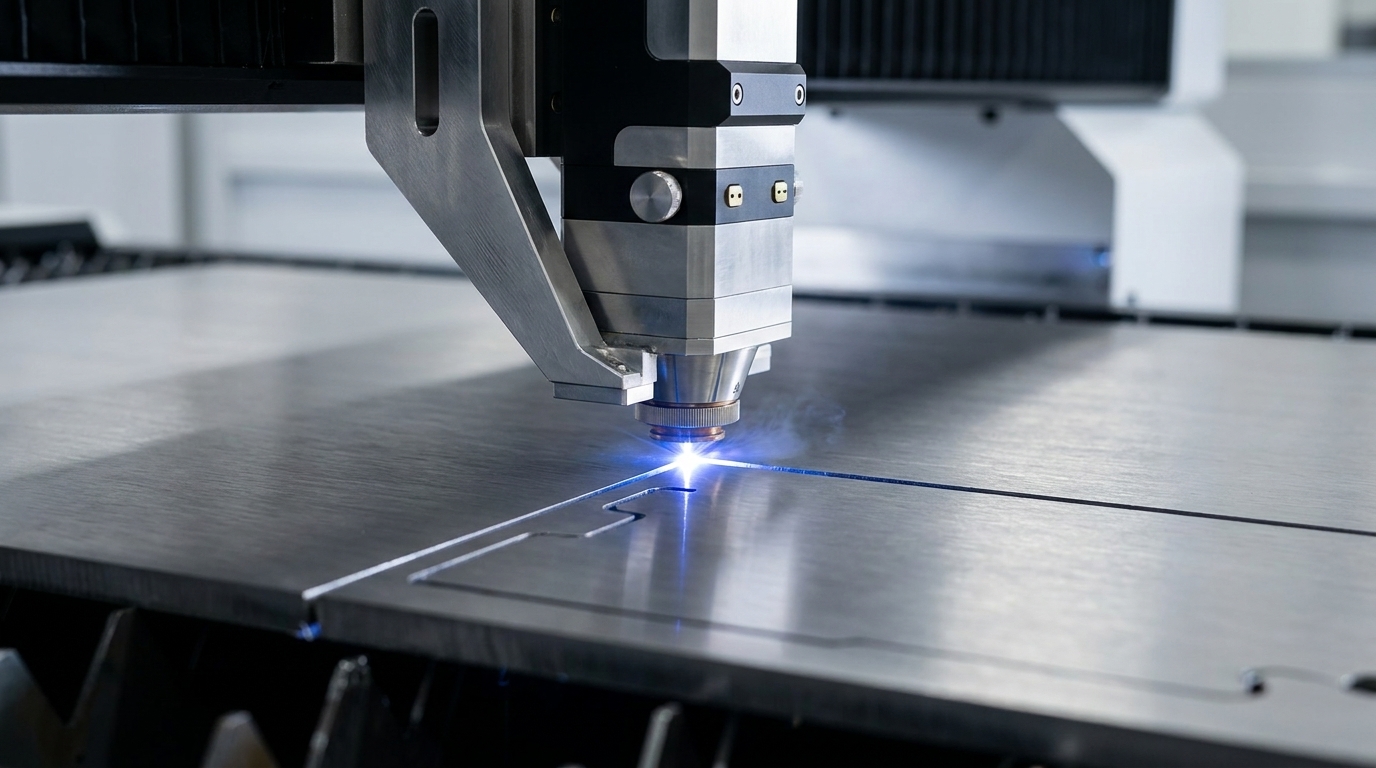
High Precision Laser Cutting: Key Takeaways for Procurement Teams
- High precision laser cutting services reduce supply chain fragmentation through integrated fabrication, finishing and assembly in a single operation.
- Advanced fiber and CO2 lasers hold tight tolerances on metals, plastics and composites for data center, medical device and energy storage programs.
- Core capabilities include ISO 9001 and AS9100D certifications, design-for-manufacturability collaboration and US-based production that lowers risk.
- Fabcon scales from prototypes to production without rigid minimums, which removes vendor handoffs and recurring quality issues.
- Procurement and engineering teams partner with Fabcon for high precision laser cutting services to streamline manufacturing and request a quote.
How High Precision Laser Cutting Supports Complex Programs
High precision laser cutting services hold tight tolerances using fiber lasers that deliver clean, repeatable cuts on sheet metals and other materials. Focused laser beams vaporize or melt material along programmed paths that follow the CAD model. These controlled paths create accurate geometries for prototype runs and ongoing production volumes.
Modern fiber laser systems excel at cutting metals, while CO2 lasers handle thicker materials and nonmetals. This combination supports chassis fabrication, enclosure manufacturing and precision brackets across data centers, medical devices, energy storage and transportation infrastructure. Growing demand from automotive electrification and aerospace precision requirements continues to expand the global fiber laser cutting machine market.
Capabilities That Distinguish High Precision Laser Cutting Partners
Meeting these demanding applications requires capabilities that extend beyond basic cutting services. Leading high precision laser cutting providers build systems that address supply chain fragmentation and quality consistency challenges that procurement teams face. These capabilities directly support reliable launches and stable production.
- Tolerance Achievement: Modern fiber lasers maintain tight tolerances on thin metals, which supports precise mechanical and electromechanical assemblies.
- Material Versatility: Processing across stainless steel, aluminum, carbon steel and specialized alloys with consistent edge quality supports diverse product lines.
- Quality Certifications: ISO 9001:2015 and AS9100D compliance provide traceability and process control for regulated and mission-critical applications.
- Design Collaboration: Early design-for-manufacturability input reduces rework and improves production efficiency across the product lifecycle.
- Integrated Operations: Combined fabrication, finishing and light assembly capabilities reduce vendor handoffs and related delays.
- US-Based Reliability: Domestic manufacturing lowers supply chain risk compared with overseas sourcing and long logistics chains.
These capabilities address core challenges facing procurement teams that manage precision metal fabrication programs. Without quality consistency and delivery reliability, small fabrication delays or dimensional variations can cascade into missed product launch windows.
Common Pitfalls with Transactional Shops and the Integrated Alternative
Traditional laser cutting approaches create operational friction for growing companies. Basic job shops often provide build-to-print services without assembly capabilities, which forces coordination with separate vendors for coating, hardware insertion and final integration. This fragmented model increases quality issues when components from different suppliers fail to align during assembly.
Large contract manufacturers create a different set of constraints. Rigid minimum volumes, extended onboarding timelines and inflexible production systems struggle to support evolving bills of materials. These constraints hit technology-driven industries hardest, because product configurations change frequently during development and early release cycles.
Fabcon closes these gaps through integrated US facilities that span 220,000 square feet across Southern California. The company combines precision laser cutting with CNC machining, powder coating and electromechanical assembly in one coordinated operation. This structure enables single purchase order simplicity and supports agile scaling from prototypes to production without the overhead burden common at large contract manufacturers.
Why Fabcon Leads Complex High Precision Laser Cutting Programs
Fabcon brings more than 45 years of precision metal fabrication experience to high precision laser cutting programs that require end-to-end support. The company maintains ISO 9001:2015, AS9100D and ITAR certifications, which align quality systems with aerospace and defense standards while serving commercial infrastructure markets.
Key differentiators include:
- Early DFM Collaboration: Engineering teams engage during design phases to improve manufacturability and reduce downstream rework.
- Agile Production Cells: Flexible manufacturing systems scale from prototype quantities to mid-volume production without rigid minimums.
- Integrated Capabilities: Laser cutting, CNC machining, welding, powder coating and light assembly reduce vendor coordination and handoff risk.
- Quality Traceability: Documentation and testing protocols support regulatory compliance in medical and aerospace applications.
Recent customer programs highlight the value of this integrated approach. A data center infrastructure company consolidated five separate vendors into a single Fabcon partnership, which reduced lead times and improved dimensional consistency across rack-mounted enclosures. A medical device manufacturer removed assembly alignment issues by using Fabcon’s combined laser cutting and precision machining capabilities for surgical cart components.
Get a quote for high precision laser cutting services that pair fabrication expertise with coordinated assembly support.
Industry Use Cases and a Practical Buyer Framework
High precision laser cutting services support critical applications across infrastructure-intensive industries. Data center operators depend on rack systems and enclosures with precise mounting tolerances that protect cooling performance and cable management. Medical device manufacturers require surgical carts and diagnostic equipment housings that meet FDA traceability expectations. Energy storage companies need weatherproof enclosures for commercial battery deployments, and transportation infrastructure projects rely on precision brackets and structural components.
Given these demanding applications, procurement teams benefit from a structured evaluation framework. When evaluating high precision laser cutting providers, teams can prioritize these decision criteria:
- Integration Depth: Capabilities that span fabrication through final assembly and reduce vendor count.
- Quality Certifications: ISO 9001, AS9100D and relevant industry compliance for regulated markets.
- Scaling Flexibility: Support for prototype runs through mid-volume production without disruptive transitions.
- US Manufacturing Footprint: Domestic facilities that reduce supply chain and logistics risk.
Frequently Asked Questions
What tolerances do high precision laser cutting services offer?
High precision laser cutting services hold tight tolerances suitable for complex assemblies. Fiber lasers excel at thin metal cutting with clean edges. Modern systems maintain consistent dimensional accuracy across production runs when supported by robust quality processes.
Which companies provide leading high precision laser cutting services in the United States?
Leading United States providers combine precision cutting capabilities with integrated operations, quality certifications and design collaboration. Companies such as Fabcon distinguish themselves through end-to-end manufacturing capabilities, ISO 9001 and AS9100D certifications and domestic facilities that reduce supply chain complexity. Strong providers also offer early design-for-manufacturability input and scale from prototypes to production volumes.
How can companies reduce supply chain fragmentation in precision fabrication?
Supply chain fragmentation occurs when organizations manage separate vendors for cutting, finishing and assembly operations. A practical solution involves partnering with integrated manufacturers that provide multiple capabilities in one coordinated operation. This structure reduces vendor coordination, shortens handoff delays and improves quality consistency through unified process control.
What differentiates high precision services from basic job shops?
Basic job shops often provide build-to-print laser cutting without finishing, assembly or design collaboration. High precision services deliver integrated manufacturing that includes powder coating, hardware insertion and light electromechanical assembly. These providers also contribute design-for-manufacturability input during development and maintain quality certifications that support regulated industries.
How do companies scale from prototypes to production with laser cutting?
Successful scaling relies on partners with flexible production systems that adapt to changing volumes without rigid minimums or lengthy setups. Agile manufacturing cells support rapid transitions from prototype quantities to mid-volume production while holding consistent quality and lead times. Integrated capabilities ensure that prototype designs move into production without disruptive vendor changes.
Conclusion: Building Stable Programs with Integrated Laser Cutting
Fragmented supply chains and design-for-manufacturability gaps continue to challenge organizations that depend on high precision laser cutting services. Fabcon’s integrated approach consolidates fabrication, finishing and assembly operations, which supports the reliability and agility that technology-driven industries require. Get a quote for high precision laser cutting services today and experience the advantages of a coordinated end-to-end manufacturing partnership.