

Last updated: August 24, 2026
Key Takeaways
- AS9100D certification defines a supplier’s quality management system, not the performance of any specific enclosure.
- AS9100D becomes mandatory through contract flow-down. Procurement teams must confirm the revision in the PO matches the supplier’s certificate.
- Traceability gaps, counterfeit-part exposure and configuration management failures are the most common sourcing mistakes that trigger audit findings.
- A seven-step sourcing checklist aligned to AS9100 Rev D clauses 8–10 helps procurement teams qualify suppliers and prepare for audits.
- Partnering with a vertically integrated, AS9100D-certified U.S. manufacturer like Fabcon eliminates hand-offs, strengthens traceability and reduces program risk.
How AS9100D Applies to Electronic Enclosures
AS9100D is the current revision of the aerospace QMS standard. It supersedes earlier versions, aligns with ISO 9001:2015’s high-level structure and adds aerospace-specific requirements including operational risk management, counterfeit-parts prevention, configuration management and external-provider control. When a supplier holds AS9100D certification, auditors have evaluated the QMS against those requirements. The certificate does not prove that every enclosure shipped meets a specific performance threshold.
When AS9100D Becomes Mandatory for Enclosures
AS9100D is a voluntary standard until a contract makes it mandatory. Contract flow-down from primes and Tier 1 integrators often requires AS9100D compliance in purchase orders and supplier qualification criteria. Legacy contracts may still reference older revisions, so procurement teams should verify that the specific revision cited in the contract matches the supplier’s current certificate.
Contractual pressure aligns with a strong business case. Aviation supply chain challenges were projected to cost the airline industry more than $11 billion in 2025, and a 2026 Roland Berger survey of 95 aerospace companies found that quality concerns linked to shortages of experienced personnel and delays in testing and finishing services remain widespread across the sector. Sourcing from a certified partner reduces exposure to those systemic risks.
Frequent AS9100D Pitfalls in Enclosure Sourcing
Three failure modes appear repeatedly in aerospace enclosure programs.
- Traceability gaps. AS9100 Rev D requires lot and serial number tracking linked to materials, processes, inspections and test results. Fragmented supply chains, where raw material, fabrication, finishing and assembly move between separate vendors, create documentation breaks that auditors flag.
- Counterfeit-part exposure. AS9100 Rev D requires an explicit counterfeit-part prevention process covering detection, prevention and response, with greater scrutiny on parts purchased from brokers or non-OEM sources. Buyers that do not verify supplier purchasing controls inherit this risk.
- Configuration management failures. AS9100 Rev D strengthens configuration management expectations by linking configuration baselines, changes and delivered product across the full lifecycle. Engineering change notices that do not propagate through ERP, MES and QMS systems simultaneously create mismatches between what was designed and what was built.
These three failure modes, traceability gaps, counterfeit-part exposure and configuration management failures, sit at the top of most audit checklists. Effective audit preparation builds supplier qualification and oversight processes that prevent these issues before production begins.
Preparing for an AS9100 Audit When Buying Enclosures
Audit preparation starts at supplier selection, not 30 days before the auditor arrives. Loss of AS9100 certification results in removal from the OASIS database, making the supplier invisible to procurement teams sourcing components. A failed stage 2 audit can delay certificate issuance and increase the risk of lost contracts.
The seven-step checklist below maps directly to AS9100 Rev D clauses 8 through 10, the operational planning, performance evaluation and improvement sections where most audit findings originate.
Seven-Step Sourcing Checklist for AS9100D Enclosures
- Define scope and customer-specific requirements (Clause 8.1). Document all contractual quality requirements, including AS9100D revision, ITAR status and any customer-specific supplements, before issuing an RFQ.
- Apply risk-based thinking to supplier selection (Clause 8.1.1). AS9100 Rev D embeds risk-based thinking throughout planning, operational control and change management. Score suppliers on single-source exposure, geographic concentration and process capability before award.
- Verify traceability controls (Clause 8.5.2). Verify the supplier’s certification status and scope through the IAQG OASIS database rather than relying solely on a certificate provided by the supplier. Request sample traveler packages showing lot traceability from raw material through final inspection.
- Require First Article Inspection per AS9102 (Clause 8.5.1). A complete aerospace documentation package commonly includes AS9102 FAI reports, ballooned drawings, dimensional inspection records, material certificates and certificates of conformance. Confirm the FAI scope covers all drawing characteristics.
- Confirm MIL-STD-810 and EMC compatibility (Clause 8.3). AS9100 certification does not by itself prove that an enclosure meets environmental or EMC performance targets such as those in MIL-STD-810 or MIL-STD-461. Request the specific test methods and tailoring applied and verify they match the operational environment. Enclosure seams, removable covers, coatings and gasket compression must be considered together as a system property, with mechanical drawings defining bonding surfaces and finish requirements.
- Conduct DFM collaboration before drawing release (Clause 8.3.3). Changes made before tooling release cost less than modifications made after. Engage the supplier’s engineering team on tolerance stack-up, bend radii, hardware insertion and secondary operations during the design phase.
- Establish supplier oversight and flow-down (Clause 8.4). AS9100 Rev D requires flowdown of requirements to sub-tier suppliers with performance monitoring and risk-based controls. Confirm the supplier monitors its own sub-tier processors, including any special-process providers, and that certifications flow through to the final documentation package.
Scorecard: Evidence to Request for Key Checklist Steps
The supplier-evaluation scorecard turns the checklist into concrete document requests. Each paragraph below links a checklist focus area to specific records that demonstrate compliance.
AS9100 Rev D Clause 8.4 covers external provider control. Effective control prevents unmonitored sub-tiers from introducing traceability gaps and counterfeit-part exposure. Buyers should confirm that the supplier monitors sub-tier processors and flows down requirements. Evidence to request includes the approved supplier list, sub-tier audit records and special-process certifications, which show that sub-tier risk is actively managed.
AS9100 Rev D Clause 8.5.2 covers identification and traceability. Strong traceability allows auditors to follow each enclosure from raw material to shipment. Buyers should confirm that the supplier can produce a complete traveler for representative parts. Evidence to request includes sample travelers, lot records, certificates of conformance and material certificates. Auditors examine these records first, and gaps often trigger major findings.
AS9100 Rev D Clause 8.5.1 covers first article inspection. Robust FAIs validate that production processes can meet drawing requirements before full release. Buyers should confirm that the FAI is performed to AS9102 and covers all drawing characteristics. Evidence to request includes the AS9102 FAI report, ballooned drawing and dimensional data. FAI must be repeated after engineering changes, process changes or prolonged production interruptions.
AS9100 Rev D Clause 8.3 covers design and development. Early DFM reviews reduce rework and schedule risk by catching manufacturability issues before release. Buyers should confirm that the supplier conducts DFM reviews before drawing release. Evidence to request includes DFM review records, tolerance analysis and engineering change logs that show how feedback translated into controlled changes.
AS9100 Rev D Clause 8.1.1 covers risk-based thinking. Documented risk analysis shows how the supplier anticipates and controls production and supply risk. Buyers should confirm how the supplier identifies and mitigates those risks. Evidence to request includes FMEAs, control plans and risk registers, which should show identified risks and the controls assigned to each.
How Vertical Integration Supports AS9100D Compliance
Step 7 of the checklist focuses on supplier oversight and flow-down to sub-tier providers. The most direct way to reduce sub-tier risk involves sourcing from a vertically integrated partner that controls fabrication, finishing and assembly within one certified system.
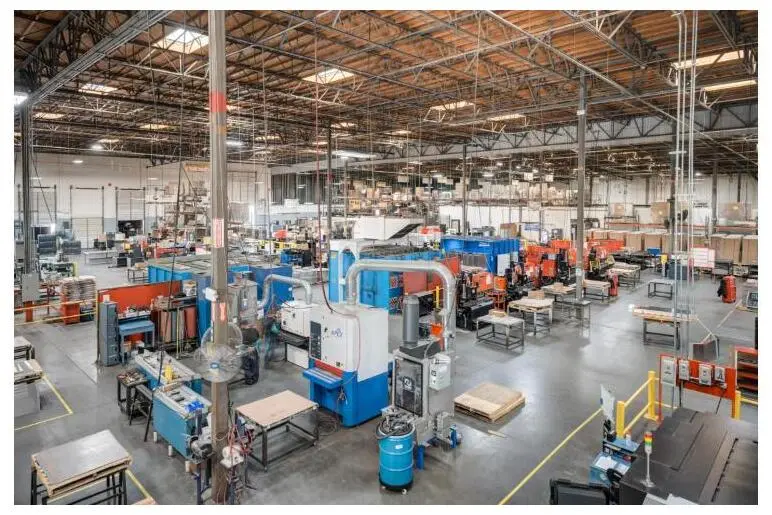
Fragmented supply chains create vendor hand-offs between fabrication, finishing and assembly shops. Each hand-off becomes a traceability event, a schedule dependency and a potential quality escape. External failure costs in aerospace, including concessions, warranty work, chargebacks, penalties and liquidated damages, quantify how quality gaps in component sourcing propagate into program-level financial exposure.
A vertically integrated partner that controls fabrication, finishing and light electromechanical assembly under one AS9100D-certified roof removes many of those hand-offs. Configuration management, traceability records and DFM feedback loops operate within a single QMS instead of across disconnected vendor systems. Vertical integration under one roof enables a single DFM review to address the full process stack, which compresses program advancement time by eliminating separate vendor engagements and siloed tolerance discussions.
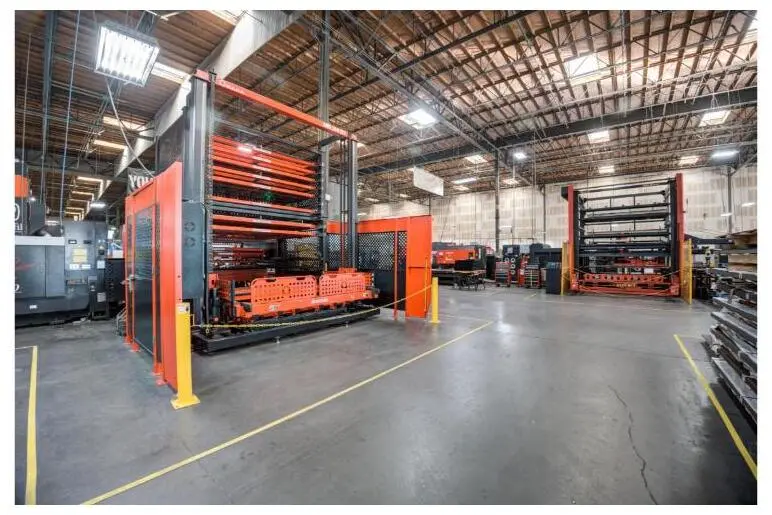
FABCON operates from 220,000 square feet of vertically integrated manufacturing space across two U.S. facilities. Fabrication, CNC machining, finishing, including CARC military-grade coatings, and light electromechanical assembly are all performed in-house under AS9100D and ITAR registration. One purchase order covers the full build.
Request a quote and start a supplier evaluation with FABCON.
AS9100D Enclosure Sourcing: Common Questions
How often are AS9100 surveillance audits conducted, and what triggers an unplanned audit?
AS9100D certification requires annual surveillance audits and a full recertification audit every three years. Unplanned or additional audits can be triggered by customer complaints, significant nonconformances, changes to the QMS scope or notification of a major process or facility change. Customers may also conduct their own audits independently of the certification body, particularly after a quality escape or when onboarding a new supplier. Maintaining current, objective evidence across all AS9100 clauses provides the most reliable way to reduce unplanned audit exposure.
What is the cost of poor quality in aerospace enclosure programs?
Cost of poor quality in aerospace falls into four categories. Internal failure costs include scrap, rework and MRB disposition. External failure costs include returns, concessions and customer chargebacks. Appraisal and containment costs cover inspection and sorting. Prevention investments fund systemic improvements. External failure costs often dominate because quality gaps in component sourcing propagate into program-level financial exposure and contractual liabilities. A failed surveillance audit can require a follow-up audit and remediation effort, and if certification is suspended, reinstatement requires a more comprehensive re-audit while production efficiency drops and delivery schedules slip.
How does AS9100D address counterfeit-part prevention for electronic enclosures?
AS9100 Rev D requires suppliers to maintain an explicit counterfeit-part prevention process that covers detection, prevention and response. This requirement includes documented controls in purchasing, receiving, verification and material control, with greater scrutiny on parts sourced from brokers or non-OEM channels. Buyers should request evidence of the supplier’s approved supplier list, receiving inspection procedures and any documented cases where suspect counterfeit material was identified and dispositioned. A vertically integrated supplier that controls its own material inputs reduces the number of external purchasing transactions where counterfeit risk enters the supply chain.
What does configuration management mean in practice for an enclosure program?
Configuration management under AS9100 Rev D means that every delivered enclosure can be traced back to the exact engineering definition, including drawing revision, material specification, approved manufacturing route and inspection method. When an engineering change is issued, the documentation package must be updated across ERP, MES, PLM and QMS systems simultaneously. Suppliers should be able to demonstrate that configuration status is accurate, controlled and demonstrable through records at any point in the product lifecycle. Buyers should request a sample engineering change log and verify that ECN approvals include impact assessments before production resumes.
When is a new First Article Inspection required after production begins?
An AS9102 First Article Inspection must be repeated or updated after engineering drawing changes, significant manufacturing process changes, introduction of new machines or tooling that affect product characteristics, changes to outside special-process suppliers, factory relocations or prolonged production interruptions. Buyers should include FAI re-trigger criteria in purchase order terms and confirm that the supplier’s QMS includes a documented process for identifying when a new FAI is required. Reliance on an FAI performed against an outdated drawing revision often appears as an audit finding.
Next Steps for AS9100D Enclosure Sourcing
The seven-step checklist above aligns with the AS9100 Rev D clauses auditors examine most closely. Teams can use it to evaluate current suppliers, structure RFQ requirements and build an internal qualification record before the next program review. Programs that cannot tolerate vendor hand-offs, traceability gaps or audit exposure benefit from a single accountable U.S. partner that controls the full build under one certified roof.
Request a quote from FABCON and put the checklist to work on a live program.