
Last updated: August 18, 2026
Key Takeaways for Mid-Volume Buyers
- Agile metal fabrication combines rapid prototyping, flexible production, advanced CNC and finishing, and end-to-end execution in one integrated operation to remove multi-vendor handoffs.
- Flexible production cells and vertical integration help mid-volume, high-mix programs adapt to changing SKUs, volumes and BOMs without high minimums or long lead times.
- Early DFM collaboration reduces late-stage rework, tooling complexity and engineering change events while building the traceability required for aerospace, defense and medical programs.
- One-stop electromechanical assembly and finishing under a single PO reduces cost, transit time and quality risk compared with routing work across multiple suppliers.
- Request a compliance-focused quote to evaluate an agile fabrication partner that meets ISO 9001:2015, AS9100D and ITAR requirements for the next program.
Agile Rapid Prototyping Workflows with Built-In Traceability
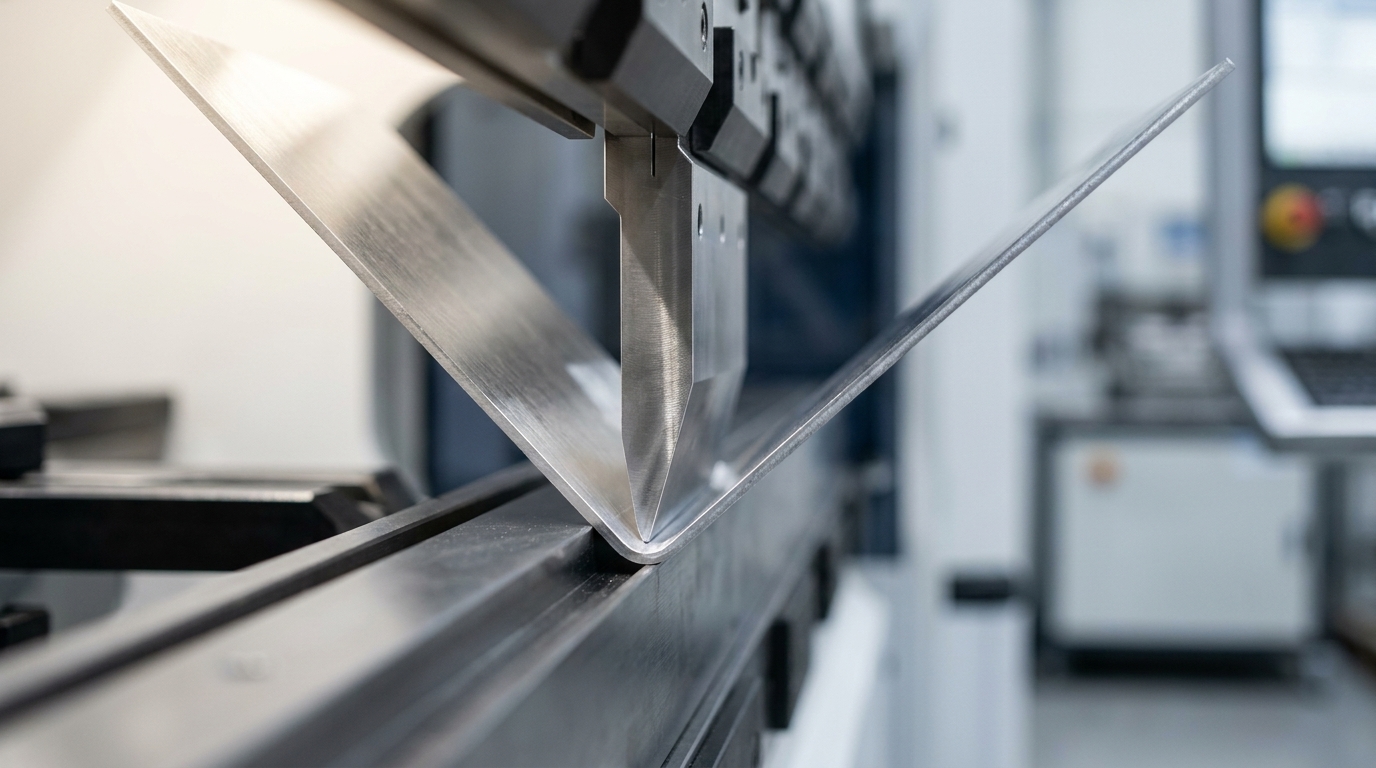
The design-to-manufacture disconnect remains a major cost driver in precision fabrication. When engineering teams finalize drawings without manufacturing input, late-stage rework and extended quoting cycles follow. Designs then struggle to scale without significant revision.
Agile rapid prototyping addresses this gap by embedding manufacturing feedback into the design phase. Early DFM collaboration aligns design intent, machining strategy, inspection requirements and production scalability from the start. This alignment reduces tooling complexity and cuts engineering change events before a program reaches production. The result is faster production readiness and more predictable lead times.
Aerospace and defense programs require full traceability across that process. Defense production needs a complete information model, including what was built, how it was built, which process parameters were used and what changed over time. Rapid prototyping workflows that integrate DFM from the first review create that documentation foundation. Procurement teams in aerospace and medical device programs then have the records needed to satisfy regulatory requirements throughout the program lifecycle. Once the design is validated, the next challenge becomes scaling that prototype into repeatable mid-volume production without losing flexibility.
Flexible Sheet Metal Production for Mid-Volume Programs
Scaling a high-mix program through a rigid contract manufacturing line creates a structural mismatch. Large contract manufacturers focus on high-volume, low-mix output. When SKUs change, volumes shift or BOMs evolve, rigid lines generate delays and cost overruns.
Flexible sheet metal production cells solve this issue by standardizing processes rather than products. This standardization enables lean manufacturing principles that reduce lead times by removing waste between operations. One key lean tool is SMED, which separates internal and external setup tasks to reduce changeover time and increase responsiveness for short-run fabrication.
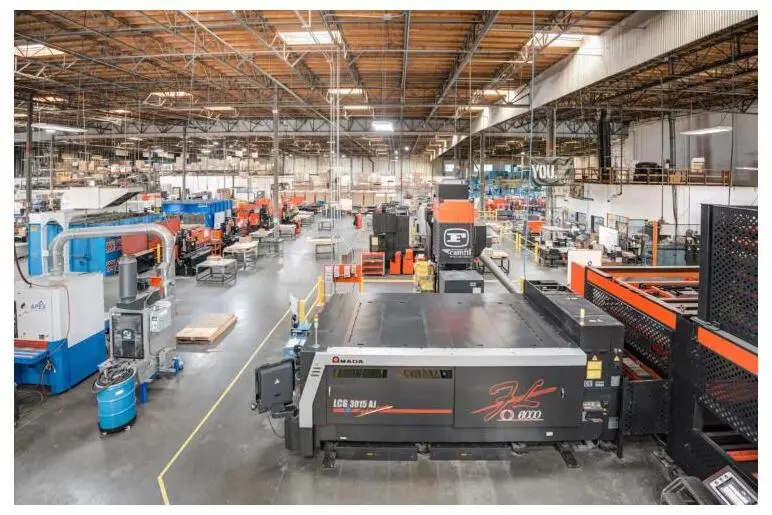
Vertical integration amplifies these gains. Vertically integrated shops that handle multiple processes in a single facility shave substantial time off process transfer compared with multi-vendor workflows that add days per handoff for shipping, handling and inspection. For mid-volume programs where schedule reliability directly affects product launches, eliminating those handoffs creates a measurable competitive advantage. But vertical integration must extend beyond fabrication processes alone to deliver the full value.
One-Stop Fabrication with Electromechanical Assembly
Many metal fabrication vendors stop at the sheet metal shell. Finishing, wiring, hardware insertion and light electromechanical assembly then route to separate suppliers, each adding a purchase order, a transit leg and a quality handoff point. Supply chain teams managing complex infrastructure programs see risk multiply at every junction.
A vertically integrated partner consolidates fabrication, powder coating, wet paint, mil-spec finishing, mechanical assembly and electromechanical integration under one roof. This consolidation means one PO covers the full build and removes the administrative overhead of managing multiple vendors. More importantly, one partner owns quality from raw material through final assembly, reducing the handoff points where defects often escape detection. Vertical integration in fabrication eliminates inter-process waste and can compress project lead times substantially.
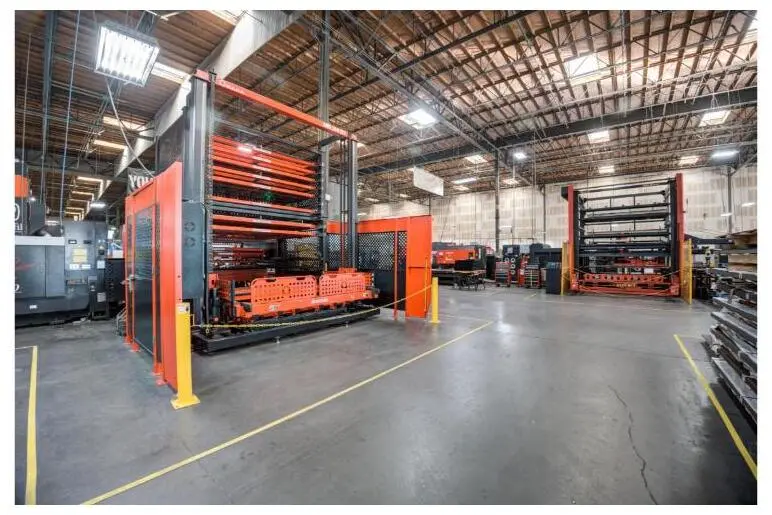
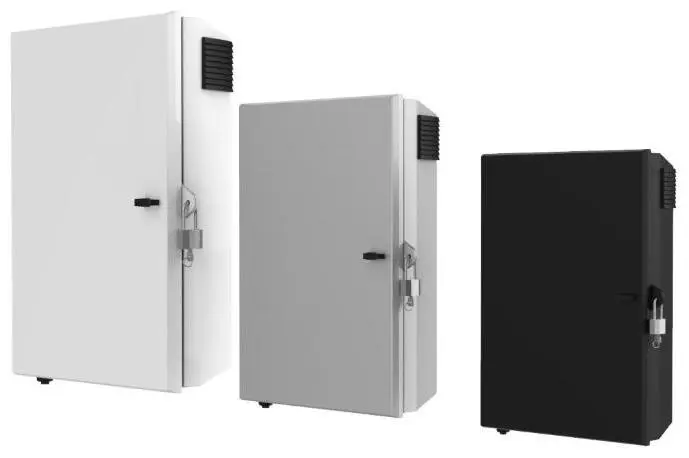
The value proposition shifts by industry. Data center programs benefit from modular enclosures and rack systems built and finished in a single facility, which simplifies integration for hyperscale and edge deployments. Energy storage programs require weatherproof enclosures with electromechanical integration, a combination that a basic fab shop cannot deliver. Traffic and transportation infrastructure programs demand compliance, consistency and durability across high-mix component sets that change with project specifications.
DFM Collaboration for Faster Launches
DFM collaboration functions as a production risk management tool, not a front-end courtesy. Early DFM lowers total cost by identifying true cost drivers such as material, tooling, labor and secondary operations early in the process, before those decisions become expensive to reverse. It also increases repeatability by selecting scalable processes and inspection methods up front while widening the process window to reduce scrap risk.
Programs governed by ISO 9001:2015, AS9100D or ITAR requirements gain another benefit from integrated DFM. The quality record starts with the first prototype. Every stage of the build operates under certified quality systems, which supports full traceability and compliance with UL and CSA standards. Engineering teams that raise DFM concerns after tooling is cut face rework costs and schedule penalties that integrated collaboration prevents.
The idea that DFM adds only upfront cost misreads the economics. Rework, scrap and late-stage design changes cost more than early engineering collaboration. A partner with in-house engineering, quoting and manufacturing teams in the same facility compresses the feedback loop to days rather than weeks.
Connect with Fabcon’s engineering team to start the DFM conversation before the next program begins.
How to Evaluate Agile Metal Fabrication Partners
Selecting the right agile fabrication partner requires careful evaluation of capability depth across several dimensions. The following checklist highlights criteria that matter most for mid-volume, high-mix infrastructure programs.
- Technical depth: Confirm whether the partner offers laser cutting, CNC punching, forming, welding, CNC machining and finishing in-house or routes work to subcontractors.
- Integration scope: Confirm that the partner delivers fabrication, finishing and electromechanical assembly with a single point of accountability.
- Quality systems: Verify current ISO 9001:2015 and AS9100D certifications and confirm ITAR registration for defense-adjacent programs.
- Production flexibility: Review whether production cells support changing volumes, mixed SKUs and evolving BOMs without high minimums or long onboarding cycles.
- DFM capability: Assess whether the partner’s engineering team engages before production begins to reduce rework and improve manufacturability.
- Prototype-to-production alignment: Confirm that the same facility and team can carry a program from quick-turn prototype through repeatable mid-volume production.
- Domestic footprint: Check that the partner operates in the United States with the supply chain control and lead time reliability that reshoring programs require.
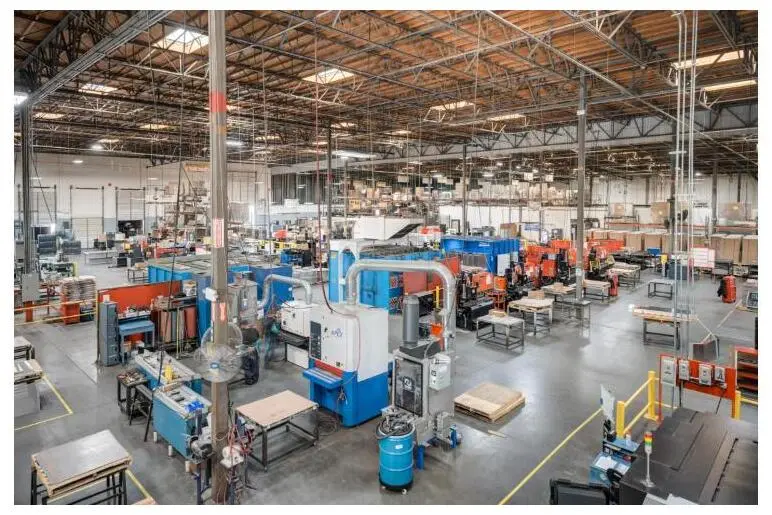
Fabcon meets each of these criteria. Operating from 220,000 square feet across two Southern California facilities, Fabcon spans design, engineering, fabrication, CNC machining, finishing, electromechanical assembly, fulfillment and logistics, all in one integrated operation, all governed by ISO 9001:2015, AS9100D and ITAR-registered quality systems.
Reshoring trends increase the urgency of this evaluation. Recent years have brought accelerating reshoring momentum with strong job announcements and projections for continued strength. Tariff and trade policy uncertainty has made landed-cost modeling unpredictable for multi-year procurement contracts. That pressure pushes buyers toward domestic suppliers with simpler logistics and shorter replenishment cycles. A vertically integrated U.S. partner built for mid-volume programs addresses that need directly.
Frequently Asked Questions
How do agile metal fabrication services differ from standard job shop work?
Standard job shops handle build-to-print sheet metal work but often lack the engineering depth for DFM collaboration and cannot manage finishing, wiring or electromechanical assembly. Agile metal fabrication services integrate those capabilities in one operation. The result is a single accountable partner for the full build, from prototype through mid-volume production, instead of a fragmented vendor base that requires separate purchase orders and coordination across multiple suppliers.
What industries benefit most from mid-volume, high-mix fabrication programs?
Data centers, energy storage and power distribution, aerospace and defense, medical devices, EV infrastructure and traffic safety and transportation all run programs that combine precision requirements with evolving SKUs and moderate production volumes. These industries need partners that handle tight tolerances, full traceability and compliance certifications while remaining flexible enough to adapt to changing BOMs and launch timelines. Basic job shops and rigid large contract manufacturers struggle to deliver that combination consistently.
How does vertical integration reduce total program cost?
Vertical integration removes vendor markup, transit costs and coordination overhead that accumulate when fabrication, finishing and assembly route through separate suppliers. Each handoff between vendors adds time for shipping, handling and incoming inspection. Consolidating those steps under one roof compresses the production cycle and reduces quality risk by limiting the number of accountability points. Early DFM collaboration further reduces cost by identifying material, tooling and process decisions before they become expensive to change.
Can a mid-sized integrated fabricator scale with a growing program?
Flexible production cells support that growth. Unlike rigid contract manufacturing lines that require high minimums and long onboarding cycles, agile cells adapt to changing volumes, mixed SKUs and evolving BOMs. A program can move from quick-turn prototype through repeatable mid-volume production within the same facility, using the same engineering and quality teams, without the overhead constraints of a large global contract manufacturer.
What compliance certifications should a fabrication partner hold for aerospace, defense or medical programs?
ISO 9001:2015 establishes the baseline quality management system. AS9100D extends those requirements for aerospace and defense, adding traceability, configuration management and risk management requirements. ITAR registration is required for programs involving defense articles or technical data. For medical device programs, full traceability across fabrication, finishing and assembly supports regulatory compliance. A partner holding ISO 9001:2015, AS9100D and ITAR registration provides the documentation foundation that procurement teams in these industries need.
Get a Quote from Fabcon
Fabcon is a vertically integrated U.S. precision sheet metal fabrication and assembly partner serving mid-sized to large enterprises across data centers, energy storage, aerospace and defense, medical devices, EV infrastructure and transportation. Founded in 1977 and operating from 220,000 square feet of manufacturing space, Fabcon delivers fabrication, finishing and electromechanical assembly in one integrated operation, backed by the quality certifications outlined above.
Engineering, supply chain and operations teams managing mid-volume, high-mix programs work with Fabcon to reduce vendor complexity, accelerate launches and improve program reliability from prototype through production.