
Last updated: August 29, 2026
Key Takeaways for 19 Inch Rack Enclosure Sourcing
- 19 inch rack enclosure manufacturers range from commodity producers to global CMs, and mid-volume, high-mix programs need a partner that balances customization depth with supply-chain reliability.
- Early DFM collaboration with an integrated fabricator can reduce manufacturing costs, improve first-pass yield and shorten lead times by resolving design issues before production begins.
- Vertically integrated manufacturers consolidate fabrication, finishing and light electromechanical assembly in a single operation, which reduces vendor count, coordination overhead and program risk.
- ISO 9001:2015, AS9100D, ITAR registration and compliance with UL 2416 and IEC standards are essential for regulated data center and energy storage deployments.
- Engineering, procurement and operations leaders evaluating 19 inch rack enclosure manufacturers can contact Fabcon to request a DFM review and discuss mid-volume infrastructure programs.
Technical Capabilities for Custom 19 Inch Rack Enclosures
The EIA-310-E standard defines the 19-inch rack width and 1.75-inch rack unit height that govern interoperability across IT equipment. Meeting that standard at the commodity level is straightforward. Consistent performance across custom configurations, tight tolerances and evolving BOMs requires a different class of manufacturer with deeper technical capability.
Design-for-manufacturability collaboration is the clearest technical differentiator. Upstream design decisions determine 70 to 80 percent of a product’s final cost, quality and manufacturability. Early DFM engagement before tooling release has outsized impact on program outcomes and reduces late-stage surprises.
DFM reviews for sheet metal enclosures focus on laser cutting and nesting, bending and forming, welding and fixtures and hardware and coating stages. That focus improves sheet utilization, simplifies forming, reduces scrap and rework, rationalizes tolerances and improves assembly access. These improvements connect directly to lower unit cost and more stable production.
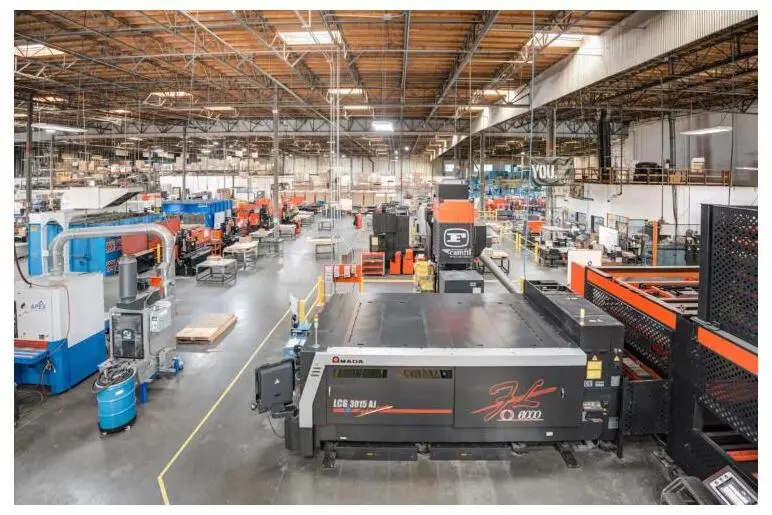
DFM reduces manufacturing costs by eliminating inefficiencies early, including material waste, cycle time, assembly complexity and costly redesigns. This cost reduction depends on closing the feedback loop before production begins, so engineering teams managing design-to-manufacturing disconnects benefit from early collaboration with a fabricator that operates laser cutting, CNC machining, forming, welding and finishing in-house.
Fabcon’s engineering and quoting teams review drawings, tolerances and materials with the customer’s technical team before production starts. That process produces manufacturing routers and work instructions tuned for the production floor, which reduces rework and supports alignment from prototype through production.
Integrated Fabrication, Finishing and Assembly in One Operation
Most job shops stop at sheet metal fabrication. That limitation creates a fragmented supply chain where procurement teams manage separate vendors for fabrication, powder coating, hardware insertion, wiring and assembly. Each handoff introduces delay, quality risk and coordination overhead that compound across the program.
Vertically integrated 19 inch rack enclosure manufacturers consolidate those steps into a single operation. Fabcon performs precision sheet metal fabrication, CNC machining, in-house finishing such as powder coat, wet paint, screen printing and mil-spec coatings, hardware insertion and light electromechanical assembly including wiring and component integration across 220,000 square feet of manufacturing space.
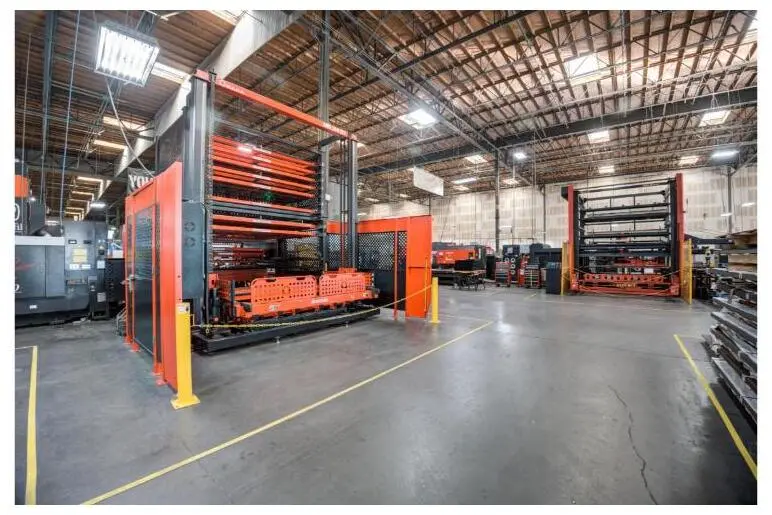
For strategic sourcing managers, this consolidation delivers one purchase order, one accountable partner and a shorter critical path from design release to finished assembly. The same consolidation principle applies at multiple levels. Reducing part count eliminates fasteners, assembly fixtures and inventory SKUs, while reducing supplier count eliminates coordination overhead and failure points. Together, these reductions simplify the entire supply chain.
In-house CNC machining supports fabricated assemblies in the same production environment, which improves dimensional accuracy and fit for complex rack and chassis configurations that require hardware insertion or pressure testing. Internal finishing maintains cosmetic standards and proper hardware installation while avoiding post-production handling between facilities.
Quality, Certifications and Traceability for Regulated Infrastructure
Compliance requirements for 19 inch rack enclosures vary by application, yet several standards apply broadly across data center and energy storage programs.
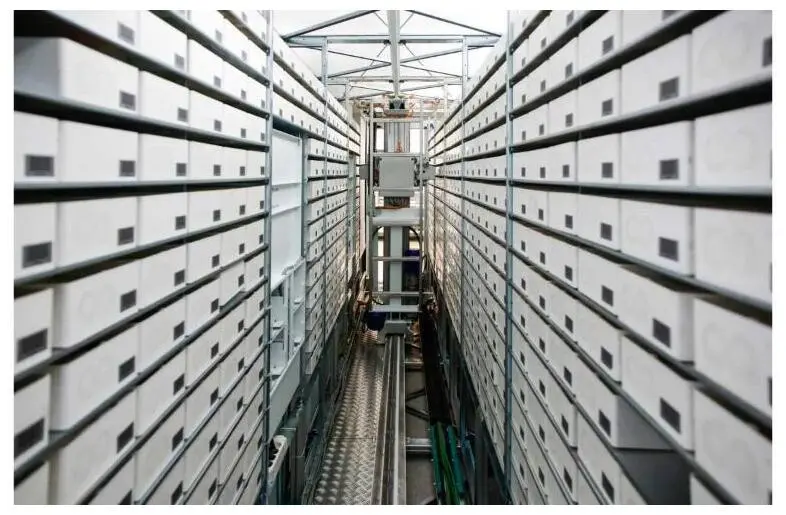
- UL 2416 is the prevailing safety standard for IT hardware enclosures in North America, covering structural integrity, grounding and fire-escape compliance.
- IEC 60297 establishes physical dimensions, installation interfaces and mechanical compatibility for 19-inch cabinets and subracks to ensure interchangeability across manufacturers.
- IEC 61587 complements IEC 60297 by providing standardized mechanical performance testing that verifies structural integrity, EMC shielding, environmental resistance and safety performance.
- Telcordia GR-63-CORE Zone 4 seismic requirements mandate that cabinets survive defined acceleration loads without tipping, moving or ejecting hardware.
- ISO 9001 certification indicates that a manufacturer maintains a documented quality management system with stage-by-stage inspection discipline.
Fabcon holds ISO 9001:2015 and AS9100D certifications and is ITAR registered. Every stage of the build follows those quality systems, with full traceability across fabrication, finishing and assembly. Operations and engineering teams in data center, energy storage and defense-adjacent programs gain reduced liability exposure and meet regulatory requirements without auditing multiple vendors.
Fabcon also maintains compliance with UL and CSA standards, which supports programs where safety certification functions as a procurement requirement rather than a preference.
Scalability and Lead-Time Reliability for High-Mix Rack Programs
The scaling problem in custom 19 inch rack enclosure manufacturing is structural. Low-complexity job shops lack the infrastructure to move from prototype to mid-volume production without adding new vendors or process gaps. Large global CMs have the scale but impose high minimum order quantities, long onboarding timelines and rigid production lines that cannot adapt to changing SKUs or evolving BOMs.
Mid-volume, high-mix programs need a different production model. Fabcon uses flexible production cells that adapt to changing volumes, mixed SKUs and evolving BOMs without the overhead rigidity of large CMs. Because these cells operate without fixed-line constraints, they support customers from prototype through production without new onboarding cycles or volume commitments at each stage, which reduces transition friction as programs scale.
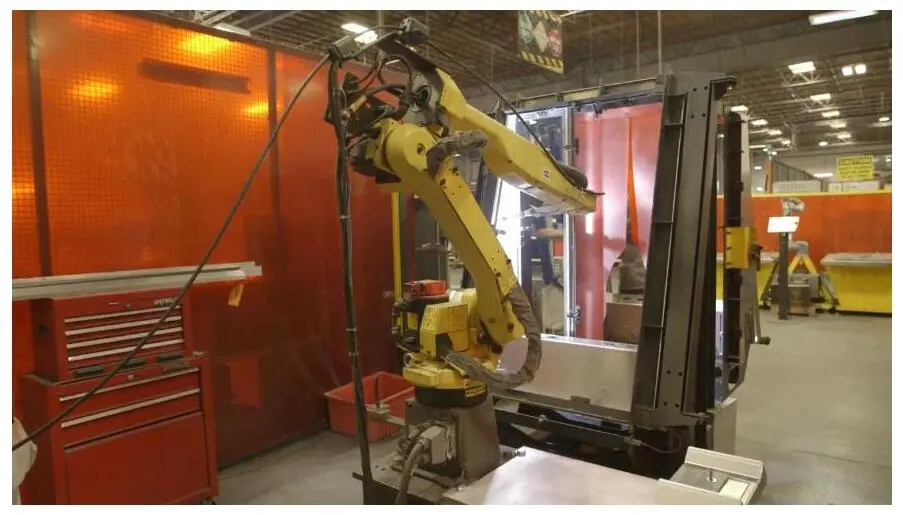
Lead-time reliability improves when a manufacturer controls the full production sequence internally. When fabrication, finishing and assembly share a facility and a quality system, production schedules avoid third-party capacity limits and inter-facility shipping delays. Procurement and operations teams managing compressed launch timelines gain a material advantage over multi-vendor supply chains.
Evaluation criteria for scalability in a 19 inch rack enclosure manufacturer include:
- Whether the manufacturer operates flexible production cells or fixed lines
- Whether finishing and assembly are in-house or outsourced to processors
- Whether the manufacturer has demonstrated prototype-to-production transitions without volume minimums
- Whether quality systems span the full build or only fabrication
- Whether the manufacturer can accommodate BOM changes mid-program
Total Program Value for 19 Inch Rack Enclosure Manufacturing
Unit price provides a narrow lens for evaluating 19 inch rack enclosure manufacturers. Total program value also includes vendor count, coordination overhead, rework exposure, lead-time reliability and downstream delays caused by quality issues or handoff failures.
DFM reviews often deliver meaningful total unit cost reduction potential for fabricated enclosures, depending on design maturity and production volume. These reviews also improve first-pass yield and shorten lead times. That cost reduction arrives before production begins, rather than after rework cycles have already consumed budget and schedule.
Fragmented supply chains multiply risk because each vendor handoff introduces potential delays, quality gaps and accountability gaps. When a finished rack enclosure requires coordination across a fabricator, a coater, a hardware installer and an assembly house, these individual handoff risks compound and force program managers to absorb coordination costs that a vertically integrated partner would internalize.
Fabcon’s model consolidates fabrication, finishing and assembly in a single facility with one quality system and one point of contact. For mid-volume programs in data center infrastructure, energy storage and related sectors, that consolidation reduces vendor count, compresses timelines and improves program visibility from prototype through production.
The reshoring dimension adds a clear risk-management argument. U.S. imports of data center equipment reached $653.1 billion in 2025, more than double the 2020 figure, and supply-chain disruptions tied to offshore sourcing already delay planned U.S. data center capacity. A domestic, vertically integrated partner reduces exposure to those disruptions while maintaining technical capability.
Frequently Asked Questions About 19 Inch Rack Enclosure Manufacturers
How does DFM collaboration affect customization depth and program costs for custom 19 inch rack enclosure manufacturers USA?
DFM collaboration allows engineering teams to resolve manufacturability issues before tooling is released or production begins. For custom 19 inch rack enclosures, that collaboration includes reviewing bend radii, hole placement, flange geometry and hardware insertion points against the actual fabrication equipment and processes the manufacturer uses. Early resolution of those issues reduces rework, improves first-pass yield and lowers total program cost.
DFM also enables deeper customization because the manufacturer’s engineering team can identify which design features are achievable at volume and which require modification. Manufacturers that include DFM in the standard quoting process, rather than treating it as a separate engagement, provide the most direct benefit to programs with evolving designs or tight launch timelines.
What compliance standards matter most for 19 inch rack enclosure manufacturers for data centers and energy storage?
The most relevant standards depend on the deployment environment and end-use application. For data center enclosures, EIA-310-E governs dimensional interoperability, UL 2416 covers structural integrity and electrical safety for IT hardware enclosures and TIA-942 addresses cabling and infrastructure requirements.
IEC 60297 and IEC 61587 apply to mechanical compatibility and performance testing for 19-inch series enclosures across applications such as telecommunications, power infrastructure and embedded computing. For energy storage and outdoor deployments, NEMA ratings determine ingress protection levels.
ISO 9001:2015 certification at the manufacturer level confirms that quality management systems are documented and consistently applied across the build. AS9100D adds aerospace-grade traceability requirements that are increasingly relevant for defense-adjacent and mission-critical infrastructure programs. ITAR registration is required for manufacturers involved in defense-related programs.
How do lead times and scaling flexibility compare across U.S. precision fabricators versus offshore or large CM options?
Offshore manufacturers can offer short lead times on standard configurations at high volumes. Custom programs with evolving BOMs or mid-volume quantities often face longer cycles due to shipping, customs and communication lag. Large domestic CMs have production capacity but typically require high minimum order quantities and extended onboarding before a new program enters production.
U.S. precision fabricators with vertically integrated capabilities, meaning fabrication, finishing and assembly in a single facility, can compress lead times by eliminating inter-vendor handoffs and controlling the full production sequence internally. For high-mix programs where SKUs and volumes change across program phases, flexible production cells at a domestic fabricator provide more reliable delivery consistency than fixed-line offshore or large CM alternatives.
When should buyers move from a job shop or large contract manufacturer to a vertically integrated domestic partner?
The transition point typically arrives when a program outgrows what a single-service vendor can support or when a large CM’s rigidity creates more friction than its scale justifies. Common indicators include managing more than two or three vendors for a single finished enclosure, experiencing quality issues that cannot be traced to a single responsible party or facing rework cycles caused by design-to-manufacturing disconnects.
Programs that need to scale production without committing to volume minimums that exceed requirements also reach this transition point. Regulated industries such as data center infrastructure, energy storage and defense-adjacent applications benefit from partners with integrated quality systems and full traceability across fabrication, finishing and assembly. A vertically integrated domestic partner provides the engineering collaboration, integration depth and compliance infrastructure that job shops and large CMs often do not deliver consistently for mid-volume, high-mix programs.
Next Steps for Evaluating 19 Inch Rack Enclosure Partners
Evaluating 19 inch rack enclosure manufacturers for mid-volume infrastructure programs requires a combined view of technical capabilities, integration scope, quality certifications, scaling flexibility and total program value. No single criterion provides a complete picture. A manufacturer that offers DFM collaboration but outsources finishing and assembly still creates handoff risk, while a manufacturer with ISO 9001:2015 certification but rigid production minimums cannot support high-mix programs through their full lifecycle.
Fabcon combines precision sheet metal fabrication, CNC machining, in-house finishing and light electromechanical assembly in a single facility with ISO 9001:2015, AS9100D and ITAR credentials. Flexible production cells support programs from prototype through mid-volume production without high minimums or extended onboarding. Early DFM collaboration functions as a standard part of engagement, not an optional add-on.
Engineering, procurement and operations leaders building or expanding infrastructure programs in data centers, energy storage or related sectors gain a domestic, vertically integrated partner model with Fabcon that reduces vendor count, compresses timelines and improves program reliability.
Get a quote and request a DFM review or capability discussion with Fabcon today.