
Key Takeaways
- Data center rack enclosure services cover custom design, precision fabrication, assembly and integration that support AI and HPC thermal and power demands.
- Core rack types include standard 42U racks, OCP racks for hyperscale, secure cabinets and open-frame racks with tailored cable management and cooling features.
- Rack and stack services follow defined phases of design review, fabrication, assembly and installation that support reliable deployment.
- By 2026, higher power densities, liquid cooling and scalable designs will shape rack enclosure requirements for hyperscale and edge environments.
- Fabcon provides integrated, ISO 9001:2015 and AS9100D certified services; get a quote today to streamline data center infrastructure projects.
Core Data Center Rack Enclosure Services
Data center rack enclosure services deliver the design, fabrication and integration capabilities needed to house critical IT infrastructure securely and efficiently. These services support requirements from basic server mounting to advanced thermal management and power distribution.
The primary service categories include custom design and design-for-manufacturability consultation, precision sheet metal fabrication with tight tolerances and professional finishing such as powder coating and specialized treatments. Light assembly and electromechanical integration bridge the gap between components and complete systems.
Rack-and-stack services provide full system deployment, including server installation, cable routing and power distribution setup. Thermal management and security feature integration support performance and protection. Compliance testing and quality assurance confirm that finished systems meet specifications and regulatory expectations.
Fabcon consolidates these capabilities under one roof, which reduces vendor handoffs and supports consistent quality from design through shipment. ISO 9001:2015 and AS9100D certified processes provide traceability and documentation that suit mission-critical infrastructure.
Key Rack and Enclosure Types for Modern Data Centers
Standard 42U racks form the base of many data center deployments and provide 73.5 inches of vertical mounting space in a 19-inch width format. This familiar standard supports a wide range of servers, switches and power distribution units.
OCP racks support AI and hyperscale deployments with airflow-optimized designs, higher power densities and modular components that suit GPU-intensive workloads. These racks align with hyperscale best practices for efficiency and serviceability.
Cabinets provide security and thermal containment through doors, side panels and locking options that protect equipment and support targeted cooling. Open-frame racks prioritize airflow and accessibility, which benefits environments with centralized cooling and frequent maintenance activity.
Customization options include structured cable management, tailored cooling solutions and integrated power distribution. As rack densities have increased to support AI and HPC workloads, these custom features have become essential for managing thermal loads and power delivery during deployment.
The Rack and Stack Process from Design to Deployment
The rack and stack process converts individual components into operational data center infrastructure through a structured sequence of phases. This sequence supports proper installation, consistent performance and long-term reliability.
The process begins with design review, where teams validate specifications against real-world installation requirements and identify integration challenges. Collaboration between engineering and manufacturing during this phase reduces rework by resolving issues before fabrication starts.
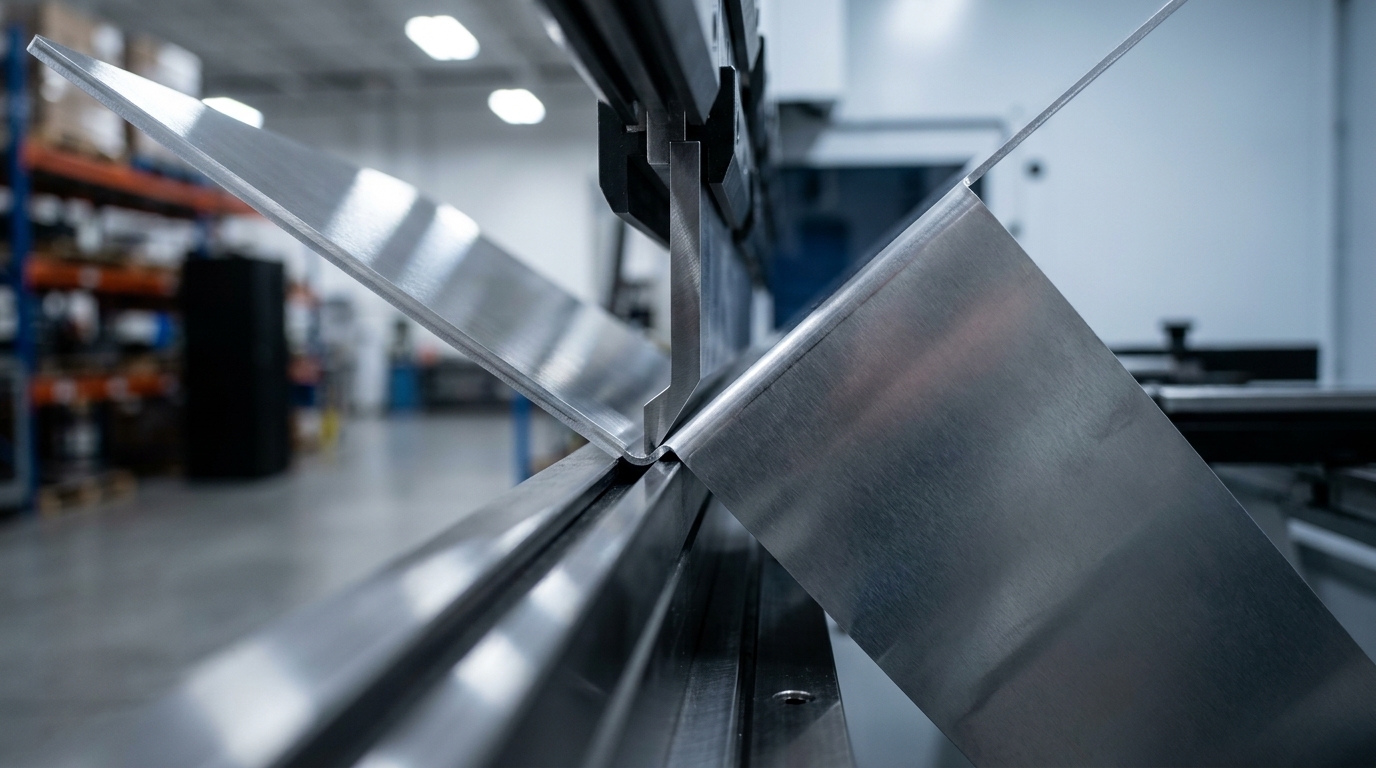
Precision fabrication follows and produces frames, panels and brackets with tight tolerances that support high-density installations. Quality control checkpoints confirm that fabricated components meet dimensional and finish requirements before moving to assembly.
Assembly then integrates mechanical, electrical and thermal elements into cohesive systems. Technicians manage cable routing, power distribution and cooling components so that airflow paths remain clear and maintenance access stays practical.
Installation and support complete the process by placing systems in the data center, connecting power and network infrastructure and validating operation. As AI training clusters demand thermal and power management, this final phase confirms that rack enclosures support real workload conditions.
Design-for-Manufacturability Practices for Custom Racks
Design-for-manufacturability plays a central role in successful rack enclosure projects because it reduces rework and aligns concepts with production realities. Collaboration between design and manufacturing teams supports both performance and cost control.
Effective DFM starts early, with manufacturing engineers reviewing specifications, tolerances and materials before fabrication. Early review identifies potential challenges, such as tight clearances or complex assemblies, and refines designs for efficient production while preserving functional requirements.
Tolerance management becomes critical in high-density environments where fit and alignment affect airflow, thermal performance and service access. Experienced manufacturers balance precision with production efficiency so that racks assemble smoothly and maintain consistent quality.
Modular bill-of-materials structures support flexibility and scalability by allowing shared components across configurations. This modular approach simplifies changes, supports regional or customer variants and helps AI and HPC systems adapt as power and cooling needs evolve.
Fabcon applies in-house engineering and precision fabrication experience to refine designs for manufacturability and performance. This integrated approach reduces prototype-to-production risk and shortens development cycles compared with fragmented supply chains.
How to Evaluate Rack Enclosure Service Providers
Provider selection should focus on technical capabilities, integration scope and proven reliability that match AI and HPC infrastructure demands. Strong partners support projects from initial design through final deployment.
Technical capabilities should span design, fabrication and assembly so that one organization can manage the full lifecycle. Within those capabilities, providers need precision manufacturing, documented quality systems and experience with high-density applications.
Integration scope matters because consolidated services reduce coordination effort and potential handoff errors. Single-source partners can manage design, fabrication, finishing and rack and stack services within one controlled workflow.
Quality credentials should include recognized certifications such as ISO 9001:2015 and AS9100D, along with processes that support traceability. Scalability also plays a role, as providers must support changing power and cooling needs and adapt as requirements evolve.
US-based providers often deliver advantages in communication, regulatory alignment and supply chain security. Fabcon combines integrated manufacturing, ITAR registration and agile production capacity for data center projects.
2026 Infrastructure Trends Shaping Rack Enclosures
Artificial intelligence and high-performance computing continue to reshape data center infrastructure and drive new rack enclosure requirements. Higher design loads appear in new projects, which affects both mechanical and electrical architectures.
High-density power levels require rack designs that support robust power distribution, cable management and safe maintenance access. Busways, high-capacity PDUs and structured cabling layouts become central design elements.
Liquid cooling has become essential for supporting the power densities of modern AI deployments. Direct-to-chip liquid cooling serves AI deployments by removing heat at the source for GPU-intensive workloads. Racks must accommodate cooling distribution units, supply and return manifolds and the added weight of cooling hardware.
Hyperscale facilities require high-volume, standardized rack solutions that support rapid deployment and consistent performance. Edge computing environments favor compact, rugged designs that fit constrained spaces while maintaining thermal and power integrity.
Manufacturers that use modular fabrication and flexible assembly cells can respond to these varied requirements across hyperscale and edge deployments.
Common Rack Enclosure Deployment Challenges and Responses
Rack enclosure deployment often encounters challenges that affect timelines, budgets and project outcomes. Addressing these issues early improves planning and execution.
Supply chain fragmentation introduces coordination complexity and increases quality risk when multiple vendors handle design, fabrication and assembly. Consolidated providers reduce these risks by managing interfaces within one organization.
Scaling challenges appear when expansion plans outpace a provider’s capacity or process maturity. Fabricators that support growth with flexible cells, standardized components and clear change control help projects scale without disruption.
Quality inconsistencies across fragmented supply chains can compromise performance and require rework. These issues become more costly when combined with external factors such as grid connection delays that increase rework costs, which extend deployment schedules.
Time-to-market pressure increases the need for efficient procurement and predictable lead times. Fabcon applies integrated manufacturing, flexible production cells and established quality certifications to support reliable schedules. Contact Fabcon to discuss specific rack enclosure requirements.
Frequently Asked Questions
What is the difference between data center cabinet and rack?
Data center cabinets are fully enclosed structures with doors, side panels and locks that provide security and environmental control for sensitive equipment. They support strong thermal containment and protection from unauthorized access. Racks are open-frame structures that prioritize airflow and accessibility, which suits environments with controlled access and centralized cooling. The choice depends on security requirements, cooling strategy and maintenance practices.
How to choose a data center racks manufacturer?
Decision makers should prioritize manufacturers with integrated capabilities that cover design, fabrication and assembly in one facility. Quality certifications such as ISO 9001:2015, experience with high-density applications and support for both standard and custom designs provide strong indicators of capability. Engineering support, including design-for-manufacturability expertise, helps refine concepts for efficient production and reliable operation.
What are rack and stack services?
Rack and stack services deliver turnkey assembly and integration of complete data center systems, from individual server installation to full cabinet configuration. These services include mechanical assembly, cable management, power distribution setup, initial testing and documentation. Professional rack and stack support proper installation, stable airflow and thermal performance while reducing configuration errors that could affect reliability.
What are the benefits of custom data center enclosures?
Custom enclosures align layouts, cooling paths and power distribution with specific applications, which benefits AI and HPC workloads with unique requirements. They support better integration with existing infrastructure, improved cable management and stronger thermal performance. Custom designs also provide scalability, allowing systems to evolve without full replacement and reducing operational complexity over time.
What are OCP racks?
Open Compute Project racks are standardized designs created by major hyperscale operators to improve efficiency, reduce costs and support scalability. These racks feature enhanced airflow, higher power densities and modular components that simplify deployment and maintenance. They reflect industry best practices for large-scale data center operations and provide a strong foundation for AI and HPC infrastructure.
How does liquid cooling integrate with server racks?
Liquid cooling integration requires rack designs that accommodate cooling distribution units, supply and return manifolds and leak detection systems. Modern implementations include direct-to-chip cooling with server cold plates, rear-door heat exchangers that cool entire racks and immersion systems that submerge servers in dielectric fluid. Racks must support routing for cooling lines, space for distribution equipment and maintenance access while preserving structural strength.
Why choose US-made for data center rack layout?
US-made rack enclosures provide advantages in compliance alignment, communication and supply chain security. Domestic manufacturers often deliver faster support, clearer regulatory adherence and reduced logistics risk. For ITAR-controlled applications or organizations with strict security requirements, US manufacturing may be mandatory. Domestic suppliers also tend to offer flexible minimum order quantities and faster prototype cycles.
Conclusion
AI and HPC growth requires a strategic approach to data center rack enclosure services that emphasizes integration, quality and scalability. Organizations that consolidate supply chains with integrated partners such as Fabcon can reduce complexity, improve quality and accelerate deployment while maintaining flexibility for evolving requirements. Get a quote today to align rack enclosure strategy with future infrastructure needs.