
Key Takeaways
- Edge and AI data centers face supply chain fragmentation, vendor delays and design-manufacturing gaps that vertically integrated fabricators resolve through agile production.
- Agile server rack enclosures use modular designs with advanced airflow, shock resistance and scalability for high-density deployments, unlike basic open racks.
- Vertical integration removes multi-vendor coordination, enabling DFM collaboration, consistent quality through ISO and AS9100 certifications and flexible scaling from prototypes to volume.
- Integrated manufacturing processes, including laser cutting, CNC machining, finishing and assembly, shorten lead times and support evolving AI and edge requirements.
- Fabcon offers comprehensive U.S.-based capabilities in custom enclosures. Request a project quote to begin.
Agile Production Server Rack Enclosures for Edge and AI Workloads
Agile production server rack enclosures provide modular, customizable protective housings for dense edge and AI deployments. They support rapid reconfiguration and fast rollout across distributed locations. Key features include directed airflow through perforated doors, shock-resistant mounting systems and scalable architectures that support growth.
Server enclosures differ from open racks by surrounding equipment with complete protective housing. Doors, side panels and integrated cooling pathways shield hardware from damage and manage airflow. Open racks supply basic mounting frameworks only. Enclosures add security, environmental protection and controlled airflow management for high-density environments.
These enclosures appear in several configurations. Common types include open frame racks for cost-sensitive sites with strong ambient airflow and enclosed cabinets for security-critical deployments. Shock-mounted enclosures protect equipment in vibration-prone environments. AI clusters also drive demand for hot- and cold-aisle containment with advanced cooling integration.
Production agility relies on flexible manufacturing processes that respond to change. These processes handle shifting bills of materials, mixed SKU production runs and fast scaling from prototypes to stable production.
Core Challenges and Design Priorities for Agile Data Center Racks
Closing Design-to-Manufacture Gaps with DFM Collaboration
Design-for-manufacturability gaps create expensive rework when engineering teams develop specifications without manufacturing input. Poor collaboration produces designs that need costly changes during production, which extends lead times and raises total project costs. Vertically integrated fabricators address this through early design reviews where engineering and manufacturing teams collaborate before production to refine designs for efficient fabrication, assembly and quality control.
Reducing Vendor Fragmentation through Vertical Integration
Traditional sourcing often uses separate vendors for sheet metal fabrication, finishing, machining and assembly. This approach creates multiple purchase orders, complex coordination and more risk. Standardized equipment and processes across a single facility support repeatable production at different locations. Vertical integration brings fabrication, finishing and assembly under one roof, which reduces vendor handoffs, simplifies supply chains and strengthens delivery reliability.
Maintaining Quality and Compliance in Critical Environments
Quality inconsistencies arise when multiple vendors manage different production stages without a unified quality system. ISO 9001:2015 and AS9100D certifications establish comprehensive quality management across the entire production process. These frameworks support traceability and compliance for critical infrastructure applications. Integrated quality control closes gaps between fabrication and assembly that can create reliability risks in high-density deployments.
Scaling from Prototype Builds to Steady Production
Job shops often lack infrastructure for complex assembly, while large contract manufacturers require high minimum volumes and lengthy onboarding. Agile production cells provide flexible manufacturing that scales from prototype quantities to mid-volume production without rigid constraints. This structure supports changing volumes, mixed SKU requirements and evolving bills of materials that define modern edge and AI infrastructure projects.
Shortening Lead Times for Rapid-Deploy Enclosures
Vendor coordination delays extend project timelines when fabrication, finishing and assembly occur at separate facilities. Organizations now blend cloud, on-premises and edge infrastructure for elasticity, consistency and immediacy. Integrated manufacturing shortens production cycles by removing inter-vendor shipping and coordination delays. A single accountable partner also simplifies project management and supports predictable delivery.
Explore Fabcon’s vertical integration and how it supports these priorities. Connect with the Fabcon team to discuss upcoming deployments.
How Vertically Integrated Partners Build Agile Server Rack Enclosures
Agile production server rack enclosure programs start with design-for-manufacturability reviews. Engineering teams refine concepts and drawings so designs move into production without costly redesign cycles.
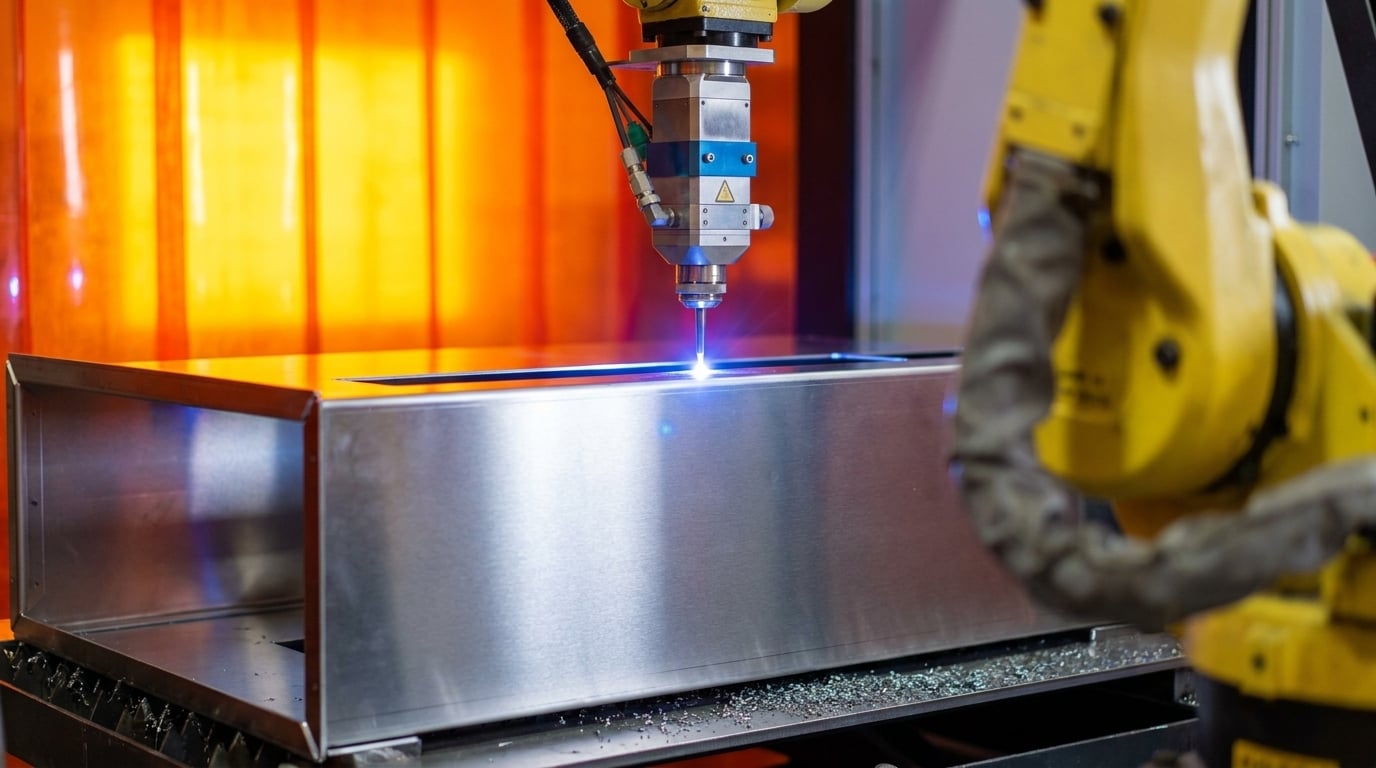
Precision sheet metal fabrication then creates the structural components. Laser cutting and CNC punching form panels and frames with tight tolerances. CNC machining adds precision hardware mounting points and complex geometries where needed.
Integrated finishing protects and brands each enclosure. Powder coating, wet paint and specialized coatings apply in controlled environments that support consistent appearance and durability. Electromechanical assembly follows with wiring, hardware installation and component integration completed in the same facility.
This end-to-end approach reduces complexity while strengthening quality control and delivery reliability. Adaptable bills of materials support evolving AI and edge computing requirements without major process changes.
Choosing Between Job Shops, Mid-Tier Fabricators and Vertically Integrated Partners
The server rack enclosure market includes three main provider categories, each with clear strengths and limits. Basic job shops offer transactional sheet metal fabrication but provide limited engineering support for DFM collaboration. They also struggle with complex assembly work, which forces customers to coordinate multiple vendors for complete systems.
Mid-tier fabricators deliver broader capabilities, including some assembly services, yet often lack the scale and integrated infrastructure needed for consistent quality across large production runs. Large contract manufacturers supply comprehensive capabilities but set rigid minimum volumes, long onboarding processes and limited flexibility for changing requirements.
Vertically integrated U.S. manufacturers such as Fabcon combine sophisticated infrastructure with responsive service. They offer engineering, fabrication, finishing and assembly in one organization without the constraints common to large contract manufacturers. This model provides the scalability and quality systems of large providers while maintaining the agility and accountability needed for modern edge and AI infrastructure projects.
Risk Management, Due Diligence and a Practical Selection Checklist
Extreme volume requirements can exceed the capacity of agile production approaches, which makes large contract manufacturers suitable for some high-volume standardized products. A structured evaluation should consider quality certifications such as ISO 9001:2015 and AS9100D, DFM capabilities, and the scope of vertical integration from fabrication through assembly. Evidence of scalability from prototype to production volumes and facility visits also help confirm capabilities and quality systems.
Effective due diligence examines engineering collaboration depth, production flexibility for changing requirements and delivery reliability records. Compliance capabilities for specific industries should align with project needs. Reference checks with similar customers reveal performance during challenging phases and show how providers respond when requirements shift.
Review Fabcon’s engineering depth, certifications and production footprint. Schedule a capabilities review with the team.
FAQ: AI Server Cabinets and Shock-Packaged Server Racks
What makes server rack enclosures agile for production?
Agile production server rack enclosures rely on flexible manufacturing cells that reconfigure quickly for different product specifications without long changeovers. Modular tooling systems, cross-trained teams and integrated DFM processes support this flexibility. These cells handle changing bills of materials, mixed SKU production runs and evolving requirements while maintaining quality and delivery reliability.
How do custom enclosures support edge computing requirements?
Custom server enclosures for edge computing use modular designs that adapt to varied sites and workloads. They direct airflow for high-density deployments and protect equipment with shock-resistant mounting. Cable management systems and integrated cooling pathways keep installations organized and stable. Modularity supports rapid reconfiguration as edge infrastructure expands.
What role does vertical integration play in rack manufacturing?
Vertical integration removes vendor handoffs between fabrication, finishing and assembly stages, which reduces lead times and coordination complexity while improving quality control. Single-source accountability simplifies project management and lowers supply chain risk. Integrated manufacturing also strengthens DFM collaboration because engineering, fabrication and assembly teams work together throughout the process. This structure supports engineering changes and customization without complex multi-supplier coordination.
How should organizations evaluate data center rack manufacturers?
Effective evaluation focuses on quality certifications such as ISO 9001:2015 and AS9100D and on vertical integration that spans design through assembly. Evidence of scalability from prototype to production volumes matters as well. Site visits provide direct insight into manufacturing capabilities, quality systems and production flexibility. Reference checks with customers in similar applications reveal performance during demanding projects and responsiveness when requirements change.
Can agile enclosures meet strict compliance requirements?
Agile production server rack enclosures meet strict compliance requirements when backed by robust quality management systems and certifications. ISO 9001:2015 supports comprehensive quality management, and AS9100D addresses aerospace and defense needs. ITAR registration enables handling of controlled technology applications. Integrated manufacturing with unified quality systems maintains traceability and compliance throughout production while preserving flexibility.
Conclusion: Vertically Integrated Partners for Agile Infrastructure
Vertically integrated manufacturing aligns with edge and AI infrastructure that depends on agile production server rack enclosures and rapid deployment. Fabcon serves as a strong U.S. manufacturing partner for organizations that need custom server enclosures with engineering, fabrication and assembly under one roof.
Begin a DFM-focused consultation with Fabcon’s team to plan the next deployment.