
Key Takeaways on Laser Cutting Lead Times
-
Standard laser cutting lead times shift with material type, thickness and part complexity, and queue time often dominates total duration.
-
Rush and expedited services shorten timelines for simpler parts using standard materials, which supports urgent prototyping and short production runs.
-
Thicker materials, intricate geometries, tight tolerances and production volume create the largest swings in cutting timelines.
-
Vertical integration shortens total project lead times by removing vendor handoffs, shipping delays and coordination overhead.
-
Fabcon’s vertically integrated approach delivers the predictable timelines precision metal projects require.
Standard Lead Times for Production Laser Cutting
Standard laser cutting lead times depend on job complexity and material requirements. Standard materials in common forms ship fast, while specialty alloys or custom thicknesses extend material procurement.
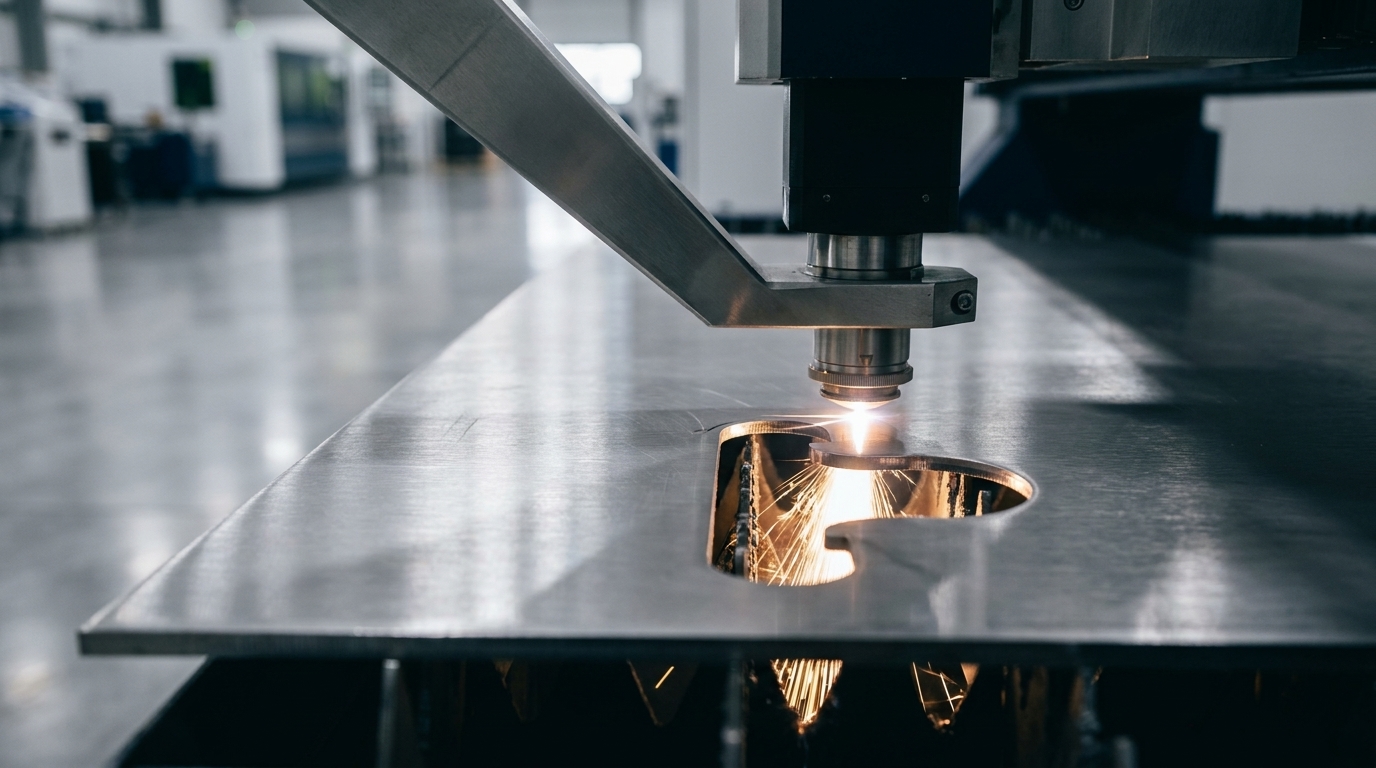
Simple laser cutting jobs on standard materials complete fast because they limit the variables that extend cycle time. Part complexity and layout efficiency influence cycle time by controlling how often the laser starts, stops and changes direction. Parts requiring many small holes or intricate geometries take longer than simple rectangular cuts because each feature needs separate motion and pierce time.
Queue time dominates total lead time in metal fabrication, so actual cutting represents only part of the schedule. Vendor selection and capacity planning support project deadlines by managing this queue time.
Rush and Expedited Laser Cutting Turnaround Options
Rush laser cutting services address schedules that standard lead times cannot meet by moving qualifying jobs ahead of the normal queue. Expedited options support time-sensitive projects that require faster response than standard service.
Expedited services focus on lower-complexity parts with standard materials and tolerances because these jobs avoid long engineering reviews and special material procurement. This focus on straightforward work enables fast turnaround for qualifying jobs by trimming the longest steps in the process. Fabcon’s agile production cells provide flexibility for urgent requirements by reserving capacity for rush work without disrupting scheduled orders.
Key Factors Affecting Laser Cutting Lead Times
Five main variables interact to shape laser cutting lead times, and material properties and part design create the largest shifts.
Material thickness impacts cutting speed and lead times through several physical effects. Thicker metals increase kerf width, heat input, taper and distortion, which forces slower cutting speeds to maintain quality. Laser cutting time increases with material thickness as a result.
Material type further shapes cutting parameters and speeds. Softer metals allow higher speeds and shorter cycles, while harder materials require lower speeds to protect edge quality.
Part complexity drives timeline variations independent of material choice. As mentioned earlier, intricate geometries extend cutting time because each feature requires careful laser control and additional motion.
Tolerance requirements affect both cutting speed and inspection time. Tighter tolerances drive up lead times because they demand slower cutting speeds and more detailed measurement, while standard tolerances enable faster processing.
Volume and capacity utilization influence scheduling priority within the queue time discussed earlier. Low-volume runs queue behind higher-volume orders, which extends their wait before cutting begins.
How Vertical Integration Speeds Projects Beyond Laser Cutting
Fragmented supply chains add delays that extend total project timelines because parts move between multiple vendors for each operation. Integrated manufacturers respond faster to changes since work stays within a single coordinated system.
Vertically integrated processes combine CNC fiber laser cutting with secondary operations such as forming, welding and finishing. Parts move from flat sheet to finished component within a single facility, which shortens handoff and shipping time.
Parts cut in the morning move directly into bending or other steps, so downstream operations start sooner and stay aligned with cutting output.
Fabcon’s integrated approach removes outside vendor transfers for data center enclosures, EV charging infrastructure and medical device assemblies. Single-facility processing reduces coordination overhead, shipping delays and quality gaps. Eliminate external transfers and accelerate the project timeline with Fabcon’s integrated approach.
DFM Best Practices to Reduce Laser Cutting Delays
Design for manufacturability collaboration shortens lead times by preventing delays and rework. Standard tolerances enable quick laser cutting and forming while still meeting functional requirements.
Simplified part geometries reduce piercing requirements and cutting complexity, which shortens cycle time. Optimizing travel paths compresses laser time per sheet by minimizing unnecessary motion and idle moves.
Early engineering collaboration identifies manufacturing challenges before production begins. Fabcon’s DFM services align prototype and production requirements so designs move smoothly into volume builds. Standard material selections and proven methods minimize risk and support faster delivery.
Fabcon: Vertically Integrated Path to Reliable Lead Times
Fabcon’s vertically integrated model delivers shorter, more predictable timelines than fragmented vendor networks. Single purchase order simplicity reduces coordination overhead, and agile production cells scale efficiently from prototype to production volumes. US-based accountability supports responsive communication and consistent delivery performance.
With more than 45 years of precision fabrication experience, Fabcon combines laser cutting with forming, welding, finishing and assembly under one roof. This integration prevents outside transfers that add weeks to project timelines while maintaining the quality standards required for critical infrastructure applications.
Discover how Fabcon’s vertical integration accelerates the next precision metal project.
Frequently Asked Questions
What factors most significantly affect laser cutting service lead times?
Material thickness, part complexity, tolerance requirements and volume create the largest lead time variations. Thicker materials require slower cutting speeds, and intricate geometries increase cycle times through added motion and pierces. Tighter tolerances demand slower speeds and additional inspection. Queue time for capacity and materials often exceeds actual cutting time, so vendor selection strongly influences delivery predictability.
How do rush laser cutting services compare to standard timelines?
Rush services focus on simpler parts with standard materials and tolerances that fit within reserved capacity. Expedited options carry premium pricing that reflects this priority treatment. Fabcon’s agile production cells provide rush capabilities while maintaining stable schedules for standard work.
What are typical lead times for precision metal fabrication beyond just laser cutting?
Integrated fabrication compresses timelines by keeping all major operations in one facility. Vertically integrated facilities like Fabcon remove external transfers, shipping delays and coordination overhead, which shortens total project duration.
How does assembly integration impact total project lead times?
Assembly integration removes transfers between cutting, fabrication and assembly vendors that can add weeks to project timelines. Parts cut in the morning can move directly into forming, welding and assembly operations the same day. This single-facility approach reduces coordination complexity, shipping delays and quality gaps while providing single-point accountability for the entire project.
What lead time advantages does Fabcon offer for data center and infrastructure projects?
Fabcon’s vertical integration delivers reliable lead times for data center enclosures and infrastructure components. Laser cutting, forming, welding, finishing and assembly occur under one roof, which shortens schedules and simplifies communication. See how Fabcon’s integrated approach delivers predictable timelines for data center and infrastructure projects.