
Key Takeaways
-
Agile sheet metal fabrication addresses HMLV production challenges by combining flexible production cells, robotics and AI-driven processes for rapid iterations and responsive manufacturing.
-
Core pillars include adaptability, early DFM collaboration, continuous improvement through AI feedback, customer focus and iterative development for quick prototyping.
-
Key benefits include short lead times, vendor consolidation, scalable production, reduced DFM rework, consistent quality and faster product launches.
-
Integrated processes from design review and precision fabrication to finishing and assembly remove handoffs and outperform traditional job shops and rigid large manufacturers.
-
For vertically integrated agile sheet metal fabrication that scales from prototypes to production, partner with Fabcon to streamline supply chains and accelerate time-to-market.
Agile Sheet Metal Fabrication Defined
Agile sheet metal fabrication applies agile principles to metal forming and assembly. The approach combines robotics, AI-driven incremental sheet metal forming and integrated CNC and laser cutting to create responsive production environments. Agile systems prioritize adaptability and continuous improvement across every manufacturing stage.
The core pillars of agile manufacturing, as outlined by industry experts, translate directly to sheet metal fabrication. These five principles work together to create a responsive production environment that adapts to changing requirements without sacrificing quality or efficiency.
Adaptability: Flexible production cells support high-mix, low-volume sheet metal requirements without extensive retooling. Manufacturing systems adjust quickly to changing product specifications and volume demands.
Collaboration: Early DFM reviews between engineering teams and fabrication specialists refine designs before production begins. This collaboration reduces rework and improves manufacturability.
Continuous improvement: AI-human feedback loops support real-time process adjustments. Data from each production run informs changes that improve quality and efficiency.
Customer focus: Agile sheet metal manufacturing prioritizes customer requirements over rigid production schedules. Manufacturing cells respond to changing specifications and delivery timelines.
Iterative development: Rapid prototyping capabilities support quick design validation and refinement before full production commitment.
Fabcon’s vertically integrated approach reflects these principles. The company combines fabrication, finishing and assembly under one roof to remove vendor handoffs and accelerate time-to-market.
Key Benefits for Modern Manufacturers
Agile sheet metal fabrication delivers measurable advantages for companies with complex product portfolios. High-mix, low-volume manufacturing strategies show clear gains in operational efficiency and cost control.
Short lead times: Integrated production removes delays between fabrication, finishing and assembly stages. Single-source manufacturing reduces coordination time and accelerates project completion.
Vendor consolidation: One manufacturing partner handles multiple processes, which reduces purchase orders and simplifies supply chain management. This single-source approach also minimizes vendor handoff delays and eliminates the quality finger-pointing that occurs when multiple vendors blame each other for defects.
Scalable HMLV production: Agile production cells adapt to volume changes without new tooling or extensive setup changes. Manufacturing systems scale from prototype quantities to mid-volume production runs.
DFM rework reduction: Early engineering collaboration highlights potential manufacturing issues before production begins. This proactive approach reduces costly design changes and production delays.
Consistent quality: Integrated quality systems maintain standards across all manufacturing stages. Single-source accountability supports consistent results from fabrication through final assembly.
Risk mitigation: Reduced vendor dependencies limit supply chain disruptions. Domestic manufacturing provides greater control over production schedules and quality outcomes.
Faster product launches: Streamlined processes and fewer handoffs shorten time-to-market for new products and product variations. These gains support rapid response to changing market demands.
How Agile Sheet Metal Fabrication Works: Processes and Production Cells
Agile sheet metal fabrication relies on integrated workflows that combine multiple processes under unified management. The end-to-end process starts with collaborative design review and DFM optimization. Engineering teams work together to identify potential manufacturing challenges before production begins.
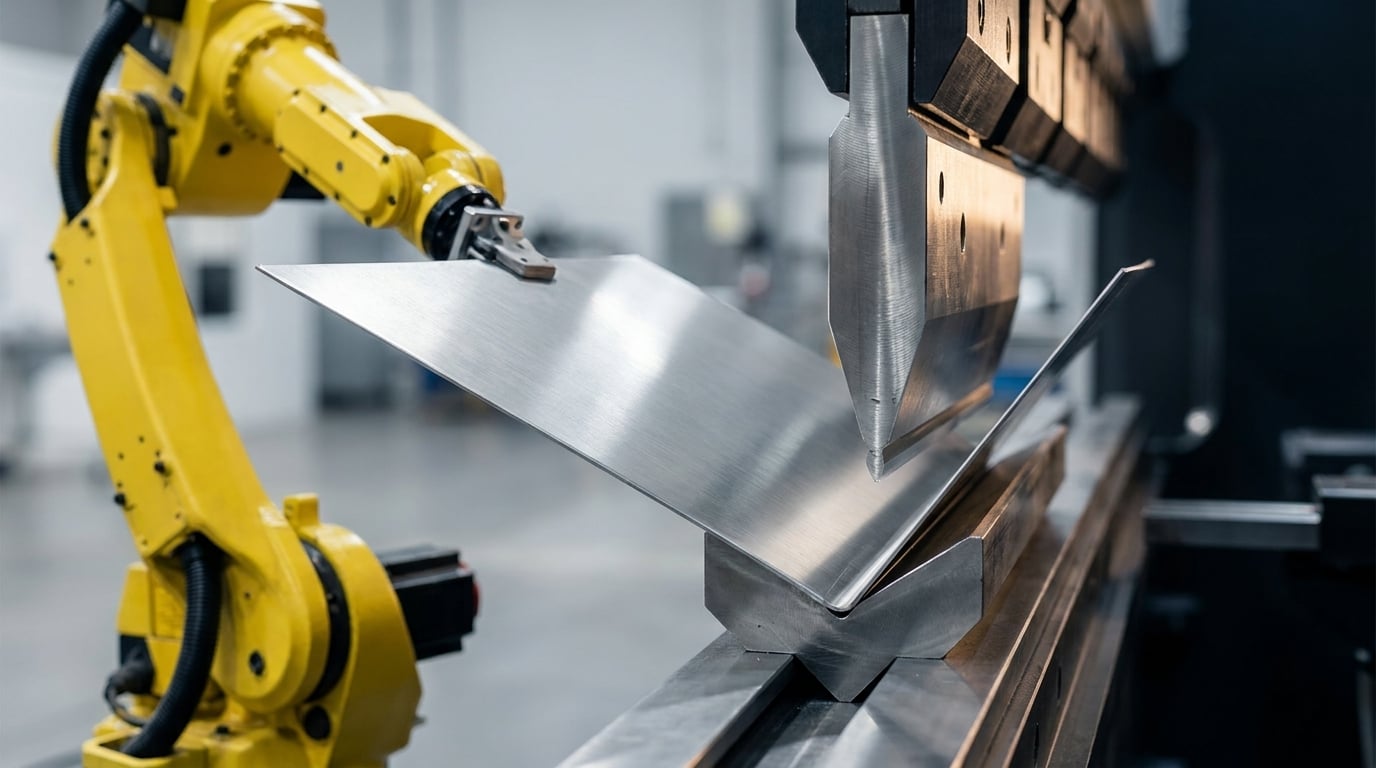
Precision fabrication forms the core of agile manufacturing. Coordinated sequences of laser cutting, CNC punching, forming and welding support complex parts. Advanced robotics and incremental sheet metal forming enable complex geometries and tight tolerances while preserving production flexibility. Robot sheet metal forming systems adapt to varying part configurations without extensive reprogramming.
Integrated machining capabilities support dimensional accuracy for complex assemblies that require hardware insertion or pressure testing. In-house CNC machining removes coordination delays between separate machine shops and fabrication facilities.
Once machined components meet dimensional requirements, finishing processes including powder coating, wet paint and specialized coatings occur within the same facility as fabrication. This integration prevents quality issues that arise from transporting parts between vendors and supports consistent surface treatments.
Light assembly and electromechanical integration complete the manufacturing process. Agile production cells handle hardware insertion, wiring and component integration to deliver finished products rather than individual components.
This end-to-end integration under one roof prevents the coordination delays and quality issues that arise when parts move between separate vendors. Unlike fragmented supply chains that require multiple purchase orders and vendor coordination, agile fabrication provides single-source accountability for complete assemblies.
Agile production cells form the operational foundation of this model. These flexible manufacturing units adapt to changing product specifications, volume requirements and delivery schedules without the rigidity of traditional production lines.
Agile Fabrication Compared to Traditional Methods
Traditional sheet metal fabrication often relies on job shops that provide basic fabrication services without engineering support or system integration. These vendors focus on build-to-print manufacturing, and customers manage design refinement, finishing and assembly through separate suppliers.
Large contract manufacturers offer broad capabilities but often require high minimum volumes and rigid onboarding. Their production systems favor high-volume, low-mix manufacturing, which limits flexibility and responsiveness.
Agile sheet metal fabrication occupies the middle ground between these options. Mid-tier manufacturers such as Fabcon provide the infrastructure of large contract manufacturers while maintaining the responsiveness required by fast-moving, technology-driven industries.
The distinction between agile and lean manufacturing centers on responsiveness versus efficiency. Lean manufacturing focuses on waste reduction and process standardization. Agile manufacturing emphasizes adaptability and customer responsiveness. For rapid prototyping sheet metal applications, agile methods provide greater flexibility for design iterations and specification changes.
Agile fabrication performs well in US HMLV markets where product specifications evolve quickly and volume requirements shift. The approach enables manufacturers to respond to market demands without rigid production systems or strict minimum volume requirements.
Implementing Agile Sheet Metal Fabrication: A Practical Playbook
Effective agile sheet metal fabrication follows a structured approach that emphasizes collaboration, rapid iteration and scalable processes.
Step 1: DFM collaboration – Engage manufacturing partners early in the design process to refine parts for production efficiency. During these early discussions, teams review drawings, tolerances and material specifications to identify potential manufacturing challenges before production begins. Addressing these issues upfront reduces rework and supports effective scaling when production volumes increase.
Step 2: Rapid prototyping – Use agile production cells to create functional prototypes quickly. Teams test designs under real-world conditions and gather feedback for refinement. Rapid prototyping supports design validation without commitment to full production tooling.
Step 3: Scale through agile cells – Move from prototype to production with flexible manufacturing cells that adapt to volume changes. Agile cells handle mixed SKUs and evolving bills of materials without extensive retooling or setup changes.
Step 4: Integrate finishing and assembly – Combine fabrication, finishing and light assembly processes under unified management. This integration removes vendor handoffs and shortens lead times while maintaining quality control across the manufacturing process.
Fabcon demonstrates this implementation approach through vertically integrated manufacturing facilities. The company holds ISO 9001:2015 and AS9100D certifications and is ITAR registered, which supports execution across regulated industries while preserving the flexibility required for agile manufacturing.
Fabcon’s agile production cells support customers from prototype through mid-volume production. The cells combine fabrication, finishing and assembly capabilities to accelerate launches and reduce supplier complexity.
Industry Applications and Fabcon Advantages
Agile sheet metal fabrication supports critical applications across technology-driven industries that require precision, reliability and scalability. Data center infrastructure depends on modular enclosures and rack-mounted systems that simplify cooling, cable management and integration for hyperscale and edge deployments. Agile manufacturing supports rapid customization for evolving data center requirements.
Electric vehicle infrastructure requires weatherproof assemblies and charging station enclosures that withstand outdoor environments while maintaining electrical safety standards. Because EV charging specifications and installation requirements vary widely across deployments, agile production cells accommodate these design variations and volume fluctuations without dedicated tooling for each configuration.
Medical device manufacturing benefits from agile fabrication’s ability to produce traceable components and assemblies with full documentation. Applications include medical carts, laboratory equipment and specialized fixtures that require precision assembly and regulatory compliance.
Fabcon’s US-based vertical integration supports these applications with local control and coordinated processes. Founded in 1977, the company brings decades of manufacturing experience to complex fabrication challenges. The facility network in Southern California provides comprehensive capabilities from design through delivery.
Fabcon holds ISO 9001:2015 and AS9100D certifications and is ITAR registered. These credentials support compliance with stringent industry requirements. They also enable full traceability and documentation for regulated industries while preserving the agility needed for rapid product development.
The company’s vertically integrated approach removes the vendor coordination challenges that affect fragmented supply chains. Single-source accountability for fabrication, finishing and assembly reduces risk and shortens time-to-market for critical infrastructure applications.
Frequently Asked Questions
What are the pillars of agile manufacturing in sheet metal fabrication?
The core pillars of agile manufacturing adapted for sheet metal fabrication include adaptability through flexible production cells that support high-mix, low-volume requirements, collaboration through early DFM reviews between engineering and manufacturing teams, continuous improvement through AI-human feedback loops that refine processes in real time, customer focus that prioritizes requirements over rigid production schedules and iterative development that supports rapid prototyping and design validation before full production commitment.
How does agile fabrication differ from lean manufacturing approaches?
Agile fabrication emphasizes flexibility and responsiveness to changing customer requirements, while lean manufacturing focuses on waste reduction and process standardization. Agile methods perform well in high-mix, low-volume environments where product specifications evolve quickly and volume requirements fluctuate. Lean approaches favor efficiency in stable, high-volume production environments. For rapid prototyping and evolving product portfolios, agile fabrication provides greater adaptability.
Can agile sheet metal fabrication handle scaling from prototype to production?
Agile production cells are designed to scale from prototype quantities to mid-volume production without extensive retooling or setup changes. Flexible manufacturing systems handle volume changes, mixed SKUs and evolving bills of materials while maintaining quality standards. This scalability removes the need to shift between different suppliers as production volumes increase, which reduces risk and supports consistency across the product lifecycle.
How do lead times compare with agile sheet metal fabrication?
Agile fabrication reduces lead times through integrated manufacturing processes that remove vendor handoffs. Single-source manufacturing for fabrication, finishing and assembly prevents delays associated with coordinating multiple suppliers and shipping parts between facilities. Rapid prototyping capabilities and flexible production cells support quick response to design changes and urgent delivery requirements while maintaining quality standards.
Does DFM collaboration work effectively during product transitions?
Early DFM collaboration proves especially valuable during product transitions and new product introductions. Manufacturing partners review designs before production begins and identify potential issues and improvement opportunities that reduce rework and production delays. This proactive approach supports smooth transitions from development to manufacturing while maintaining design intent and performance requirements. Collaborative engineering also reduces the risk of costly design changes during production ramp-up.
Conclusion
Agile sheet metal fabrication addresses the challenges of high-mix, low-volume production through integrated processes, flexible production cells and collaborative engineering. The methodology reduces supply chain fragmentation and supports the responsiveness required by technology-driven industries.
Fabcon provides made-in-America agility that combines decades of manufacturing experience with modern production capabilities. Vertically integrated manufacturing accelerates product launches and reduces supply chain complexity. Get a quote now.