
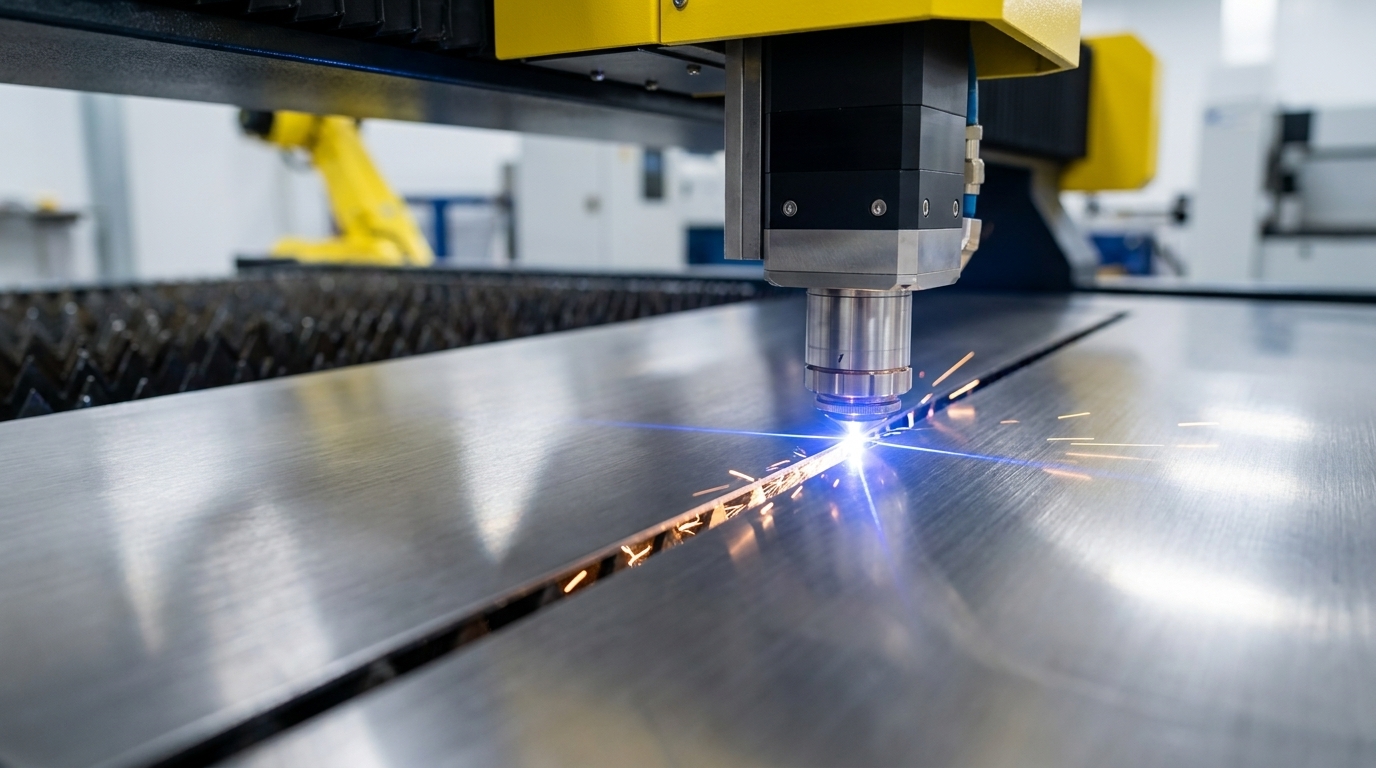
Key Takeaways on 2026 Laser Cutting Prices
- Laser cutting prices in 2026 depend on machine hourly rates, material type and thickness, setup costs, production volume and design complexity.
- Cost calculation follows this structure: (cut time × hourly rate) + setup + material + finishing. Cut time comes from path length and material-specific speeds.
- US hourly rates vary by laser power and facility overhead. Bulk discounts come from setup amortization and better nesting at higher volumes.
- Material costs differ by gas and speed. Carbon steel with oxygen assist costs less. Stainless and aluminum need nitrogen, especially in thicker gauges.
- Design for manufacturability with clear hole sizing and efficient nesting reduces total cost. Get a quote from Fabcon for vertically integrated precision cutting that lowers project spend.
Primary Cost Drivers for Laser Cutting Projects
Laser cutting prices hinge on four primary cost drivers that shape final project expenses. Machine hourly rates form the foundation of any quote. Actual time on the machine depends on material type and thickness, which influence cutting speed and assist gas requirements. These time-based costs combine with setup expenses that spread across production volume to define per-part economics.
Production volume creates cost variations through setup cost distribution. A single setup adds the full amount to a prototype part. The same setup adds less per part across many units. Post-processing such as deburring or finishing introduces secondary operations that increase total project costs.
Beyond volume considerations, design complexity affects cutting time through path length, pierce count and geometry requirements. Simple rectangular cuts process faster than intricate patterns with multiple internal features. Fabcon’s vertical integration minimizes related overhead. Fabrication, finishing and assembly occur in a single facility, which reduces coordination effort between stages.
Practical Method for Calculating Laser Cutting Cost
Laser cutting cost calculation follows a direct formula: (cut time × hourly rate) + setup costs + material costs + finishing operations. Cut time depends on total path length divided by cutting speed. Speed changes with material thickness and laser power.
A steel panel requires machine time based on its cutting path. Typical US shop rates apply to that machine time. Setup costs apply per job, and material costs depend on sheet utilization and scrap levels.
Complex enclosures with multiple bends and internal features require longer cutting times and additional setup for effective nesting. A telecommunications rack panel needs more cutting time than a simple bracket. Longer machine occupation increases per-part costs and affects overall budget.
Laser Cutting Hourly Rates and Volume-Based Savings
US laser cutting hourly rates vary based on equipment capability and facility overhead. Basic shops with lower-power fiber lasers charge lower rates. Precision-certified facilities with higher-power systems command premium rates. Higher-power systems cut faster and deliver superior edge quality, which can reduce downstream finishing.
Bulk production creates per-part savings through setup cost amortization and improved material utilization. Nesting more parts per sheet reduces material waste and handling time. Production runs often qualify for structured volume pricing that rewards consistent demand.
Fabcon’s agile manufacturing cells focus on efficient mid-volume production. The operation provides infrastructure benefits similar to large contract manufacturers without rigid minimum order requirements. This flexibility supports cost-effective scaling from prototype quantities to production volumes.
Material Choices and Their Impact on Laser Cutting Prices
Material selection influences laser cutting costs through assist gas requirements and cutting speed differences. Carbon steel with oxygen assist gas carries lower operating expenses. Stainless steel that requires nitrogen assist gas increases costs because of inert gas consumption and slower speeds.
Aluminum processing also uses nitrogen assist gas to prevent oxidation. This creates cost structures similar to stainless steel. Thickness compounds these effects. Thicker materials demand slower cutting speeds and higher gas consumption. A thick stainless steel sheet requires more processing time than a thin gauge alternative.
Enterprise applications in data centers and energy infrastructure often specify stainless steel or aluminum for corrosion resistance and electromagnetic compatibility. These material requirements create higher processing costs. Project budgets benefit when teams account for these factors during the design phase.
DFM Strategies That Lower Laser Cutting Costs
Design for manufacturability decisions reduce laser cutting costs through practical geometry and tolerance choices. Hole diameters equal to or greater than material thickness eliminate secondary drilling operations. Standard tolerances avoid the need for specialized precision equipment.
Efficient nesting geometry increases material utilization and reduces waste. Rectangular shapes with consistent orientations nest better than irregular geometries with large voids. Proper edge-to-feature spacing prevents structural weakness during forming and reduces the risk of costly rework.
Early collaboration between design and manufacturing teams uncovers cost-reduction opportunities before tooling commitments. Fabcon’s integrated engineering support provides DFM feedback during the quoting process. This collaboration supports design refinement that reduces material waste and processing time while maintaining functional requirements.
Fabcon as a Partner for Cost-Effective Laser Cutting
Fabcon’s vertical integration delivers cost advantages that traditional job shops cannot match. A single-facility approach eliminates vendor handoffs between laser cutting, powder coating and assembly operations, which shortens project timelines and reduces coordination overhead. ISO 9001:2015 and AS9100D certifications support consistent quality across all manufacturing processes.
Data center rack manufacturers and EV infrastructure companies benefit from Fabcon’s ability to handle complete assemblies rather than only cut parts. A telecommunications enclosure project that might require three separate vendors can run entirely within Fabcon’s facilities, which simplifies procurement and lowers delivery risk.
Agile production cells scale efficiently from prototype to mid-volume production without the rigid minimums typical of large contract manufacturers. This flexibility supports evolving bills of materials and shifting production requirements common in technology-driven industries. Get a quote to experience the advantages of a fully integrated manufacturing partner.
Frequently Asked Questions
How much does laser cutting cost per hour in US shops?
US laser cutting hourly rates vary by geographic region, shop utilization and business model. Equipment capability and facility overhead shape pricing. Higher-power systems command premium rates because of speed and quality advantages.
Why are laser cutting prices higher for complex parts?
Complex parts require longer cutting paths, more pierces and additional setup time for effective nesting and fixturing. Intricate geometries with tight tolerances may need secondary operations or specialized tooling. These factors increase total processing time and labor requirements compared to simple rectangular cuts.
What bulk discounts are available for laser cutting?
Volume production reduces per-part costs through setup cost amortization and improved material utilization. Production runs often qualify for volume pricing tiers. Efficient nesting of larger quantities maximizes sheet utilization and minimizes material waste.
How do aluminum and steel laser cutting prices compare?
Aluminum and stainless steel both require nitrogen assist gas, which creates similar cost structures. These materials typically run higher than carbon steel with oxygen assist. Carbon steel suits applications where corrosion resistance holds lower priority.
How can engineers reduce laser cutting costs?
Design refinement through proper hole sizing, standard tolerances and efficient nesting geometry reduces costs. Early collaboration with manufacturing partners enables DFM feedback before production commitments. This approach identifies cost-reduction opportunities and limits expensive design changes and rework.
Conclusion: Managing 2026 Laser Cutting Costs with Integrated Support
Laser cutting prices in 2026 depend on the relationship between machine rates, material choices and volume economics that shape total project costs. Strategic design decisions and coordinated manufacturing partnerships create cost advantages over procurement models that rely on multiple vendors and fragmented supply chains.
Fabcon’s experience and vertically integrated facilities support cost transparency and manufacturing efficiency. Engineering and procurement teams depend on this structure for successful project execution. Get a quote from Fabcon for enterprise-grade laser cutting prices today and see how integrated manufacturing reduces total project costs while improving delivery reliability.