
Key Takeaways
-
Precision sheet metal fabrication follows seven steps: design and DFM review, material selection, cutting, forming, joining, finishing and inspection.
-
Early DFM collaboration sets realistic tolerances, bend radii and features, which reduces rework and schedule risk.
-
Vertical integration keeps all operations under one roof, which removes vendor handoffs and improves quality control.
-
Material choices such as aluminum 5052-H32 and standard gauges affect formability, cost and lead time.
-
Fabcon provides ISO-certified, vertically integrated precision sheet metal fabrication from prototype through production.
Why Precision Sheet Metal Context Matters Before the Seven Steps
Engineering directors, supply chain managers and program leads in data centers, aerospace, medical and energy sectors face a shared risk. Designs that appear sound on paper can create delays, scrap and cost once production starts. Precision sheet metal projects perform better when teams understand how design decisions affect each manufacturing step. Design-for-manufacturability aligns part geometry with efficient production methods and realistic tolerances.
Tolerance stack-up describes how small dimensional variations across features accumulate in an assembly. Vertical integration brings multiple manufacturing operations into one facility and reduces vendor handoffs. Agile production supports fast shifts from prototypes to mid-volume runs. U.S. programs often require high-mix capability and ISO 9001:2015 and AS9100D compliance for aerospace work, which shapes expectations for every step that follows.
How the Precision Sheet Metal Fabrication Process Works: 7 Key Steps
1. Design and DFM Review
The process starts with design analysis and DFM collaboration. Engineering teams review CAD models, material specifications and functional requirements together. Early DFM alignment on build intent, target volumes and critical-to-function features prevents downstream production delays. Common pitfalls include tolerances that exceed process capability and flanges that cannot form without special tooling. Effective practices standardize hole sizes, bend radii and hardware across assemblies. Teams also avoid features that require hand forming or heavy manual deburring.
2. Material Selection and Specifications
Material selection balances formability, performance and cost. Aluminum 5052-H32 alloy offers superior bendability, which supports tight bend radii and complex shapes. In contrast, 6061-T6 requires larger inside radii because of higher strength and lower ductility. Stainless steel provides corrosion resistance when environmental exposure drives the requirement. Standard gauges shorten lead times and lower cost because they match common stock and tooling.
3. Cutting Operations: CNC Laser and Punching
Cutting operations define flat part geometry and set the stage for accurate forming. Fiber lasers achieve tight tolerances on thin mild steel and aluminum by holding stable positional accuracy at high speeds. This accuracy allows consistent feature placement across thin sheets. That capability supports design guidelines such as minimum hole diameters equal to material thickness and edge distances of 1.5 times thickness. Punching complements laser cutting for high-volume patterns, louvers and formed features.
4. Forming and Bending: Press Brake Operations
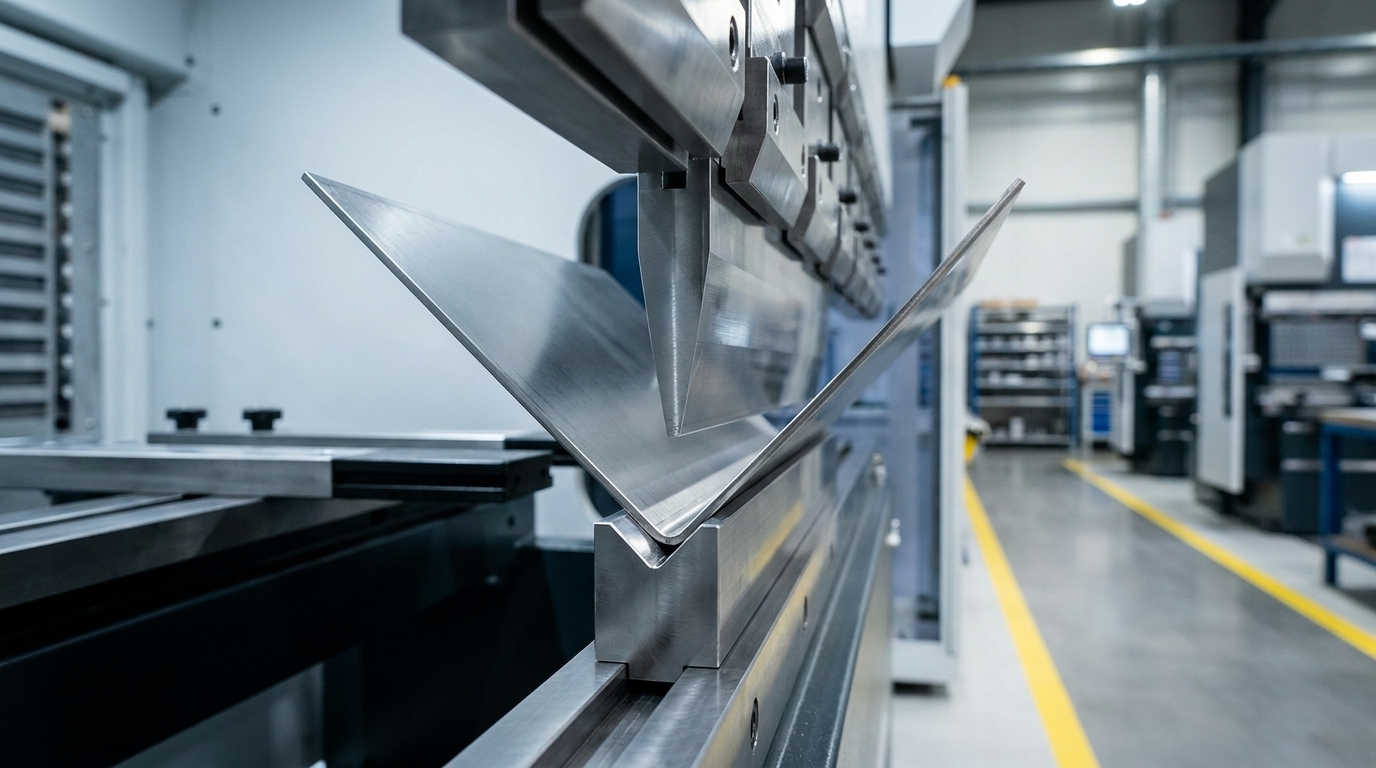
Forming operations convert flat blanks into three-dimensional parts while protecting dimensional accuracy. CNC press brakes create precise bends and flanges that follow the cut geometry. Industry standard inside bend radius aligns with common press brake tooling, which simplifies setup and improves repeatability. Tight bend angle tolerances hold on precision formed parts when tooling and programming match the material. Springback compensation offsets elastic recovery after pressure release. Advanced forming simulations and predictive software support overbending and coining techniques to achieve target angles.
5. Joining, Welding and Assembly Operations
Joining and assembly steps bring formed components together into functional units. Successful assembly depends on controlling distortion and maintaining alignment during welding and fastening. Interlocking tabs mitigate welding issues by holding components in place, increasing strength and eliminating shrinkage complications. Proper fixture design adds further distortion control when interlocking features are not practical. Hardware insertion introduces PEM studs, nuts and standoffs that support electromechanical integration. Thoughtful assembly sequences reduce handling, shorten cycle times and protect cosmetic surfaces.
6. Finishing and Surface Treatment
Finishing protects parts and shapes final appearance. In-house finishing capabilities maintain consistent quality and tighter delivery control. Powder coating provides durable corrosion resistance for many steel and aluminum applications. Anodizing Type II protects aluminum while preserving tight dimensional features. Engineers adjust hole sizes and clearances to account for surface coating thickness and prevent interference fits. Masking strategies protect threads, grounding points and precision surfaces during coating.
7. Inspection, Quality Control and Production Scaling
Inspection and quality control confirm that each step delivers parts within specification. Coordinate measuring machines, laser micrometers and optical comparators enable real-time verification without halting production. ISO 9001:2015 and AS9100D certification support traceability and documentation standards for regulated industries. Agile production cells with automated tool changing support flexible manufacturing for high-mix production. Digital documentation tracks material certifications, process parameters and inspection results as programs scale from prototypes to larger batches.
DFM Frameworks, Tools and Practical Project Examples
DFM frameworks connect design decisions to predictable manufacturing outcomes. Precision sheet metal shops provide expertise on material behaviors that influence bend radii, hole locations and hardware choices. Process Failure Mode and Effects Analysis highlights potential manufacturing risks during design review so teams can address them early. Vertical integration shortens coordination time between metal fabrication, powder coating and electromechanical assembly for data center enclosures and similar systems. DFM reviews for mid-sized OEM sheet metal enclosures with wiring subassemblies reduce post-release engineering change orders through tolerance optimization and hardware standardization. A focused DFM consultation often standardizes hardware families, simplifies fastener access and removes potential ECOs before release. Request a DFM-focused consultation to align precision sheet metal designs with real production capability.
Common Challenges and Troubleshooting in Precision Sheet Metal Fabrication
Even with strong DFM practices, precision sheet metal projects encounter operational challenges. Fragmented supply chains create vendor handoff delays and quality finger-pointing between metal fabrication, finishing and assembly operations. Queue time waiting for capacity, material or between operations frequently dominates total lead time over actual process cycle time. Tool wear and calibration errors in forming dies cause inconsistent dimensions and surface defects. Effective mitigation strategies include early supplier collaboration, integrated manufacturing capabilities and predictive maintenance programs. One-partner solutions reduce coordination complexity and maintain accountability across the full fabrication process.
Why Fabcon’s Integrated Model Strengthens Sheet Metal Programs
Fabcon operates as a vertically integrated U.S. precision sheet metal fabrication partner founded in 1977, with 220,000 square feet across Southern California facilities. ISO 9001:2015, AS9100D and ITAR certifications support aerospace, medical and defense applications that require strict controls. Fabcon’s vertically integrated facilities combine design engineering, laser cutting, CNC forming, certified welding, powder coating and electromechanical assembly under one roof. This structure removes vendor handoffs that slow fragmented supply chains. Agile production cells scale programs from prototype through mid-volume production without the rigidity of large contract manufacturers or the limits of basic job shops. Start a precision sheet metal project with Fabcon to gain streamlined production and clear quality ownership.
Frequently Asked Questions
What are typical laser cutting tolerances for precision sheet metal fabrication?
Laser cutting tolerances depend on material thickness and type. As noted in the cutting operations section, fiber lasers achieve tight tolerances on thin mild steel, stainless steel and aluminum. Thinner sheets support tighter positional accuracy than thicker plate. Kerf width enables precise feature cutting with minimal heat-affected zones.
How does DFM reduce rework in precision sheet metal fabrication?
Design-for-manufacturability collaboration identifies production risks before tooling and setup costs accrue. Early DFM reviews align bend radii with standard tooling, match tolerance requirements to process capability and confirm clearances for hardware insertion. Standardizing hole sizes, bend radii and hardware across assemblies reduces setup changes and quality variation. DFM also prevents issues such as unformable flanges, PEM locations that block punch paths and assembly access problems that create rework and delays.
What is vertical integration in precision sheet metal fabrication?
Vertical integration combines design engineering, laser cutting, CNC forming, welding, powder coating and electromechanical assembly within one facility. This structure removes vendor handoffs, shortens coordination time and maintains quality accountability across the production sequence. Integrated facilities control scheduling, material flow and process improvements across all operations. Benefits include compressed lead times, simpler supply chain management, consistent quality standards and single-point responsibility for complex assemblies.
How should companies evaluate suppliers for precision sheet metal tolerances?
Supplier evaluation should focus on process capability, quality systems and equipment. ISO 9001:2015 and AS9100D certifications support aerospace and other regulated applications. Laser cutting capability depends on fiber laser power, positioning accuracy and achievable tolerances by material type. Press brake capability includes tonnage, tooling inventory and bend angle repeatability. Inspection capability should cover coordinate measuring machines and real-time verification tools. Process capability studies and sample parts on similar materials and geometries provide evidence of tolerance performance.
What are typical timelines for precision sheet metal prototype-to-production scaling?
Prototype development often uses in-stock materials and simple features to move quickly. Complex assemblies that require welding and finishing extend timelines because of additional steps and approvals. Batch production of 25 to 1,000 parts follows prototype validation and fixture refinement. Production scaling depends on part complexity, volume targets and supply chain integration. Vertically integrated facilities compress schedules by removing shipping delays between fabrication, finishing and assembly. Capacity planning and strong supplier alignment support predictable ramp-up.
How do agile production cells support high-mix precision sheet metal manufacturing?
Agile production cells support high-mix work through flexible equipment and fast changeovers. Automated tool changing, programmable motion control and standardized setups allow frequent job switches. Unlike rigid lines that require high minimum volumes, agile cells adapt to changing SKUs and evolving bills of materials. Servo-electric presses provide programmable motion profiles for different part geometries. Automated material handling supports lights-out manufacturing while preserving flexibility for prototypes and mid-volume runs. Digital twin simulations refine process parameters for new parts, which reduces setup time and improves first-pass yield.
What regulations apply to aerospace precision sheet metal fabrication?
Aerospace sheet metal fabrication relies on AS9100D quality management certification, which builds on ISO 9001:2015 with aerospace-specific requirements. NADCAP accreditation covers special processes such as welding, heat treatment and surface finishing. ITAR registration supports defense-related components that fall under export control. Material traceability systems track certifications from raw stock through finished components. Process documentation includes work instructions, inspection records and material test certificates. Quality systems demonstrate continuous improvement, risk management and customer satisfaction measurement tailored to aerospace programs.
Conclusion
The seven-step precision sheet metal fabrication process supports better design decisions, supplier selection and supply chain performance. Vertical integration removes vendor handoffs and maintains quality accountability from prototype through production scaling. Launch a precision sheet metal program with Fabcon to apply integrated expertise across every stage of fabrication.