
Key Takeaways
-
Advanced sheet metal techniques such as precision CNC laser cutting, multi-axis press brake bending, and hydroforming create complex enclosure geometries with tight tolerances for data centers, EVs, and medical devices.
-
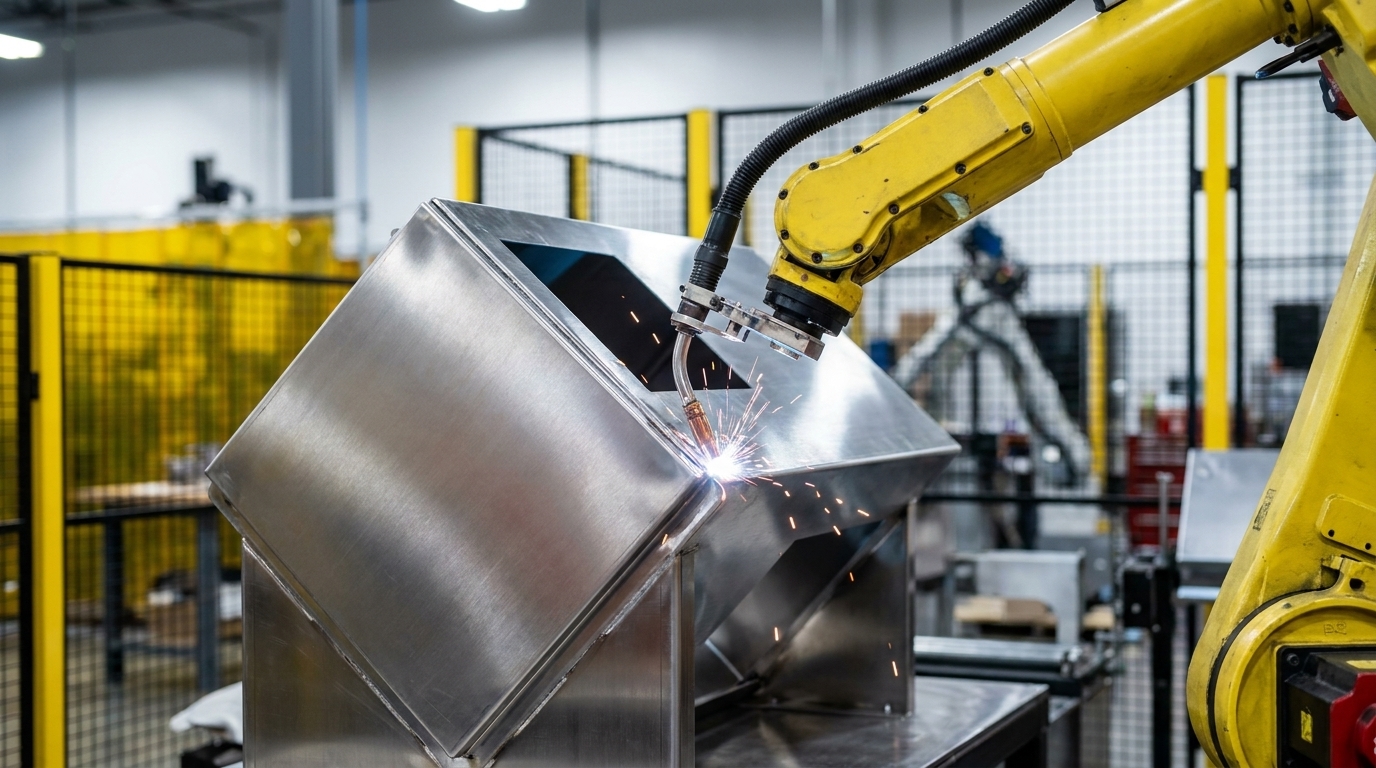
Robotic TIG, MIG, and laser welding maintain structural integrity and minimize heat distortion in thin-sheet assemblies, which is critical for medical and electronic enclosures.
-
AI-powered DFM simulation with springback compensation improves designs before production, cutting material waste, rework, and time-to-market.
-
Vertical integration from prototype through production removes vendor handoffs, supports consistent quality, shortens lead times, and aligns with ISO 9001:2015 and AS9100D standards.
-
Partner with Fabcon for a free DFM review to turn complex enclosure designs into scalable, high-precision manufactured products.
How Advanced Techniques Work Together for Complex Enclosures
Complex enclosures need a coordinated fabrication workflow where each step supports the next. The process starts with precision CNC laser cutting using fiber technology to create accurate blanks and intricate patterns. These cut parts then move into multi-axis press brake bending with AI compensation, which forms complex geometries while holding the tight tolerances set during cutting.
When designs call for deeper draws or flowing curves that bending cannot achieve, hydroforming applies uniform pressure to shape the metal without introducing wrinkles or tears. Robotic TIG, MIG, and laser welding then join these formed components with consistent penetration and minimal distortion. AI-driven DFM simulation and springback compensation guide these operations, reducing trial-and-error on the floor.
Coordinate Measuring Machine (CMM) inspection confirms that each stage stays within specification. Powder coating protects the finished enclosure and delivers a consistent appearance that matches brand and environmental requirements. Light electromechanical assembly integration brings wiring, hardware, and subcomponents together in the same facility, so the finished enclosure arrives ready for system-level integration.
Integrated fabrication cells that connect cutting, bending, and material handling with Industry 4.0 technologies keep this workflow synchronized. Fabcon’s vertically integrated model removes the vendor handoffs that often introduce delays, scrap, and inconsistent quality.
Advanced Forming Techniques for Complex Enclosures
Modern forming processes now support enclosure geometries that traditional stamping cannot handle reliably. These methods help maintain dimensional accuracy while still achieving deep draws, tight radii, and complex shapes.
Hydroforming for High-Precision Enclosure Shapes
Precision hydroforming provides uniform high-pressure distribution, creating higher-quality parts with fewer defects compared to conventional metal forming. This uniform pressure removes the localized force spikes that cause wrinkles, tearing, and dimensional drift in traditional stamping.
EV battery housings and data center cooling assemblies gain clear benefits from hydroforming’s ability to create complex curves and deep draws in a single operation. Bladder-free hydroforming reduces tooling expenses and shortens lead times while overcoming material limitations. This combination supports faster design changes and more efficient production ramps.
DFM considerations for hydroforming include:
-
Optimize bend radii early in design to prevent material thinning, which becomes more critical as you manage springback in complex geometries.
-
Account for material springback in areas with tight radii or deep draws so final dimensions stay within tolerance.
-
Design drain holes and access points before forming, since adding them afterward can weaken the structure you just created.
-
Consider tool accessibility for secondary operations from the start, and align flange and corner geometry with the tools that must reach those areas.
-
Minimize sharp corners that concentrate stress and also restrict tool access during trimming, piercing, or assembly.
Fabcon’s forming capabilities support data center rack production, where cooling channels, mounting features, and structural members must all form correctly while still carrying load.
Multi-Axis Press Brake Bending with AI Compensation
AI-integrated bending systems automatically compensate for springback, achieving dimensional accuracy. This precision keeps enclosure seams aligned and ensures that doors, panels, and internal components fit consistently across every build.
Advanced press brake systems apply machine learning to adjust bending parameters based on material grade, thickness variation, and shop conditions. This real-time tuning delivers first-part accuracy, cuts setup scrap, and stabilizes production runs even when material lots change.
Robotic Welding for Sheet Metal Assemblies
Robotic welding improves structural integrity and repeatability for enclosure assemblies. Robotic welding reduces weld defect rates compared to manual operations, which directly lowers rework and field failure risk.
Fiber laser welding systems in robotic setups achieve high travel speeds with minimal thermal distortion. These systems create narrow, deep welds that traditional arc processes cannot match, which is especially valuable for thin-gauge medical carts and electronic enclosures where flatness and cosmetic appearance matter.
Medical device enclosures also benefit from robotic TIG welding, which combines precise heat control with clean, visually consistent beads. Six-axis robotic arms achieve high repeatability, critical for maintaining structural integrity and precision in sheet metal assemblies.
Request a free DFM review to see how robotic welding can improve your enclosure quality and support consistent performance across every production lot.
DFM Simulation and Springback Compensation
AI-powered simulation tools now shape enclosure designs long before metal reaches the press brake. AI-driven optimization maintains tight tolerances with high repeatability, reduces manual rework, and achieves faster cycle times across the fabrication workflow.
AI-powered CAD/CAM software optimizes sheet layouts via nesting algorithms, reducing raw material usage compared to manual methods. This material efficiency becomes especially valuable when you work with stainless, aluminum, or specialty alloys under tight delivery schedules.
Digital twin technology extends this planning into full process simulation. Digital twins simulate cutting, bending, and nesting operations before production begins, minimizing trial runs and material waste.
Fabcon’s engineering team brings these simulation tools into the project at the concept stage. This early collaboration confirms manufacturability, aligns cost with performance targets, and avoids late-stage redesigns that delay launches.
Designing Sheet Metal Enclosures for DFM Success
Successful DFM for complex enclosures starts with early alignment between design and manufacturing teams. Key considerations include:
-
Establish realistic tolerances that reflect both manufacturing capability and final assembly needs.
-
Select materials that balance strength, thermal performance, and compatibility with forming and finishing.
-
Design for assembly efficiency by reducing complex joints, custom hardware, and unnecessary fasteners.
-
Plan for finishing processes at the initial design stage so coating thickness, masking, and grounding points do not conflict with fit or function.
-
Reduce vendor handoffs by working with vertically integrated partners that handle fabrication, finishing, and assembly.
Common pitfalls include features that require multiple setups, tolerances that exceed actual functional needs, and designs that ignore springback in complex bends. Fabcon’s agile manufacturing cells address these issues through early engineering reviews that surface risks before they affect schedules.
Scaling Sheet Metal Manufacturing Across Industries
Different industries place distinct demands on enclosure design and production. Data centers rely on modular rack systems with accurate mounting patterns and integrated cable management. EV infrastructure needs weather-resistant housings that protect electronics while meeting electrical safety standards. Medical devices require enclosures that tolerate sterilization and align with strict regulatory expectations.
Energy storage systems depend on enclosures that combine structural strength with effective thermal management. Each of these applications calls for specific material choices, coatings, and assembly methods that must scale from prototype quantities to full production volumes.
Fabcon’s end-to-end capabilities, supported by ISO 9001:2015 and AS9100D certifications, enable this scaling from first article through mature production. Multiple US locations support short lead times, domestic sourcing requirements, and the design agility needed for fast-moving markets.
Solving Common Challenges with the Right Manufacturing Partner
Supply chain fragmentation still creates delays and quality issues for many enclosure programs. Traditional job shops such as Willman and Cartel often handle only basic fabrication, which forces teams to coordinate separate vendors for coating, assembly, and testing. Large contract manufacturers provide broader services but usually require high volumes and rigid processes that resist design changes.
Fabcon fills the gap between these two extremes by offering vertically integrated capabilities with the responsiveness that technology-driven industries expect. ISO 9001:2015 and AS9100D certifications support quality and traceability while still allowing flexible engagement models.
Partner with Fabcon for vertically integrated enclosure manufacturing and experience how a single US-based source can simplify your next program.
Frequently Asked Questions
How does precision sheet metal enclosure fabrication differ for complex designs?
Complex enclosures require tighter tolerances, advanced forming, and integrated assembly processes that extend beyond traditional sheet metal work. Modern fabrication uses AI simulation, robotic welding, and multi-axis forming to reach the precision needed for data center racks, EV systems, and medical device housings. The major difference comes from integrating these processes under one roof so dimensions stay consistent and quality does not vary between vendors.
What is Design-for-Manufacturability (DFM) in sheet metal enclosure fabrication?
DFM in sheet metal fabrication means shaping designs early so they run efficiently on real equipment while still meeting performance goals. This approach covers material selection, realistic tolerances, assembly-friendly features, and finishing considerations from the start. Strong collaboration between engineering and manufacturing teams reduces redesign cycles and shortens time-to-market by resolving manufacturing challenges before release.
What are the benefits of integrated finishing and assembly for enclosures?
Integrated finishing and assembly keep quality consistent and timelines predictable. When fabrication, powder coating, and electromechanical assembly happen in the same facility, dimensional control carries through every step, and teams can correct issues immediately instead of shipping parts back and forth. This setup also simplifies project management and reduces cost surprises that often appear when multiple vendors share responsibility.
What role do certifications like ISO 9001:2015 and AS9100D play in enclosure manufacturing?
Quality certifications provide the documented processes and traceability that regulated industries require. ISO 9001:2015 defines the quality management framework, while AS9100D adds aerospace-focused controls such as configuration management and structured risk assessment. These standards show that a manufacturer can maintain stable processes, document each step, and support audits and regulatory reviews.
How can manufacturers avoid supply chain delays in complex enclosure projects?
Vertical integration offers the most direct path to avoiding supply chain delays. When fabrication, finishing, and assembly stay under one roof, projects avoid shipping gaps, vendor scheduling conflicts, and cross-supplier quality disputes. Working with US-based manufacturers further reduces international transit risk and improves communication throughout the project.
Advanced sheet metal fabrication for complex enclosures depends on combining modern technology with experienced manufacturing teams. Success comes from early DFM collaboration, careful process selection, and partnerships with manufacturers that can support consistent quality from prototype through production.
Get a DFM review and quote for your precision sheet metal enclosures today and connect your next project with vertically integrated capabilities and proven fabrication expertise.