
Key Takeaways for Rapid Sheet Metal Prototyping
- US rapid sheet metal prototyping services typically deliver parts in 2–5 days, which outpaces most offshore suppliers for EV, aerospace, and medical programs.
- Vertically integrated providers such as Fabcon remove vendor handoffs by combining laser cutting, forming, welding, finishing, and assembly in one coordinated workflow.
- Strong partners offer low MOQs, hands-on DFM support, ISO 9001:2015 and AS9100D certifications, and tight tolerances down to ±0.005″.
- Fabcon stands out with large-scale facilities, documented results in data centers and EV components, and smooth scaling from prototypes to mid-volume production.
- Teams that follow DFM checklists for bend radii, material selection, and hole placement shorten development cycles, especially when they submit designs for Fabcon DFM review early in the process.
How Rapid Sheet Metal Prototyping Works in Practice
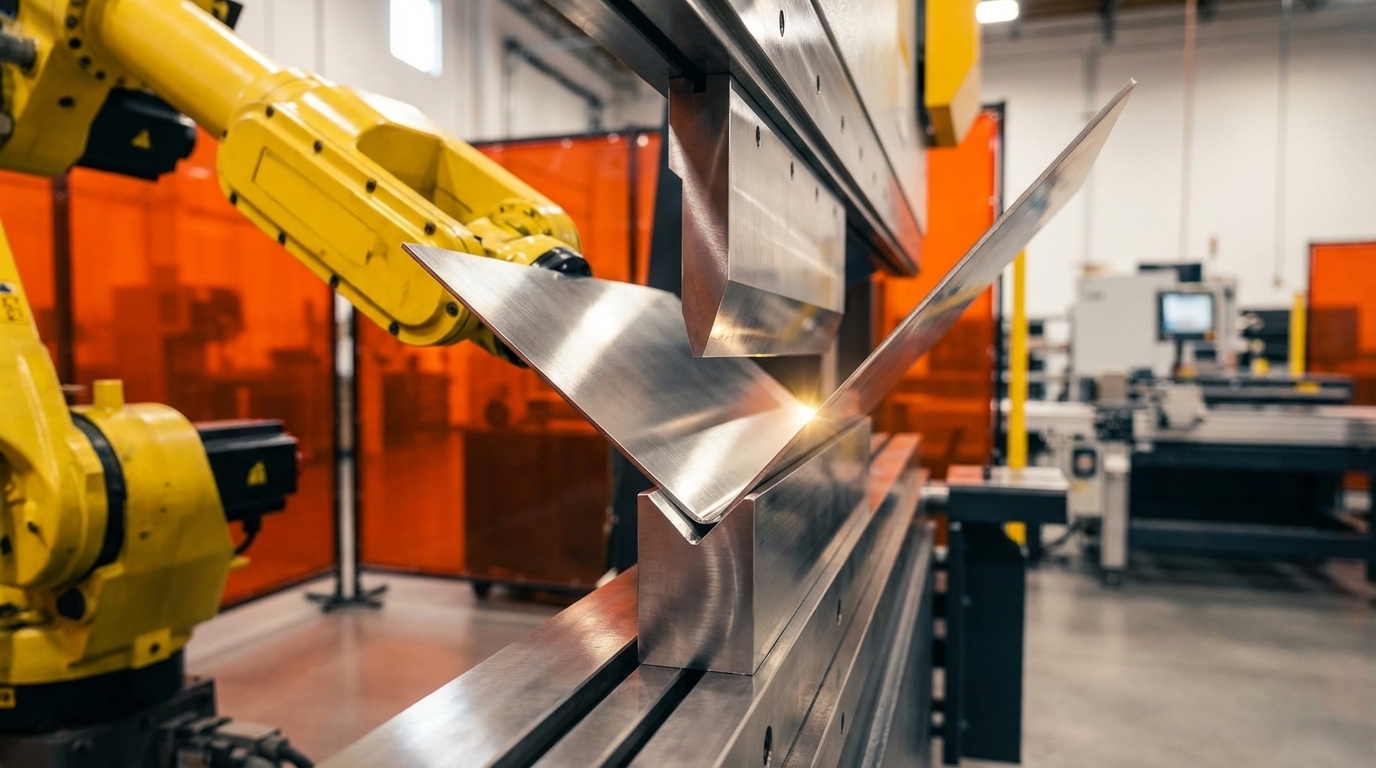
The rapid sheet metal prototyping process starts with design review and DFM analysis to catch manufacturing constraints before fabrication begins. Precision laser cutting or CNC punching then creates flat patterns with tight tolerances. Press brake forming follows to achieve the required bends and angles. Welding and finishing operations build structural integrity, and final assembly and testing confirm fit, function, and performance.
US-based fabrication gives product teams faster response and better control than most offshore options, including reduced exposure to China-related delays and stronger material traceability. Domestic fabricators often ship prototypes in under a week, while international suppliers may take several weeks. Fabcon’s integrated workflow keeps laser cutting, forming, welding, finishing, and assembly in one facility, which supports fast turnarounds for most prototype builds.
Key Factors When Choosing a Fast-Turn Sheet Metal Partner
Partner selection directly affects lead time, cost, and program risk, so teams should evaluate several specific criteria.
- Turnaround Time: Leading providers deliver prototypes in 2–5 days for standard complexity parts.
- Capabilities: Look for broad material support (aluminum, stainless steel, cold-rolled steel), tight tolerances (±0.005″ to ±0.010″), and integrated processes.
- Minimum Orders: Low MOQs that range from single prototypes through validation runs up to roughly 5,000 pieces.
- DFM Support: Direct engineering collaboration that refines designs for manufacturability and cost.
- Vertical Integration: In-house fabrication, finishing, and assembly that reduce handoffs and delays.
- Certifications: ISO 9001:2015, AS9100D, and ITAR compliance for regulated and defense-related applications.
Metal manufacturers in 2026 emphasize supply chain resilience through in-house processing that minimizes handoffs. Non-integrated shops push customers to coordinate separate vendors for cutting, forming, finishing, and assembly, which introduces scheduling conflicts and longer lead times. Fabcon’s single purchase order model removes those coordination gaps while preserving fast US-based turnaround.
Top 7 US Sheet Metal Prototyping Services Compared (2026)
The following comparison highlights seven leading US providers across turnaround speed, capabilities, certifications, and DFM support so you can align your project with the right partner.
| Provider | Turnaround | Capabilities | Certs/MOQ/DFM/Locations |
|---|---|---|---|
| Fabcon | Rapid turnaround | Laser/CNC/forming/welding/finishing/assembly | ISO 9001:2015, AS9100D, ITAR; supports full DFM; located in SoCal; flexible from prototype to mid-volume without high minimums |
| Xometry | 3-7 days | Laser cutting/basic forming | ISO 9001, Network |
| Protolabs | 3-5 days base | Laser/punching/forming | ISO 9001/AS9100, Multiple locations |
| SendCutSend | Typically 2-4 business days for standard orders without additional services like bending or finishing | laser cutting, waterjet cutting, and CNC equipment | Limited certs, Low MOQ, DFM, Nevada |
| Approved Sheet Metal | 2-5 days for prototypes | Laser/forming/finishing | ITAR/ISO 9001:2015, 1-5000 parts, DFM, US |
| Fathom | 3-7 days | Laser/waterjet/forming | ISO 9001/AS9100D/ITAR, Variable MOQ, DFM, Nationwide |
| TMCO | Rapid turnaround | Laser/forming/welding/assembly | ISO certified, No minimum MOQ, Full DFM, Regional |
Fabcon leads this comparison by pairing fast turnaround with deep vertical integration. While SendCutSend offers competitive speed, their lack of forming and assembly capabilities forces customers to involve additional vendors for complete builds. Approved Sheet Metal delivers prototype sheet metal parts in 2–5 days, yet Fabcon’s extensive manufacturing footprint supports smoother scaling when programs move into mid-volume production. Fabcon also handles complex assemblies with wiring and electromechanical integration, which many competitors do not provide.
Why Fabcon Excels for Rapid Prototyping Programs
Fabcon brings more than 45 years of precision manufacturing experience and operates extensive vertically integrated facilities across multiple buildings. These facilities combine fabrication, CNC machining, finishing, wiring, and assembly in one coordinated operation. This structure removes vendor handoffs that slow traditional job shops and supports agile production cells tuned for high-mix, low-to-medium volume work.
Fabcon’s approach aligns with the needs of three core stakeholder groups on most development teams.
- Engineers: DFM collaboration refines designs for manufacturability while preserving consistency from prototype through production.
- Procurement: Single-source consolidation cuts vendor management overhead and strengthens supply chain reliability.
- Operations: Predictable delivery and responsive change-order handling help programs stay on schedule.
Recent projects illustrate these advantages. A data center enclosure program received functional prototypes in 3 days, which allowed thermal validation before committing to production tooling. An EV chassis component required several design revisions during development, and Fabcon’s integrated engineering and fabrication teams supplied updated prototypes within 48 hours of each change. Teams that want similar responsiveness for custom sheet metal builds can engage Fabcon early in their development cycle.
To capture the full speed benefit of services like Fabcon’s, design teams must also focus on manufacturability from the first iteration. The following checklist highlights practical DFM guidelines that prevent avoidable delays.
DFM Checklist for Faster Iterations
These DFM practices help engineers create sheet metal designs that move through prototyping with fewer revisions and shorter lead times.
- Bend Optimization: Maintain a minimum bend radius of at least 1× material thickness to reduce cracking and improve forming consistency.
- Material Selection: Choose standard gauges and readily available alloys to avoid sourcing delays.
- Tolerance Specification: Call out tolerances that match functional needs without driving unnecessary secondary operations.
- Assembly Features: Use tabs and slots for self-locating assembly to simplify fixturing and reduce assembly time.
- Hole Placement: Keep holes at least 2× material thickness away from bend lines to limit distortion during forming.
Fabcon’s engineering team supports these practices with structured DFM reviews that often cut design rework by 30 percent or more. This reduction shortens iteration cycles and raises first-article success rates.
Common Pitfalls That Slow Prototyping
Several recurring issues extend prototype lead times, especially when teams overlook DFM or rely on fragmented supply chains.
- Fragmented Supply Chains: Managing separate vendors for cutting, forming, and finishing introduces handoffs and schedule risk, so integrated providers such as Fabcon usually deliver faster.
- Quoting Lag: Offshore suppliers often require long quoting cycles, while US-based fabricators typically respond much faster.
- Quality Inconsistencies: Non-certified shops may lack robust quality systems, so selecting ISO 9001:2015 and AS9100D certified partners reduces rework and inspection failures.
The following FAQs address additional questions that engineering, sourcing, and operations teams commonly raise when evaluating rapid sheet metal partners.
What are typical lead times for sheet metal prototypes?
Leading US fabricators deliver prototypes in 2–5 days for standard complexity parts. Fabcon consistently meets these aggressive timelines by using integrated processes and coordinated production cells.
How does Fabcon compare to traditional job shops?
Traditional job shops often focus on basic cutting and forming only. Fabcon instead provides full integration that includes DFM engineering, finishing, and electromechanical assembly in a single operation.
Can prototypes scale directly to production?
Fabcon’s agile production cells support a direct path from prototype quantities to mid-volume production while keeping processes and quality standards consistent.
Vendor complexity and fragmented supply chains create real risk for product launches in 2026. Fabcon’s vertically integrated US facilities provide fast sheet metal prototyping with DFM support, assembly capabilities, and certified quality systems. Teams ready to move from concept to hardware can start their rapid prototype project with Fabcon and accelerate time-to-market.
Frequently Asked Questions
What materials does Fabcon work with for rapid sheet metal prototyping?
Fabcon fabricates prototypes using aluminum alloys, stainless steel, cold-rolled steel, galvanized steel, and selected specialty alloys. The company maintains significant material inventory to support fast turnaround without sourcing delays. Material choice depends on strength, corrosion resistance, weight, and cost targets for each application. Fabcon’s engineering team recommends materials during DFM review to balance performance and manufacturability.
How does Fabcon ensure quality consistency from prototype to production?
Fabcon maintains ISO 9001:2015 and AS9100D certifications with quality management systems that govern every production stage. The same equipment, processes, and controls used for prototypes carry into production runs, which protects dimensional consistency and performance. First article inspection verifies critical dimensions and tolerances, and statistical process control tracks ongoing production quality. This unified approach avoids the variation that often appears when different suppliers handle prototype and production phases.
What types of assembly and finishing services are available for sheet metal prototypes?
Fabcon offers powder coating, wet paint, screen printing, CARC military-grade finishing, and mil-spec coatings. Assembly services include hardware insertion such as PEM studs, nuts, and standoffs, along with mechanical fastening, light welding, and electromechanical integration with wire harnesses and component mounting. This range of services supports delivery of fully functional prototypes ready for testing, without involving multiple outside vendors.
How does Fabcon’s pricing compare to offshore alternatives for rapid prototyping?
Fabcon’s per-part pricing may exceed some offshore quotes, yet total cost of ownership often comes in lower. Faster turnaround, reduced shipping costs, no import duties, and higher quality consistency cut rework and schedule slips. Domestic lead times that beat 3–6 week offshore windows create significant value for time-sensitive development. Fabcon’s DFM support also identifies design changes that lower production cost and offset initial price differences.
What information should I provide when requesting a quote for sheet metal prototypes?
Provide 3D CAD files in formats such as SolidWorks, STEP, or IGES, along with 2D drawings that show critical dimensions and tolerances. Include material specifications, quantities, finish requirements, and any assembly or testing needs. Share target timelines and application details so Fabcon’s engineering team can tailor DFM recommendations. If you expect future production volumes, include those projections because they can influence tooling and process choices that benefit both prototype and production stages.