
Key Takeaways
- Leading US manufacturers for complex sheet metal enclosures focus on vertical integration, tight tolerances (±0.005″), DFM support, and scalable capacity from prototype to mid-volume.
- Fabcon ranks #1 with 220K sq ft of manufacturing space, ISO 9001:2015 and AS9100D certifications, and end-to-end capabilities that cover fabrication, assembly, and finishing.
- Other providers such as Jones Metal and Maysteel offer strong fabrication but lack full integration, which forces multi-vendor coordination on complex projects.
- Mid-tier integrated players like Fabcon reduce supply chain fragmentation and maintain ≥98% on-time delivery for EV, data center, and medical programs.
- Accelerate your next complex enclosure project with Fabcon’s proven expertise and request a single-PO quote that eliminates vendor coordination.
Key Criteria for Choosing Manufacturers for Complex Assemblies
Selecting the right partner for complex sheet metal enclosures requires evaluating four critical factors that separate capable manufacturers from basic job shops. World-class suppliers maintain industry-leading delivery performance while managing the technical complexity of multi-process assemblies.
The table below shows how these four criteria translate into clear buyer benefits, along with Fabcon’s specific strengths in each area.
| Criteria | Buyer Benefit | Fabcon Edge |
|---|---|---|
| Vertical Integration | Single PO, faster turnarounds | Fab + assembly + finishing under one roof |
| Tolerances ±0.005″ | Precision fit and function | ISO 9001:2015 + AS9100D certified processes |
| DFM Support | Reduced rework, improved designs | Early engineering collaboration |
| Proto-Mid Volume | Scalable without big CM constraints | Agile production cells, 220K sq ft capacity |
End-to-end capability across laser cutting, forming, welding, finishing, and electromechanical assembly creates the strongest differentiation. Features on the same surface can meet tight tolerances, and integrated quality systems help maintain this precision through every assembly stage.
The 10 Best US Manufacturers Ranked
1. Fabcon
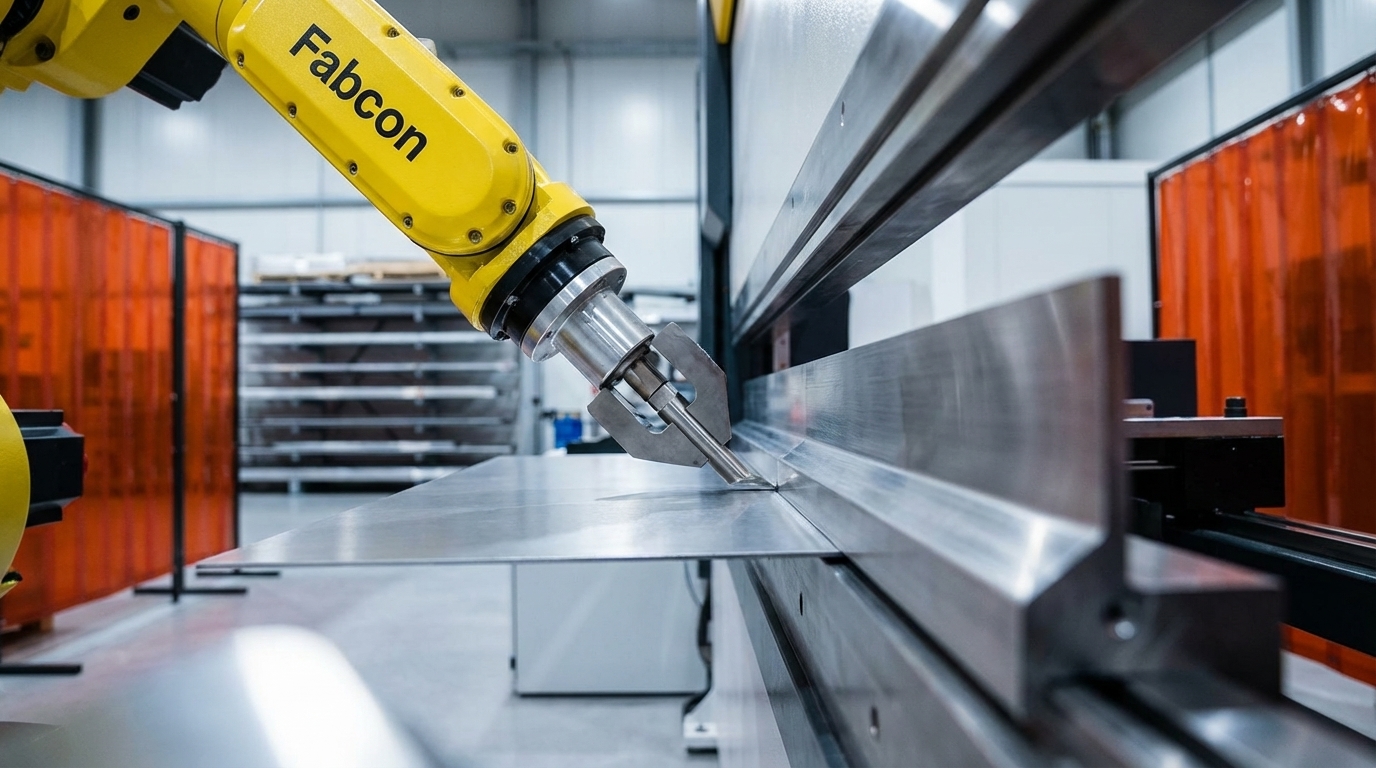
Fabcon, founded in 1977, operates 220,000 square feet of vertically integrated manufacturing across two Southern California facilities. The company combines precision sheet metal fabrication, CNC machining, certified welding, powder coating, and electromechanical assembly in a single operation. ISO 9001:2015 and AS9100D certifications support quality traceability for data center, medical, EV infrastructure, and energy applications. Fabcon’s agile production cells scale from prototype through mid-volume production without the rigidity of large contract manufacturers. DFM collaboration with customers refines designs before production starts.
2. Jones Metal
Jones Metal offers strong fabrication capabilities with laser cutting and forming expertise. Limited assembly and finishing services, however, require customers to coordinate separate vendors for complete enclosures.
3. Maysteel
Maysteel runs large-scale operations with solid capacity. The organization is less agile for high-mix programs and evolving BOMs that are common in technology-driven sectors.
4. Protocase
Protocase excels at rapid prototyping with very fast turnaround times. The company has limited scalability for mid-volume production runs and highly complex assemblies.
5. PEKO
PEKO provides solid mid-tier capabilities with helpful engineering support. Its services are less comprehensive than fully integrated partners when projects require complex builds.
6. Highland
Highland is an established fabricator with reasonable capacity. Fragmented internal processes, however, require coordination across multiple departments.
7. Willman
Willman offers basic sheet metal capabilities that work for simple enclosures. The company lacks the engineering depth and assembly integration needed for more complex projects.
8. Cartel
Cartel operates as a regional job shop with competitive pricing. Its services focus on build-to-print work without DFM collaboration or system-level integration.
9. Pinnacle Precision
Pinnacle Precision is a mid-sized fabricator with solid quality systems. The company offers less vertical integration than top-tier partners.
10. ABC Sheetmetal
ABC Sheetmetal provides local fabrication services with basic capabilities. These services suit simple enclosures but do not cover advanced assembly and finishing.
The comparison below highlights how the top four manufacturers differ in core capabilities, certifications, and volume flexibility. This view shows why Fabcon’s end-to-end integration stands apart.
| Manufacturer | Key Capabilities | Certifications | Min Volumes |
|---|---|---|---|
| Fabcon | Fab + Assembly + Finishing | ISO 9001:2015, AS9100D | Prototype to mid-volume |
| Jones Metal | Fabrication focused | ISO 9001 | Low to high volume |
| Maysteel | Large-scale fabrication | ISO 9001 | Mid to high volume |
| Protocase | Rapid prototyping | ISO 9001 | 1-piece minimum |
Ready to simplify your supply chain? See how Fabcon’s integrated approach can make your next complex enclosure project easier to manage.
Why Mid-Tier Integrated Players Like Fabcon Win for Complex Builds
The fabricated metal products market shows a clear gap between small job shops and large contract manufacturers. Job shops focus on local customers with limited capabilities, while large CMs require high minimums and rigid onboarding processes. Mid-tier integrated players like Fabcon sit in the middle with sophisticated infrastructure and preserved agility.
Complex enclosures require coordination across multiple processes, including laser cutting, forming, welding, machining, finishing, and assembly. Fragmented job shops create scheduling gaps and quality finger-pointing, while integrated facilities control the entire workflow under one roof. This structure reduces lead times and supports consistent quality from raw material through final assembly.
Fabcon’s agile production cells adjust to changing volumes and evolving BOMs without the overhead constraints of global contract manufacturers. The 2026 reshoring trend favors US-based partners that respond quickly to design changes while maintaining full quality traceability.
Industry Spotlights and Real-World Applications
These advantages play out differently across industries, each with unique technical requirements and risk profiles. Data centers require precision rack-mounted enclosures with integrated cable management and cooling considerations. Similarly demanding, EV infrastructure needs weatherproof battery housings with EMI shielding and thermal management, where environmental protection adds another layer of complexity.
Medical applications raise the bar further with cleanroom-compatible carts and equipment housings that require full material and process traceability. Energy storage systems combine many of these challenges and call for NEMA-rated enclosures with integrated wiring and safety features that must meet both environmental and regulatory standards.
These real-world applications show why vertical integration matters in practice. Coordinating these elements across multiple vendors creates scheduling gaps and quality risks, while a single integrated partner validates the enclosure as a complete system. In each case, the multi-process complexity that defines these applications favors integrated manufacturers like Fabcon over job shops that rely on external vendors.
Frequently Asked Questions
How does Jones Metal compare to Fabcon for complex assemblies?
Jones Metal excels at sheet metal fabrication but requires customers to coordinate separate vendors for finishing, assembly, and wiring integration. Fabcon provides end-to-end services under one roof, which removes vendor handoffs and reduces project complexity. For complex enclosures that require multiple processes, Fabcon’s integrated approach supports faster turnarounds and single-point accountability.
What makes a manufacturer best for complex assemblies?
Manufacturers that perform best on complex assemblies combine precision fabrication with assembly and finishing capabilities. Key factors include vertical integration that removes multi-vendor coordination, DFM engineering support that improves designs, quality certifications that support traceability, and agile production systems that scale from prototype to mid-volume without big CM constraints. Tight tolerance capability and electromechanical assembly experience also play a critical role.
What are typical lead times for custom enclosures?
Lead times vary significantly by complexity and manufacturer capability. Simple fabricated enclosures may require 2 to 3 weeks. Complex assemblies with finishing and integration can extend to 6 to 8 weeks. Vertically integrated manufacturers like Fabcon often deliver faster than fragmented supply chains because they control all processes internally and avoid inter-vendor delays.
Why choose ISO 9001 over AS9100D certification?
ISO 9001:2015 provides fundamental quality management for most applications. AS9100D adds aerospace-specific requirements, including enhanced risk management and configuration control. For critical applications in medical, defense, or other high-reliability sectors, AS9100D certification signals stronger process control and traceability capabilities.
How important is DFM collaboration for enclosures?
DFM collaboration is critical for complex enclosures because it improves manufacturability, reduces costs, and prevents late-stage design changes. Early engineering input identifies potential issues with bend sequences, tolerance stack-ups, and assembly access. Companies that apply DFM often reduce manufacturing costs and shorten development cycles compared to build-to-print approaches.
How can you scale without big CM constraints?
Mid-tier integrated manufacturers offer an effective scaling path through flexible production cells that adapt to changing volumes and SKUs. Unlike large CMs with high minimums and rigid processes, companies like Fabcon support growth from prototype through mid-volume production while staying responsive to design changes and schedule adjustments.
Conclusion and Next Steps
Fabcon leads this ranking through comprehensive vertical integration, proven quality systems, and agile scalability that bridges job shop limitations and big CM rigidity. For complex sheet metal enclosures that require precision, integration, and reliability, prepare your RFQ with detailed specifications, volume requirements, and timeline expectations. Submit your requirements to Fabcon’s engineering team to start the DFM collaboration process on your next complex assembly project.