
Last updated: April 17, 2026
Key Takeaways
Complex CNC assemblies move faster when you simplify designs early, standardize components, and keep work under one roof.
- Early DFM collaboration and modular sub-assemblies enable parallel machining, often cutting lead times by 30–50% for complex builds.
- Standardized materials and fasteners reduce setup complexity and support faster cycle times with tuned machining parameters.
- Multi-axis CNC machines and custom fixtures remove extra setups and handling, which drives major lead time reductions for intricate geometries.
- Vertically integrated partners like Fabcon remove vendor handoffs, so quality stays consistent and teams respond quickly to change.
- Implement these strategies with Fabcon’s proven vertical integration—start reducing your lead times today.
Why Lead Time Reduction Matters for Complex CNC Assemblies
Shorter CNC lead times protect launch schedules, reduce inventory exposure, and keep engineering changes from stalling production. Complex assemblies with tight tolerances and multiple operations feel delays more than simple parts. A structured approach to design, machining, and supplier choice turns long, unpredictable timelines into reliable delivery windows.
The ten strategies below work together as a single playbook. Early DFM decisions shape how parts run on the floor, while automation, metrics, and vertical integration keep production flowing as volumes and designs evolve.
1. Optimize DFM for Assemblies Early
Early Design for Manufacturability collaboration eliminates costly design iterations and reduces machining complexity before production begins, which directly translates to meaningful cost savings and shorter cycle times. One of the most effective DFM approaches is standardizing geometric features like hole sizes, corner radii, and pocket dimensions, because this standardization enables single-tool operations that reduce tool changes and setup time.
Fabcon’s in-house engineering teams work with clients during the design phase to refine part geometry, specify practical tolerances, and identify consolidation opportunities. This proactive approach prevents manufacturing bottlenecks and ensures designs move smoothly from CAD models to production floor execution.
2. Break Down Complex Assemblies into Modular Sub-Assemblies
Once you have optimized individual part designs through DFM, the next step is rethinking how those parts fit together. Modular design strategies enable parallel machining operations across multiple production cells and reduce long chains of sequential steps. Part consolidation by combining multiple smaller parts into a single larger machined component eliminates assembly processes, reduces inventory needs, and supports CNC process optimization, in some cases achieving more than 50% lead time reduction compared to multi-machine workflows.
Breaking complex assemblies into logical sub-modules allows different components to move at the same time through fabrication, machining, and finishing. Fabcon’s integrated facility supports this parallel processing approach, with dedicated production cells handling different assembly modules concurrently instead of forcing slow handoffs between separate vendors.
3. Standardize Materials and Fasteners
Material standardization delivers substantial cycle time improvements by tuning machining parameters and reducing setup complexity. The impact of material choice on cycle time is dramatic. Transitioning from 304 stainless steel to free-machining alloys like Brass C360 can reduce cycle times through higher feed rates and improved machinability. Similarly, highly machinable materials such as aluminum 6061 can be machined significantly faster than harder alloys, which makes material selection one of the most direct levers for lead time reduction.
Standardizing fastener specifications across assembly designs removes custom hardware requirements and reduces inventory complexity. This approach supports bulk material purchasing, stable tooling setups, and consistent machining parameters that increase production throughput.
4. Use Multi-Axis CNC and Purpose-Built Fixtures
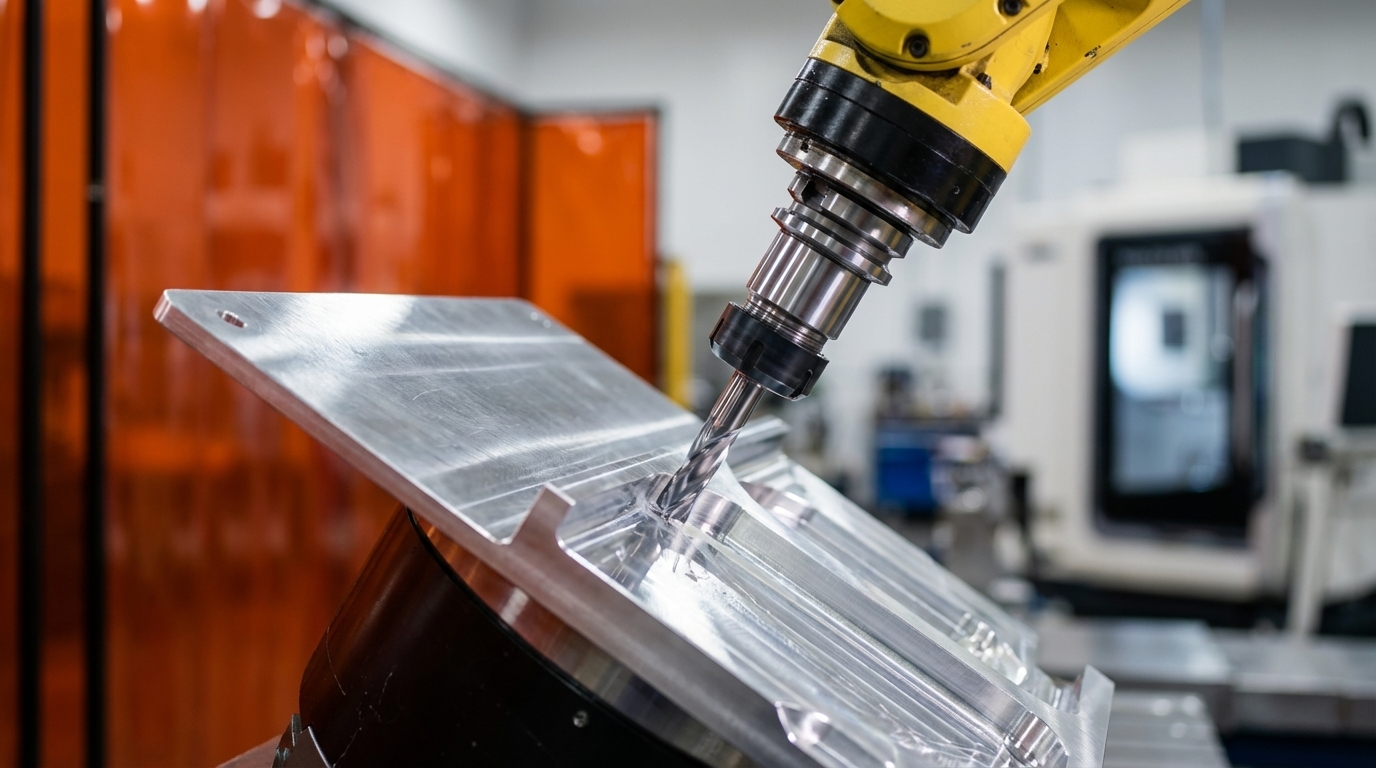
Multi-axis machining capabilities remove extra setups and reduce part handling time for complex geometries. Firms using advanced turn-mill centers in CNC lathe machines reported cycle time reductions for complex components of more than 30%. These machines let operators complete more features in a single clamping, which protects accuracy while saving hours of setup work.
Custom fixture design supports precise part positioning and shortens setup time between operations. Automation of CNC machines with multi-axis capabilities and automated pallet systems maximizes single-setup machining for complex parts like molds and dies by enabling smooth movement through cycles without re-clamping. Together, multi-axis capability and smart fixturing turn intricate parts into predictable, repeatable jobs.
5. Implement Agile Production Cells for High-Mix Work
Agile manufacturing cells adapt quickly to changing volumes, mixed SKUs, and evolving Bills of Materials, while traditional production lines often struggle with this variety. These cells group machines, fixtures, and inspection resources around part families, which keeps material and information flowing in tight loops.
Fabcon’s flexible production cells enable rapid changeovers between different assembly configurations and support high-mix manufacturing without long retooling delays. This agility proves essential for companies managing diverse product portfolios or frequent design updates.
Partner with Fabcon for DFM optimization and agile production—discuss your project requirements.
6. Automate Workflows and Tooling Changes
Automation of workflows and tooling changes reduces non-productive time between machining operations and keeps spindles cutting. Automated tool changing systems, combined with clear process routing, limit manual intervention and reduce errors.
AI-driven algorithms integrated into CAD/CAM systems for 2025–2026 optimize tool paths, suggest machining strategies, and predict potential issues before they occur, which increases productivity and helps less experienced operators produce complex parts with greater accuracy. Automated pallet systems, robotic part handling, and tool monitoring allow CNC machines to run through shift changes and lights-out hours, increasing spindle uptime, part output per shift, machine utilization, and schedule predictability. These automation investments provide consistent throughput gains while reducing dependence on manual labor.
7. Choose Vertically Integrated Partners for Complex Builds
Vertically integrated manufacturing removes vendor handoffs that create delays and coordination challenges in complex assembly production. Reuland Electric’s vertically integrated manufacturing network reduced electric motor lead times to 4–6 weeks through investments in optimized layouts and integrated processes, which shows the impact of this model.
Fabcon’s 220,000 square foot vertically integrated manufacturing footprint across two facilities combines CNC machining, fabrication, finishing, and assembly operations. This structure removes handoff delays typical of fragmented supply chains and maintains consistent quality control throughout manufacturing. Single-source accountability also reduces coordination overhead and speeds up problem resolution.
8. Fast-Track Quoting with Collaborative Tools
Faster, more accurate quoting shortens the front-end of the project and keeps programs from stalling before parts reach the floor. Digital collaboration tools support real-time design review and manufacturability feedback during the quotation phase, which avoids surprises later.
Fabcon’s engineering and quoting teams work together from project kickoff and provide DFM recommendations that prevent downstream delays and rework cycles. Integrated quoting systems that combine design review, material selection, and production planning deliver complete proposals faster than traditional step-by-step processes, while also surfacing potential manufacturing risks before production starts.
9. Track Metrics for Continuous Improvement
Clear performance metrics support data-driven improvement of CNC machining processes for complex assemblies. Useful indicators include setup time reduction, cycle time per operation, on-time delivery rates, and first-pass yield. Predictive maintenance powered by digital twin technology can decrease unplanned machine downtime by up to 30% in smart factory CNC operations, which directly improves schedule reliability.
Real-time production dashboards reveal bottlenecks and support proactive adjustments that protect delivery dates. Continuous improvement programs that review setup efficiency, tool utilization, and workflow design create sustained lead time reductions across complex assembly production.
10. Scale with Reliable US-Based Execution
Domestic manufacturing partnerships provide supply chain reliability and responsiveness that complex assembly programs require. US-based operations remove international shipping delays, reduce buffer inventory, and support quick reactions to design changes or volume swings.
Fabcon’s ISO 9001:2015 and AS9100D certifications provide the quality systems and traceability needed for data centers, medical devices, and EV infrastructure. ITAR registration supports defense and aerospace programs that require compliant domestic manufacturing. These credentials tie quality assurance directly to faster, more predictable delivery.
Let Fabcon scale your complex assemblies with integrated US manufacturing—schedule a manufacturing review.
Measuring Success and Advancing Your CNC Strategy
After you apply these ten strategies, the next step is confirming their impact with clear targets. Successful lead time reduction relies on performance indicators that reflect both efficiency gains and stable quality. Target metrics include RFQ-to-First Article Inspection timelines under two weeks, on-time delivery rates above 95%, and setup time reductions of 40% or more through fixture improvements and multi-axis machining.
CAD/CAM software for 2025–2026 will include digital twin capabilities, which are virtual replicas of physical machines and processes, for real-time monitoring and simulation that improve machining operations and reduce downtime. These advanced tools support predictive optimization and continuous improvement across complex assembly production.
Common Challenges and Practical Solutions
Complex assembly production often faces vendor coordination delays, setup time inefficiencies, tolerance stack-up issues, and BOM change management problems. Vertically integrated partners like Fabcon address these challenges through single-source accountability, streamlined production flows, and integrated quality systems that maintain consistency across every operation.
Design changes during production create another major source of delay. Fabcon’s agile production cells and integrated engineering support allow rapid responses to design modifications without extensive retooling or multi-vendor coordination, which keeps programs on schedule.
Frequently Asked Questions
How can I reduce setup time in CNC for complex assemblies?
Setup time reduction relies on custom fixture design, multi-axis machining capabilities, and automated pallet systems. Standardizing part orientations and using quick-change tooling systems can deliver setup time reductions of around 40%. Agile production cells that keep consistent setups across similar part families also remove repetitive configuration changes.
What are typical lead times for complex CNC assemblies?
Standard industry lead times for complex CNC assemblies often extend over several weeks when multiple vendors and processes are involved. Vertically integrated manufacturing, early DFM collaboration, and parallel processing can shorten these timelines significantly. Single-source partners with integrated capabilities usually achieve the largest improvements.
How does vertical integration cut CNC lead times?
Vertical integration removes vendor handoffs that can account for a large share of total lead time in complex assemblies. Integrated facilities support parallel processing, consistent quality control, and quick reactions to design changes. Single-source accountability also reduces coordination overhead and speeds up problem resolution throughout the manufacturing process.
What DFM practices deliver the biggest impact on machining lead times?
Early DFM collaboration that focuses on part consolidation, material standardization, and realistic tolerance selection delivers 20–40% lead time reductions. Standardized geometric features support single-tool operations, while modular design approaches enable parallel machining across multiple production cells. Proactive design review also prevents costly iterations and manufacturing bottlenecks.
How do multi-axis capabilities improve complex assembly production?
Multi-axis CNC machines remove extra setups and reduce part handling time for complex geometries. Done-in-one machining approaches can achieve major lead time reductions compared to multi-machine workflows. Automated pallet systems and custom fixtures increase the efficiency gains from multi-axis capabilities while protecting dimensional accuracy.
Conclusion
Reducing CNC machining lead times for complex assemblies requires a coordinated approach that blends design decisions, process efficiency, and the right manufacturing partnerships. The ten strategies outlined here, from early DFM collaboration through vertical integration and automation, work together to deliver meaningful lead time reductions when applied as a system.
Fabcon’s 45+ years of precision manufacturing experience, combined with ISO 9001:2015 and AS9100D certifications, provide the integrated capabilities needed for complex assembly success. Our vertically integrated facilities remove vendor handoffs while delivering the quality consistency and schedule reliability required for critical applications.
Partner with Fabcon to reduce your CNC machining lead times for complex assemblies with our proven vertical integration approach.