
Key Takeaways for Southwest Infrastructure Teams
- Industrial powder coating delivers stronger corrosion and UV protection than wet paint for structural steel, EV chargers, and outdoor enclosures.
- Working with a single integrated partner like Fabcon reduces coordination effort and quality risk compared to juggling multiple standalone coaters.
- Critical selection factors include 20+ foot oven capacity, ISO 9001/AS9100 credentials, and in-house fabrication support for complex projects.
- Fabcon provides in-house laser cutting, powder coating, and assembly backed by proven results in traffic control and energy infrastructure programs.
- Reduce project risk for 2026 Southwest builds by requesting a Fabcon quote tailored to your infrastructure schedule.
How Industrial Powder Coating Protects Infrastructure Assets
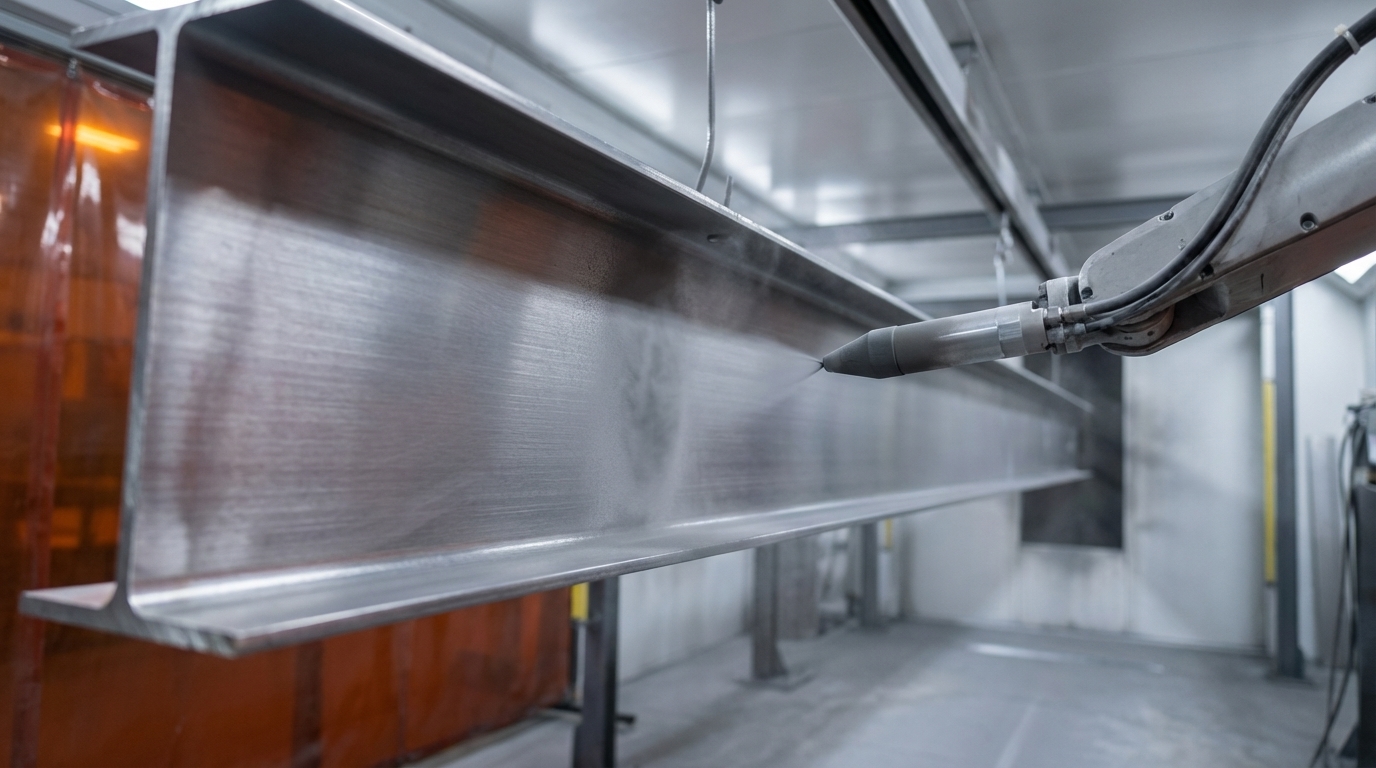
Industrial powder coating applies electrostatically charged dry powder to metal, then cures it at high temperatures to form a hard, uniform finish. This process creates stronger corrosion resistance and UV protection than most wet paint systems, which makes it a fit for harsh outdoor environments.
Powder coating delivers long service life with lower environmental impact, and it requires large ovens for 20-foot components plus surface preparation steps such as sandblasting for strong adhesion.
Infrastructure applications often require marine-grade powder systems with tightly controlled thickness to meet ASTM and ISO standards for traffic safety, energy storage, and EV infrastructure exposed to sun, salt, and moisture.
Why Southwest Infrastructure Manufacturers Need Specialized Providers
Meeting these technical coating requirements while staying on schedule demands more than basic coating capability. Standalone powder coating shops create fragmented workflows, because manufacturers must ship fabricated parts between vendors and manage quality at each handoff.
These coordination challenges have intensified as reshoring efforts and vendor consolidation push teams to work with fewer, more capable partners that can maintain compliance while handling more of the process in-house.
Infrastructure manufacturers should evaluate providers based on six critical criteria that reflect these realities and reduce project risk:
- Oven capacity and maximum part dimensions, with 20+ feet required for many structural components
- Quality credentials such as ISO 9001:2015, AS9100D, and AMPP CIP Level 1 coating inspector certification
- Fabrication and assembly integration that keeps more work under one roof
- Lead times and logistics that align with JIT and field installation schedules
- Transparent pricing supported by clear explanations of total value
- Documented infrastructure experience and case studies relevant to your application
The following comparison shows how five Southwest providers align with these criteria and highlights the integration differences that affect schedule and coordination effort.
Top Industrial Powder Coating Services in the Southwest: Comparison Table
|
Provider |
Key Specifications |
Integration Level |
Best For/Lead Time |
|
Fabcon |
Southern CA, ISO 9001:2015/AS9100D/ITAR |
Full vertical: fab, coating, assembly |
Enclosures/frames, fast quoting and delivery |
|
Sadler Powder Coating |
Texas, large structural ovens, basic certifications |
Coating only, no fabrication |
Infrastructure steel, 6-8 weeks |
|
Southwest Powder of Arizona |
Arizona, structural capacity, sandblast prep |
Coating plus limited prep |
Architectural columns, variable timing |
|
STP Performance Coating |
Arizona, industrial focus, mid-scale capacity |
Coating only, limited assembly |
Mid-volume components, standard lead times |
|
Houston Powder Coaters |
Texas, large-scale operations, Gulf proximity |
Coating only, no integration |
Gulf infrastructure, fast turnaround options |
Fabcon offers the only fully integrated solution in this group, so teams can rely on a single vendor for fabrication, coating, and assembly instead of coordinating multiple shops.
Why Fabcon Stands Out for Southwest Infrastructure Projects
Fabcon operates 220,000 square feet of vertically integrated manufacturing space across Santa Ana and Valencia, California. This footprint supports complete in-house laser cutting, CNC fabrication, powder coating, and electromechanical assembly under a single purchase order. Integrated manufacturing reduces vendor coordination, closes quality gaps, and shortens lead times by keeping work in one facility.
Fabcon teams collaborate on design for manufacturability, which cuts rework and speeds the move from prototype to production. A unified quality system tracks every step across fabrication, coating, and assembly, which supports the documentation required for regulated infrastructure programs. Case studies include weatherproof enclosures for Traffix Systems and scalable production that supports early prototypes through mid-volume runs.
Fabcon also combines more than 45 years of experience with ISO 9001:2015, AS9100D, and ITAR credentials. Agile production cells adjust to changing volumes and SKU mixes without the rigid batch structures common at large contract manufacturers.
Request a quote to see how Fabcon’s agile cells handle your volume requirements.
Vendor Selection Criteria and Practical Benchmarks
Infrastructure manufacturers should prioritize providers with oven capacities above 20 feet, because many guardrails, frames, and structural members exceed standard sizes. While industry pricing often falls between $2 and $5 per square foot, this single metric does not capture the full impact on project cost. Total value factors such as reduced rework, faster delivery, and fewer vendors often justify choosing an integrated partner over the lowest unit price.
Teams should target on-time delivery rates above 95% and request detailed RFQ responses that show technical depth. Providers also need to meet the marine-grade thickness standards discussed earlier for outdoor infrastructure, especially in coastal or high-moisture Southwest regions.
Evaluation should include each provider’s ability to handle large structural parts, meet corrosion protection requirements, and connect smoothly with upstream fabrication. This approach reduces overall project risk and protects critical milestones.
Common Pitfalls and How Fabcon Addresses Them
Working with multiple vendors for fabrication, coating, and assembly increases coordination work, introduces quality variation, and stretches lead times. Fabcon’s single-vendor model reduces these risks by keeping fabrication, coating, and assembly aligned under one quality system.
Scaling also creates problems for many manufacturers. Small job shops may lack the systems and capacity for growth, while large contract manufacturers often require high minimums that do not fit every program. Fabcon’s powder coating processes have passed PPAP audits for demanding global corporations, which shows that its quality systems scale from prototype through production volumes.
Learn how Fabcon’s PPAP-certified processes ensure quality at scale for your next infrastructure project.
FAQ: Practical Questions from Infrastructure Teams
What maximum part sizes can Southwest infrastructure coaters handle?
Fabcon’s integrated facilities support large enclosures, guardrail systems, and energy infrastructure components with coordinated fabrication, powder coating, and assembly. This capability helps teams manage oversized infrastructure parts without splitting work across several vendors.
What lead times and pricing ranges apply to infrastructure powder coating?
Fabcon’s integrated approach supports fast quoting, shorter lead times, and reliable delivery by keeping fabrication and coating in one workflow instead of moving parts between shops.
Which powder coating specifications work best for structural steel corrosion protection?
Marine-grade polyester powder systems with controlled film thickness provide strong corrosion resistance for outdoor infrastructure. ISO 9001:2015 and ASTM compliance help ensure consistent application and performance across production runs.
How does Fabcon compare to standalone powder coating shops?
Fabcon provides full vertical integration that covers fabrication, coating, and assembly under one quality framework. This structure reduces the coordination and quality handoff issues that often cause delays and rework with standalone coating providers.
What certifications should infrastructure manufacturers require?
Key credentials include ISO 9001:2015 for quality management, AS9100D for aerospace-grade controls, and ITAR registration for defense-related work.
How does integration affect total project cost?
Vertical integration removes shipping steps between vendors, cuts rework through early design collaboration, and often reduces lead times by 20 to 30 percent compared with multi-vendor supply chains.
Can powder coating support outdoor EV and energy infrastructure requirements?
Modern powder coatings provide strong UV and corrosion resistance for outdoor energy and EV equipment. Newer PFAS-free formulations also support environmental goals while maintaining durability for long-term infrastructure use.
Conclusion and Next Steps for Your Project
Fabcon supports Southwest industrial powder coating needs through vertically integrated manufacturing that reduces supply chain complexity while maintaining strong quality and compliance controls. Infrastructure manufacturers gain an advantage through fewer vendors, shorter lead times, and reliable performance across demanding outdoor applications.
Request a Fabcon quote to review your design and timeline so you can move your next infrastructure project forward with greater confidence.