
Key Takeaways for Fast Metal Enclosure Prototypes
- Sheet metal fabrication delivers the fastest 5-7 day lead times at $200-500 per unit for accurate, production-ready electronic enclosures.
- CNC machining provides high precision for complex geometries with 7-14 day lead times and $400-800 per unit costs, ideal for small runs.
- Metal 3D printing supports intricate designs in 5-10 days, but higher costs ($500-1200) and surface finish limits keep it a niche option.
- Essential DFM practices include proper bend radii, hole spacing, strain relief, and EMI grounding to avoid redesigns and ensure a reliable fit.
- Vertically integrated partners like Fabcon deliver complete enclosures with assembly in under 2 weeks, so request your free DFM review and quote.
How the 7 Prototyping Methods Compare on Speed, Cost, and Complexity
The following comparison ranks prototyping methods using 2026 industry benchmarks for electronic enclosure development. Sheet metal fabrication offers the strongest balance of speed and cost for most projects, while CNC machining and metal 3D printing support specialized geometries at higher price points. Laser cutting enables 24-48 hour turnaround times for simple sheet metal iterations, and more complex methods require longer timelines.
|
Method (Ranked) |
Lead Time |
Cost/Unit (Low Vol) |
Best For |
|
1. Sheet Metal Fabrication |
5-7 days |
$200-500 |
Production-ready enclosures |
|
2. CNC Machining |
7-14 days |
$400-800 |
Precision complex geometries |
|
3. Metal 3D Printing |
5-10 days |
$500-1200 |
Intricate internal features |
|
4. Waterjet Cutting |
7-12 days |
$300-600 |
Thick materials, tight nesting |
Fabcon’s vertically integrated approach combines the speed of sheet metal fabrication with in-house assembly, so you receive complete electronic enclosures without vendor coordination delays.
Upload CAD files for a rapid prototyping quote.
1. Sheet Metal Fabrication: Fastest Path to Production-Ready Enclosures
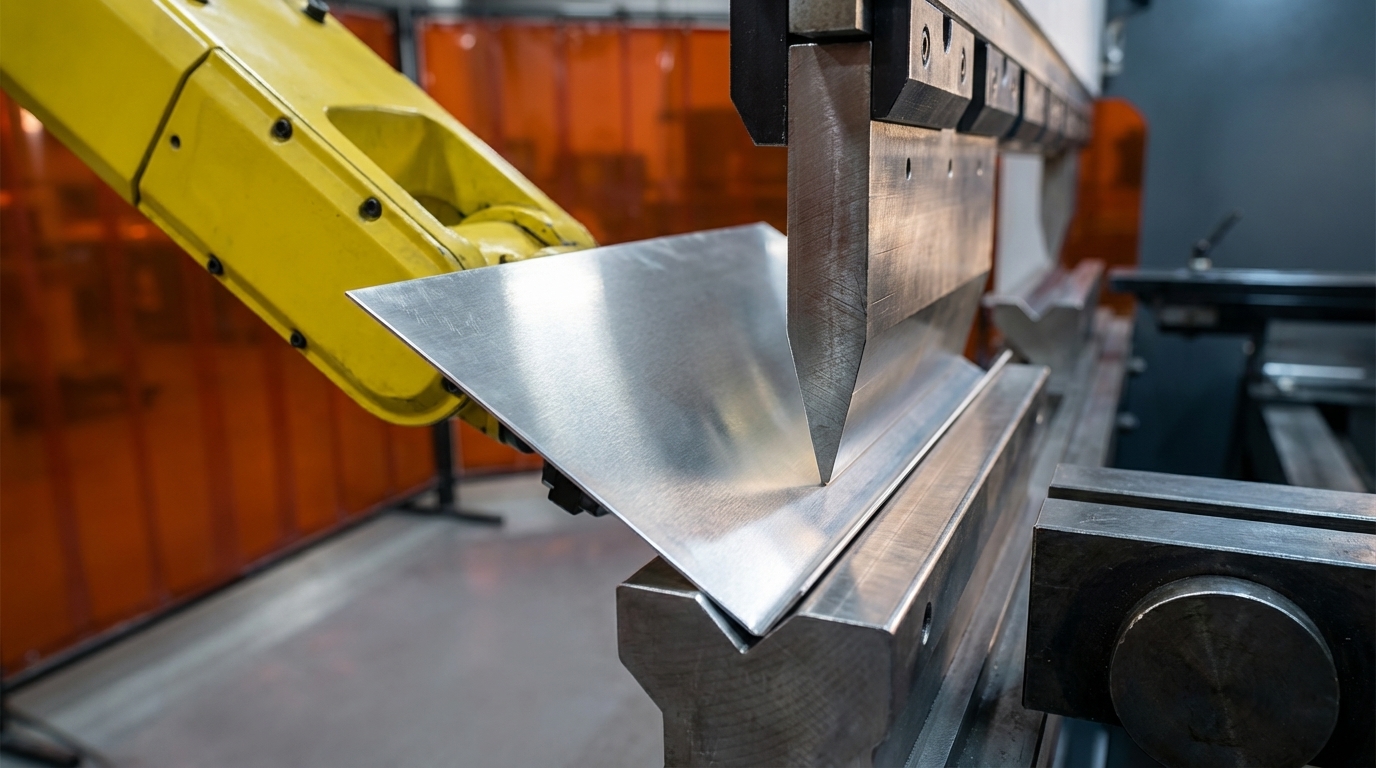
Sheet metal fabrication using laser cutting and CNC bending provides fast turnaround for enclosures with ±0.1 mm accuracy. This capability makes it a strong fit for electronics housing prototypes that must behave like production parts. The process uses laser cutting or CNC punching for flat patterns, then adds precision forming, welding of seams, and powder coating or wet paint finishes. Sheet metal fabrication remains economical from single prototypes through thousands of units.
Lead times typically fall in the 5-7 day range for standard aluminum and steel. These timelines hold across most simple to moderate geometries, with the $200-500 per unit cost range reflecting small orders of roughly 1-10 units. This combination of speed and economics makes sheet metal ideal for rectangular enclosures, control boxes, and chassis that need production-like durability. To maintain these advantages, designs must follow key DFM rules such as keeping bend radii greater than material thickness and specifying proper hole-to-edge distances.
Fabcon’s 220,000 square foot facilities bring laser cutting, forming, welding, finishing, and assembly together in one location. This structure enables sub-7-day delivery of complete electronic enclosures that already include wiring and hardware installation.
2. CNC Machining: High Precision for Complex Low-Volume Enclosures
CNC machining achieves tight tolerances of about ±0.01 mm for complex metal parts in aluminum, steel, and titanium. This precision suits electronic enclosures that demand exact PCB fitment and highly controlled connector locations. The process mills enclosures from solid billets, which supports complex internal geometries and threaded features without many secondary operations.
Typical lead times span 7-14 days, with small-quantity costs in the $400-800 per unit range. CNC machining excels when enclosures require precise connector cutouts, integrated heat sinks, or intricate internal mounting features, because these geometries justify the higher cost. For simple rectangular boxes without those features, material waste and longer cycle times often make CNC less cost-effective than sheet metal fabrication.
3. Metal 3D Printing: Rapid Prototyping for Intricate Designs
Metal 3D printing supports the rapid production of complex geometries that traditional fabrication cannot easily achieve. Lead times usually range from 5-10 days, and costs often fall between $500 and $1200 per unit, depending on size and material. This method works well for enclosures that need internal lattice structures, integrated cooling channels, or highly complex mounting geometries.
Surface finish quality and mechanical properties often lag behind traditional fabrication methods. Post-processing requirements and limited material options keep metal 3D printing focused on specialized applications instead of mainstream electronic enclosure prototyping. Regardless of whether you choose 3D printing, sheet metal, or machining, success depends on strong design-for-manufacturability practices that prevent costly rework.
DFM Checklist for Reliable, Buildable Enclosures
Successful electronic enclosure prototyping starts with clear design-for-manufacturability principles that match how parts are actually built. Common DFM pitfalls include misalignment of components due to poor tolerancing between PCB cutouts and enclosure features, which can create binding or stress on solder joints.
The DFM principles mentioned above require specific implementation across three main areas.
First, structural integrity: maintain bend radii greater than 1x material thickness and specify hole-to-edge distances of at least 2x material thickness to prevent cracking during forming.
Second, electrical performance: include strain relief features for cable routing and design grounding tabs for EMI compliance so connections remain stable over time.
Third, assembly fit and serviceability: allow about ±0.010″ tolerances for PCB mounting, specify IP rating requirements early, include ventilation for thermal management, design for consistent wall thickness, avoid overly complex bends in a single operation, and leave clear access for fasteners.
Get comprehensive DFM feedback from Fabcon’s engineering team to avoid redesigns and keep your prototype schedule on track.
4. Waterjet Cutting: Best for Thick, Heavy-Duty Enclosure Panels
Waterjet cutting suits thick materials and complex nesting patterns where thermal distortion would cause problems. Typical lead times fall between 7 and 12 days, with costs around $300-600 per unit for low volumes. The process cuts materials several inches thick without creating heat-affected zones, which makes it a strong option for heavy-duty electronic enclosures that require thick aluminum or steel construction.
5. Laser Cutting plus Bending for Simple Formed Enclosures
Laser cutting combined with press brake bending supports moderate complexity at competitive cost and speed. Lead times usually land in the 6-10 day range, and costs often run $250-450 per unit for small quantities. This approach works well for straightforward enclosures that need precise cutouts but only limited forming complexity compared to full-featured sheet metal fabrication cells.
6. Casting for Complex Shapes When Speed Is Secondary
Investment or sand casting supports complex internal geometries and smooth surface finishes, but requires more time and upfront tooling. Typical timelines exceed 14 days, and costs often start around $600 per unit at low volumes. These tooling and schedule demands make casting a poor fit for rapid prototyping, although it can serve specialized enclosure applications once designs stabilize.
7. Hybrid 3D Printing plus CNC for Specialized Prototypes
Hybrid workflows that combine 3D printing with CNC finishing offer strong design flexibility for demanding projects. These approaches often require 10-16 days and cost $800 or more per unit at low volumes. Coordination between multiple vendors and processes can introduce delays and quality control challenges, so teams usually reserve hybrid methods for highly specialized prototypes.
Electronics Integration and Post-Processing Often Overlooked
Most fabrication vendors focus only on metal forming and leave wiring, hardware installation, and final assembly to separate suppliers. This fragmented approach often creates integration problems that single-focus vendors do not catch. Cable strain and pinching from improper routing causes intermittent connections when cases close, so designs need dedicated strain relief that considers both enclosure geometry and wiring paths together.
Fabcon’s integrated model includes electromechanical assembly, hardware insertion, and wiring integration in the same workflow. This structure removes three or more weeks of vendor coordination that fragmented supply chains typically require. The end-to-end capability also supports proper EMI grounding, thermal management, and connector alignment from first prototype through production.
Scaling Prototypes to Production without Big CM Roadblocks
About 18% of manufacturers plan to shift production domestically within six months, driven by supply chain resilience goals. Large contract manufacturers often require high minimum order quantities and long onboarding processes, which conflict with agile hardware development cycles.
Fabcon’s agile production cells bridge the gap between prototypes and mid-volume production while avoiding those big CM constraints. These cells support evolving BOMs and changing volumes yet maintain US-based accountability and consistent quality standards.
Frequently Asked Questions about Metal Enclosure Prototyping
What is the fastest method for complex electronic enclosures?
Sheet metal fabrication with integrated assembly usually delivers the fastest turnaround for production-ready electronic enclosures. Fabcon’s vertically integrated facilities support rapid prototyping of complete enclosures, including laser cutting, forming, welding, finishing, and electromechanical assembly in one location.
How do sheet metal costs compare to CNC machining?
Sheet metal fabrication typically costs $200-500 per unit for small quantities, while CNC machining often ranges from $400 to $800 per unit. Sheet metal scales more efficiently to mid-volume production because setup costs are lower and cycle times are faster for simple geometries.
What are typical US quick-turn lead times for metal prototypes?
US-based sheet metal prototyping often achieves 2-7 day lead times for standard materials and straightforward geometries. More complex assemblies that include wiring and finishing usually require 5-10 days from established suppliers with vertically integrated capabilities.
How should I design for wiring integration in metal enclosures?
Design dedicated strain relief features, specify grounding tabs for EMI compliance, and include clear cable routing channels. Allow adequate bend radii for wire bundles, hold connector cutout tolerances near ±0.010 inches, consider thermal expansion effects on cable paths, and maintain enough access for service work.
Why avoid metal 3D printing for most electronic enclosures?
Metal 3D printing often costs $500-1200 per unit and offers limited material options with surface finishes below traditional fabrication standards. Post-processing needs and mechanical property constraints usually make it less suitable than sheet metal fabrication for typical electronic enclosure applications.
Conclusion: Use Sheet Metal and Fabcon for Fast, Scalable Enclosures
Sheet metal fabrication with integrated assembly provides a strong balance of speed, cost, and scalability for electronic enclosure prototyping. Sheet metal prototyping closely replicates thickness, bending behavior, and hole alignment for early issue detection while giving a clear path to mid-volume production.
Fabcon’s 45+ years of experience and vertically integrated capabilities remove vendor fragmentation that often adds weeks to development schedules. From CAD review through functional enclosure delivery, Fabcon’s ISO-certified processes support quality and reliability for mission-critical electronic systems.
Contact Fabcon to request a prototype quote and DFM consultation.