
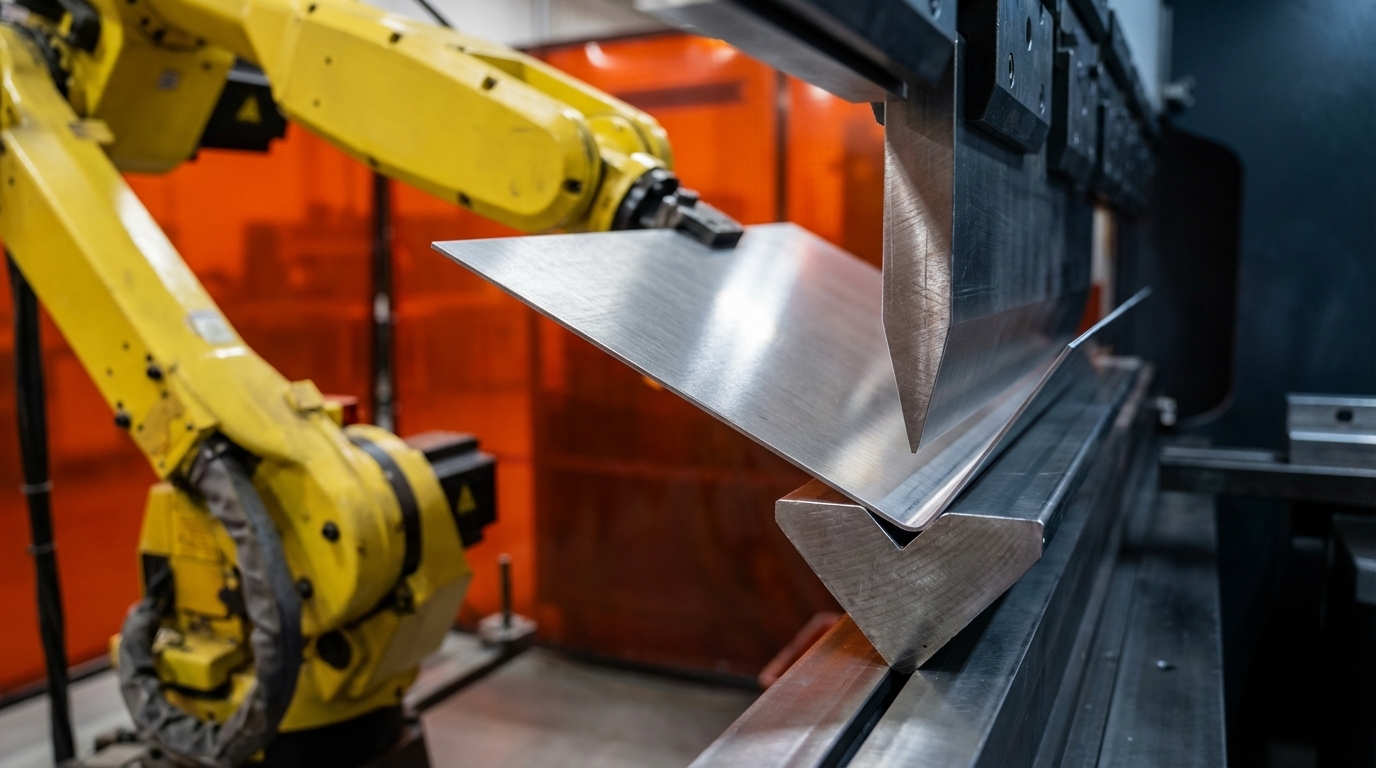
Key Takeaways for Sheet Metal Enclosure DFM
- DFM tailors sheet metal electronic enclosures for fabrication, EMI shielding, and thermal performance, cutting prototyping costs by about 30% and avoiding rework.
- Select aluminum 5052-H32 or 6061-T6 for lightweight, high-thermal-conductivity enclosures with thicknesses between 0.040 and 0.125 inches.
- Keep bend radii equal to or greater than material thickness and place holes at least 2x thickness from edges and bends to prevent cracking and distortion.
- Use overlapping seams for EMI shielding, strategic vents for thermal control, and self-fixturing features to speed assembly and support compliance.
- Partner with Fabcon for vertically integrated DFM reviews to reach more than 95% first-pass yield and 20-30% lead time reductions on enclosure programs.
Who Uses This Guide & Key DFM Terms
This guide serves senior mechanical engineers, directors of engineering, and hardware engineering managers in technology and infrastructure who own CAD decisions and pre-fabrication design. Key DFM terms include bend radius (minimum curvature that avoids cracking), EMI shielding (electromagnetic interference protection), PEMs (press-fit PCB mounting inserts), tolerance stack-up (cumulative dimensional variation), and self-fixturing (design features that position parts during assembly).
US high-mix, mid-volume production gains measurable value from vertical integration instead of fragmented job shops or rigid contract manufacturers. Fabcon’s agile manufacturing cells adapt to evolving BOMs while maintaining DFM collaboration from early design through full production.
12 Practical DFM Rules for Sheet Metal Electronic Enclosures
1. Material Selection for Electronics Applications
Aluminum 5052-H32 and 6061-T6 work well for lightweight chassis and corrosion-prone environments because they combine good formability, strength, and thermal conductivity. Aluminum 5052-H32 delivers thermal conductivity of 138 W/m·K with EMI shielding above 90 dB at 1 GHz, which suits high-power electronics. Keep thickness uniform between 0.040 and 0.125 inches to balance cost, stiffness, and thermal performance.
|
Material |
Thickness Range |
Thermal Conductivity |
Best Application |
|
Aluminum 5052-H32 |
0.040-0.090 in |
138 W/m·K |
Lightweight electronics, thermal spreading |
|
Aluminum 6061-T6 |
0.063-0.125 in |
167 W/m·K |
Structural strength, rackmount panels |
|
Stainless 316L |
0.074-0.125 in |
16.2 W/m·K |
Harsh environments, medical devices |
|
Cold Rolled 1008 |
0.048-0.125 in |
50 W/m·K |
Cost-effective indoor applications |
2. Bend Radius Guidelines for Reliable Forming
Use a minimum inside bend radius of 0.030 in (0.76 mm) for sheet metal enclosures to avoid interference and cracking. Keep inside bend radius equal to or greater than material thickness to reduce stress and support consistent forming. Fabcon’s engineering team collaborates early on bend sequences to prevent cracking and reduce trial-and-error on the press brake.
|
Material Thickness |
Minimum Bend Radius |
Recommended Radius |
Forming Method |
|
0.032 in (20 ga) |
0.032 in |
0.045 in |
Air bending |
|
0.048 in (18 ga) |
0.048 in |
0.060 in |
Air bending |
|
0.063 in (16 ga) |
0.063 in |
0.090 in |
Bottom bending |
|
0.090 in (14 ga) |
0.090 in |
0.125 in |
Bottom bending |
3. Hole Placement and Edge Distance Rules
Place holes at least 2x material thickness from bends and edges to avoid distortion and tearing during forming. For PCB mounting holes and PEM insertion points, maintain minimum edge distances that keep strength under vibration and handling loads.
|
Feature Type |
Min Distance from Bend |
Min Edge Distance |
Typical Application |
|
Standard holes (≤0.25 in) |
2x thickness |
1.5x thickness |
Ventilation, cable routing |
|
PEM fastener holes |
3x thickness |
2x thickness |
PCB mounting points |
|
Large cutouts (>0.5 in) |
4x thickness |
3x thickness |
Display windows, connectors |
|
Slots and elongated holes |
3x thickness |
2x width |
Adjustment features |
4. PEM Fastener Integration for PCB Mounting
Self-clinching nuts (PEM fasteners) work in sheet metal as thin as 0.5 mm and support thinner enclosure profiles without losing strength. Lock PEM locations into the design early so edge distances, bends, and nearby features do not conflict during insertion or assembly.
5. EMI Shielding Seam Design for Electronics
For EMI shielding, keep metal-to-metal continuity across seams, use conductive gaskets, and pull paint back from ground points to avoid EMI failures. Design overlapping seams with at least 0.125-inch contact area and specify conductive finishes such as chem-film for aluminum or zinc plating for steel.
6. Thermal Vent Placement and Louver Design
Ventilation perforations or louvers support thermal management in electronic enclosures, but keep them away from bend lines to limit distortion. Maintain at least 0.5-inch clearance from formed edges and use standard perforation patterns to keep tooling costs predictable.
7. Tolerance Specification Using ISO Standards
Use ISO 2768-m (medium) tolerances for most sheet metal features and tighten only where function demands it. Overly tight tolerances raise cost and scrap without improving performance. Fabcon’s quality systems hold consistent tolerances across prototype and production runs.
8. Self-Fixturing Assembly Features for Faster Builds
Include tabs, slots, and alignment features that locate components during assembly without external fixtures. This approach cuts assembly time and improves repeatability, which matters for wiring harness routing and PCB installation in dense electronic enclosures.
9. Hardware Insertion Strategy and Service Access
Choose PEM fasteners when you need permanent hardware and use conventional screws where field service and replacement matter. Consider technician access, tool clearance, and sequence of assembly, then define fastener types early so hole patterns and edge distances support that plan.
10. Finishing Preparation for Coatings
Specify corner radii that support even powder coating coverage and confirm material thickness can handle the planned finishing process. Sharp edges and very thin sections often create coating voids and weak spots that hurt appearance and corrosion resistance.
11. Scalability and Modular Enclosure Families
Design enclosure families with shared bend patterns, hole sizes, and assembly methods so one tooling set supports multiple SKUs. This strategy lowers per-unit cost in high-mix environments and simplifies ECOs across related products.
12. Vertical Integration and DFM Review with Fabcon
Bring a vertically integrated manufacturing partner into the design phase so DFM issues surface before you commit to tooling. Fabcon’s integrated approach highlights forming, finishing, and assembly risks early and closes them before release. Get a quote for a complete DFM analysis on your next enclosure.
Common DFM Challenges in Enclosures and Fabcon’s Fixes
Electronic enclosure programs often repeat the same DFM mistakes, which you can avoid with a structured review. The table below summarizes typical issues and how Fabcon’s integrated model addresses them.
|
Challenge |
Root Cause |
DFM Solution |
Fabcon Advantage |
|
EMI leakage |
Poor seam design, paint on ground points |
Overlapping seams, conductive finishes |
In-house finishing controls conductivity |
|
Thermal hotspots |
Inadequate vent placement, poor material selection |
Strategic louver positioning, aluminum selection |
Thermal analysis during DFM review |
|
Assembly delays |
Multiple vendor handoffs, poor fixturing |
Self-fixturing features, integrated assembly |
Single-source fabrication through assembly |
|
Tolerance stack-up |
Over-specification, poor process control |
ISO 2768-m standards, functional tolerancing |
ISO 9001:2015 certified quality systems |
Fabcon’s vertically integrated workflow removes vendor handoffs that often create schedule slips and quality escapes. This approach may not deliver the lowest piece price, but it usually reduces total program cost through higher first-pass yield and shorter development cycles.
How to Track DFM Results and Engage Fabcon
Effective DFM delivers more than 95% first-pass yield, less than 10% cost variance from estimates, and 20-30% lead time reduction versus traditional multi-vendor approaches. Track these metrics across prototype, pilot, and production phases to confirm that your DFM decisions are paying off.
Fabcon supports technology leaders such as Traffix Systems and Jabil with end-to-end US manufacturing that combines precision fabrication, finishing, and electromechanical assembly. Our 45-plus years of experience and AS9100D certification provide a stable base for critical infrastructure and electronics programs. Get a quote for your next electronic enclosure project.
FAQ: DFM for Sheet Metal Electronic Enclosures
What bend radius should I specify for 16-gauge steel electronic enclosures?
For 16-gauge steel at 0.063 inches thick, specify a minimum bend radius of 0.063 inches and a recommended radius of 0.090 inches. This range prevents cracking and keeps part geometry consistent across production runs. Use bottom bending on thicker materials when you need tighter radius control.
How do I design EMI shielding seams for electronic enclosures?
Design overlapping seams with at least 0.125-inch metal-to-metal contact area along the joint. Call out conductive finishes such as chem-film for aluminum or zinc plating for steel to maintain continuity. Pull paint and powder coating back from electrical contact points and use conductive gaskets on removable panels that must maintain EMI shielding.
What lead time advantages does vertical integration provide for sheet metal enclosures?
Vertical integration removes shipping and scheduling gaps between fabrication, finishing, and assembly operations. This structure typically cuts total lead time by 20-30% compared with managing separate vendors. Internal coordination also supports faster design changes and prototype turns during development.
Where can I find comprehensive sheet metal design guidelines for electronic applications?
Industry standards such as ISO 2768 provide general tolerancing guidance, and IPC standards cover electronics-specific needs. Manufacturer DFM guides often give the most actionable rules for cost-effective production. Fabcon supplies detailed DFM checklists tailored to electronic enclosure requirements.
How does Fabcon compare to traditional job shops for electronic enclosure projects?
Fabcon goes beyond basic job shops that only provide sheet metal fabrication and instead offers integrated engineering support, finishing, and electromechanical assembly under one roof. This model removes vendor handoffs, lowers quality risk, and simplifies project management through single-source accountability. Fabcon’s ISO 9001:2015 and AS9100D certifications maintain consistent quality standards from first article through full-rate production.
Conclusion: Apply These 12 DFM Rules with Fabcon
These 12 DFM rules create a practical framework for cost-effective sheet metal electronic enclosures that satisfy EMI, thermal, and assembly requirements. Strong material selection, correct bend radii, disciplined hole placement, and robust EMI seam design prevent the rework that slows many programs. Combined with smart PEM placement, thermal vent layout, and self-fixturing features, these practices can cut prototyping costs by about 30% while supporting smooth scaling to production.
Fabcon’s 45-plus years of vertically integrated manufacturing experience make our team a strong partner for applying these DFM best practices. Our ISO 9001:2015 and AS9100D certified facilities combine precision fabrication, finishing, and assembly to deliver complete electronic enclosures ready for deployment. Get a quote today and turn your next electronic enclosure design into a manufacturable, cost-controlled product.