
Last updated: April 17, 2026
Key Takeaways
- Sheet metal fabrication suits most metal enclosure prototypes because it balances speed, cost, and easy scaling into production.
- CNC machining delivers very high precision (±0.001″) but costs more and takes longer, so it fits only tight tolerances or complex 3D shapes.
- DMLS and metal 3D printing handle complex internal features but bring high costs ($10K+), long lead times (21-35 days), and variable tolerances.
- The decision matrix and 8-point DFM checklist help you avoid cracking, deformation, and rework, which significantly cuts delays.
- Partnering with Fabcon for vertically integrated sheet metal prototyping keeps prototype-to-production transitions smooth and supports faster launches.
Top Rapid Prototyping Methods Ranked for Metal Enclosures
Three primary rapid prototyping methods dominate metal enclosure projects when you compare speed, cost, and scalability.
1. Sheet Metal Fabrication (Best Overall)
Turnaround: 7-14 days
Cost: $2-5K for mid-size enclosures
Geometries: Simple to moderate complexity
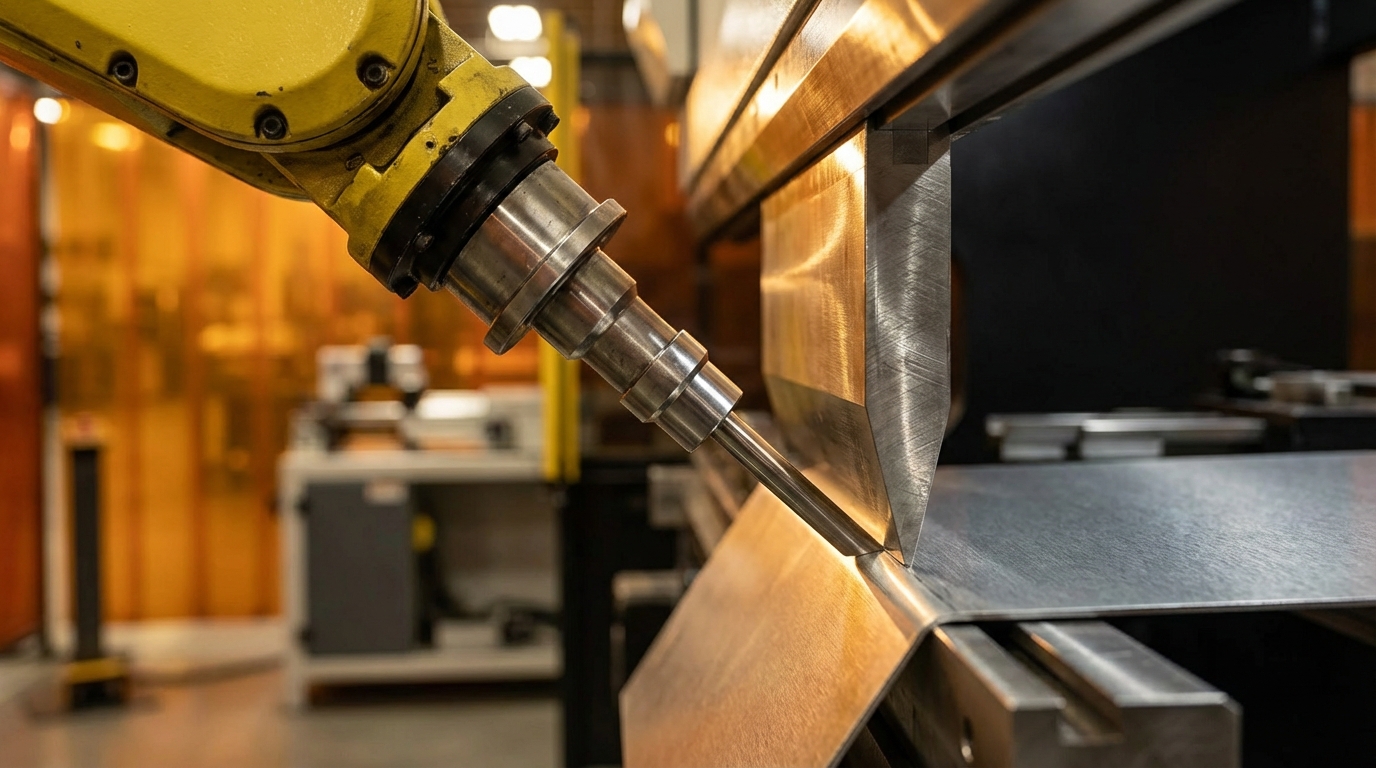
Laser cutting is widely used in precision steel fabrication, which reflects its strong fit for enclosure applications.
2. CNC Machining (Precision Leader)
Turnaround: 14-21 days
Cost: $4-10K for comparable parts
Tolerances: ±0.001″ precision
CNC machining offers superior dimensional accuracy with tolerances up to ±0.01 mm, which makes it ideal for tight-fitting assemblies.
3. DMLS/Metal 3D Printing (Complex Geometry Specialist)
Turnaround: 21-35 days
Cost: $10K+ for most enclosures
Applications: Complex internal features only
Metal 3D printing tolerances for powder bed fusion processes (DMLS/SLM) typically range from ±0.1 to 0.3 mm, which makes it a weaker choice for tight-fitting enclosure components.
The comparison table below shows how each method performs on speed, cost, precision, scalability, and overall fit for enclosure work.
| Method | Speed/Cost | Precision/Scalability | Enclosure Fit |
|---|---|---|---|
| Sheet Metal | Fast/Low | Good/Excellent | Best choice for most projects |
| CNC Machining | Slow/High | Excellent/Good | Overkill for simple geometries |
| DMLS/3D Print | Slowest/Highest | Variable/Poor | Complex features only |
Why Sheet Metal Excels for Metal Enclosure Prototypes
Sheet metal fabrication leads enclosure prototyping because laser cutting, CNC punching, forming, and welding create rugged parts with strong heat dissipation. Hot-Rolled Coil US steel price is at $1,040 per ton, which supports stable material costs for prototype budgets.
Sheet metal fabrication typically costs $2-4K per unit with 7-14 day turnarounds, so it clearly outperforms CNC machining for flat panels and simple bends. 3D printing suffers from poor surface finishes, and enclosure applications often need extensive post-processing when you choose that route.
Design-for-manufacturability collaboration reduces rework by 30% when teams engage early in the design cycle. This early collaboration becomes especially valuable when you need tight hole-to-hole positioning tolerances for alignment in your assembly. Typical tolerances for sheet metal enclosures support these alignment needs when engineers review the design up front. Request a DFM review with your quote to validate critical tolerances before production begins.
Decision Matrix for Selecting Your Enclosure Prototype Method
Use this decision matrix to match your project constraints to each method. Review your budget, timing, tolerance, volume, and feature needs, then compare them to the symbols in each cell. A check mark (✓) indicates an excellent fit, a triangle (△) signals a marginal fit, and a cross (✗) shows a poor fit for that requirement.
| Criteria | Sheet Metal | CNC Machining | DMLS/3D Print |
|---|---|---|---|
| Budget <$5K | ✓ Excellent | △ Marginal | ✗ Exceeds |
| Turnaround <2 weeks | ✓ 7-14 days | △ 14-21 days | ✗ 21+ days |
| Tolerance ±0.005″ | ✓ Achievable | ✓ Excellent | ✗ Variable |
| Volume 1-50 units | ✓ Optimal | △ Expensive | △ Slow |
| Features: hinges/seals | ✓ Excellent | ✓ Good | ✗ Poor finish |
Sheet metal fabrication usually wins by balancing speed, cost, and functionality for the majority of enclosure scenarios. Once you select your method using this matrix, the next step is to protect that choice with sound design practices, which the following DFM checklist covers.
DFM Checklist to Avoid Common Metal Prototype Pitfalls
This 8-point DFM checklist helps you avoid costly rework and schedule slips on metal enclosure prototypes.
• Maintain bend radius ≥1× material thickness to prevent cracking
• Keep holes ≥2× material thickness from bend lines to avoid deformation
• Add hemmed edges to remove sharp edges and increase stiffness
• Minimize tabs and use consistent bend radii for repeatability
• Specify appropriate finishes early (powder coat, anodizing, plating)
• Design hole-to-edge distances ≥1.5× material thickness
• Use standard sheet metal gauges to reduce material costs
• Add relief slots at tight corners to prevent tearing
JLCCNC recommends minimum hole edge to bend tangent line distance of ≥2× material thickness for tight tolerance applications. Integrated manufacturing partners like Fabcon reduce vendor handoff delays, which often cause these DFM details to slip through the cracks.
Why Fabcon Is the Right Partner for Sheet Metal Enclosure Prototypes
Fabcon operates 220,000 square feet of vertically integrated manufacturing space with ISO 9001:2015 and AS9100D certifications, which supports smooth prototype-to-production transitions. This integration removes the vendor fragmentation that often creates assembly failures in typical supply chains.
A recent data center enclosure project shows how this works in practice. Fabcon delivered rapid prototypes, then scaled to production volumes without design changes. This seamless transition was possible because the vertically integrated approach removed supplier handoffs that usually force redesigns when moving from prototype to production, while also reducing quality finger-pointing and keeping lead times consistent.
Fabcon’s engineering team provides early DFM collaboration that cuts rework compared to build-to-print-only vendors. Start your project with a complimentary engineering review to identify improvement opportunities before you commit to tooling.
FAQ
When should I choose sheet metal vs CNC for enclosures?
Sheet metal fabrication works best for most enclosure applications because it offers a strong speed-to-cost ratio and scales easily into production. Choose CNC machining only when you need the micron-level tolerances CNC provides or complex 3D geometries that bending and forming cannot achieve. CNC machining achieves tolerances within microns but often costs about twice as much and takes longer for simple enclosure geometries.
What is the fastest method for metal enclosure prototypes?
Sheet metal fabrication at Fabcon delivers the fastest turnaround at 7-14 days for most enclosure prototypes. Integrated laser cutting, forming, and finishing processes remove vendor handoffs that usually add 5-10 days to project timelines. CNC machining typically requires 14-21 days, and metal 3D printing often extends to 21-35 days when you include post-processing.
How do I transition from prototype to production seamlessly?
Fabcon’s vertically integrated approach supports seamless prototype-to-production scaling without design changes or vendor transitions. The same tooling, processes, and quality systems used for prototypes carry directly into production volumes. This structure avoids the common problem of prototype vendors who cannot support production requirements, which often forces costly re-engineering and qualification cycles.
What DFM guidelines prevent rework in metal prototypes?
The 8-point DFM checklist prevents most common issues: maintain bend radius ≥1× material thickness, keep holes ≥2× thickness from bends, add hemmed edges, use consistent radii, specify finishes early, design proper hole-to-edge distances, use standard gauges, and add corner relief slots. Early DFM collaboration delivers the 30% rework reduction mentioned earlier when teams address these points before releasing drawings.
What are 2026 costs for metal enclosure prototypes?
Sheet metal fabrication typically costs $2-4K per unit with stable US steel prices around $1,040 per ton, while CNC machining costs $4-10K and metal 3D printing often exceeds $10K per unit. This pricing landscape makes sheet metal the most cost-effective option for both prototype and production volumes.
Conclusion
Sheet metal fabrication stands out as the strongest rapid prototyping method for metal enclosures, combining speed, cost control, and scalability for most applications. Use the decision matrix and DFM checklist to refine your design, then rely on Fabcon’s vertically integrated capabilities for smooth prototype-to-production execution. Launch faster by submitting your design for rapid turnaround pricing and engineering feedback on your next metal enclosure prototype.