
Key Takeaways
- Fragmented supply chains cause delays and quality issues for custom sheet metal enclosures, while vertical integration removes vendor handoffs.
- Custom enclosures use steel, aluminum, and stainless steel to deliver electronics shielding and industrial durability that meet UL and CSA standards.
- Fabcon manages every step from laser cutting through assembly, which shortens lead times and creates single-point accountability with ISO and AS9100D certifications.
- DFM best practices, including proper bend radii and realistic tolerances, prevent rework, and Fabcon offers early design reviews to improve manufacturability.
- For reliable US-based custom sheet metal enclosures that scale from prototype to production, partner with Fabcon today.
Defining Custom Sheet Metal Enclosures for Your Equipment
Custom sheet metal enclosures are precision-built protective housings created through laser cutting, CNC punching, and forming. These enclosures function as cabinets, chassis, racks, and protective housings that meet UL and CSA standards for electronics shielding and industrial durability.
|
Material |
Key Properties |
Primary Applications |
|
Steel (Cold-Rolled) |
High strength, cost-effective, versatile |
General-purpose enclosures, server racks |
|
Aluminum (5052, 6061) |
Lightweight, corrosion-resistant, thermal conductivity |
Small metal enclosures for electronics, portable instruments |
|
Stainless Steel (304/316) |
Superior corrosion resistance, durability, and hygienic |
Harsh environments, medical devices, food processing |
Fabcon’s precision fabrication capabilities hold tight tolerances and deliver consistent quality across all materials, supporting both early prototypes and scaled production.
Fabcon’s Vertically Integrated Manufacturing Workflow
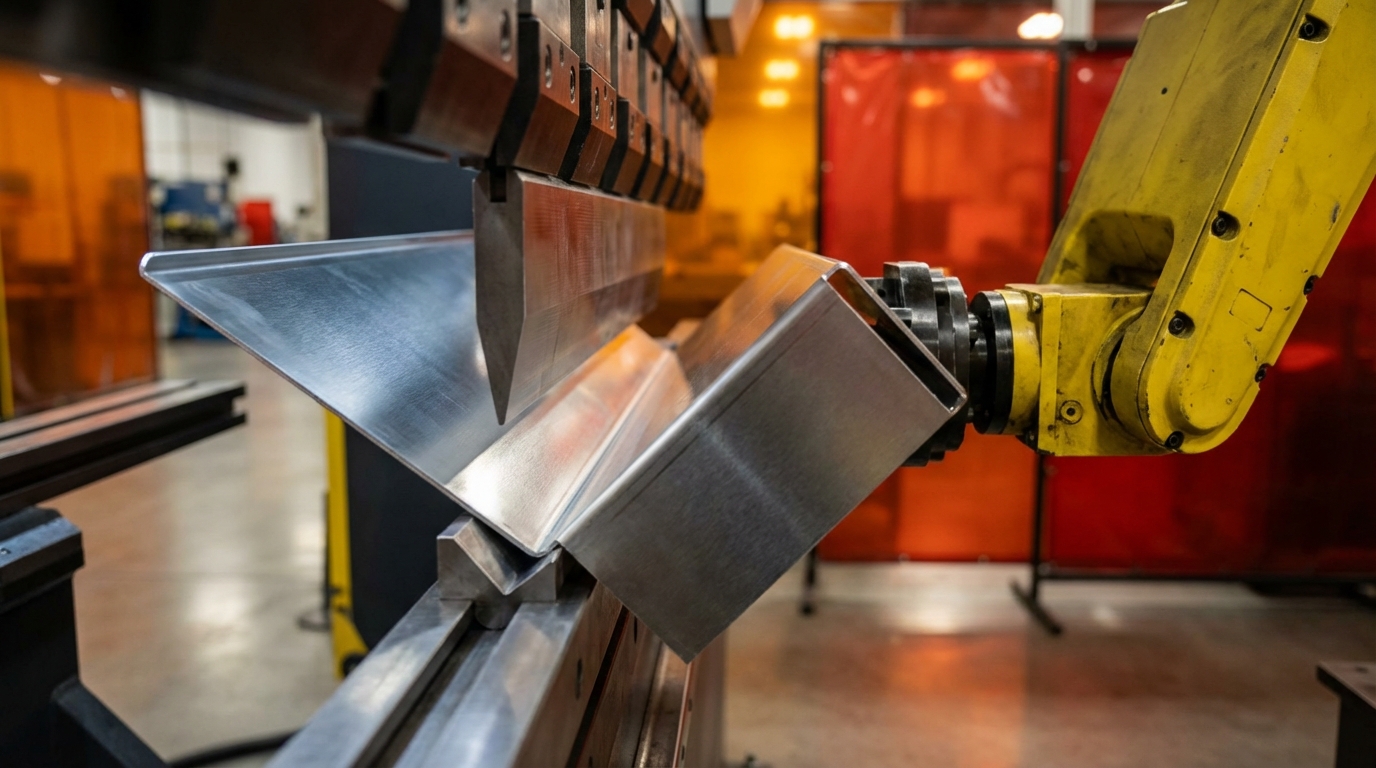
Standard sheet metal enclosure manufacturing runs through several steps, including laser cutting, CNC punching, press brake forming, welding, machining, surface finishing, and electromechanical assembly. CNC laser cutting provides high precision with ±0.2 mm tolerance and smooth edges, which suits custom enclosures with complex cutouts and mounting features.
Many competitors require customers to coordinate these steps across multiple vendors, which creates scheduling issues and inconsistent quality. Fabcon’s vertical integration removes these handoffs by controlling every stage in one facility. Agile production cells adjust to changing volumes and mixed SKUs without the rigidity of large contract manufacturers, which supports sheet metal enclosures for electronics from prototype through mid-volume production.
This integrated model shortens lead times, improves quality control, and gives you a single accountable partner. Electromechanical assembly services include hardware insertion, wiring integration, and component installation, which deliver plug-and-play enclosures that reduce internal assembly work. Partner with Fabcon for end-to-end builds that simplify your supply chain.
DFM Checklist for Sheet Metal Enclosures
Effective DFM collaboration avoids expensive rework and schedule slips. Use this checklist to improve your custom sheet metal enclosure designs:
- Maintain tolerances within ±0.005″ for critical dimensions.
- Use a minimum bend radius of 1x material thickness to prevent cracking.
- Keep holes at least 2x material thickness away from bend lines.
- Specify material thickness carefully and avoid 20–24 gauge for structural features.
- Design around standard hardware and PEM fastener insertion.
- Include relief slots where needed to prevent material distortion.
- Address thermal management requirements early in the design phase.
- Plan EMI and RFI shielding for sensitive electronics applications.
Common DFM challenges include poor material thickness choices and weak thermal planning. Fabcon’s engineering team works with clients during design to flag issues before production, which shortens development cycles and lowers manufacturing costs. Upload drawings for Fabcon DFM review to refine your designs.
Where Fabcon Enclosures Perform in the Field
Custom sheet metal enclosures support critical functions across many industries. Data center infrastructure uses modular rack-mounted enclosures with integrated cooling and cable management. EV and energy storage systems rely on NEMA-rated sheet metal enclosures that handle outdoor exposure while maintaining electrical safety.
Medical device manufacturers require precision-built assemblies with full traceability to satisfy regulatory demands. Fabcon has delivered measurable gains in these sectors. One data center client cut lead times by 30 percent through Fabcon’s integrated fabrication and assembly model.
Established relationships with customers such as Traffix Systems and Jabil show Fabcon’s ability to support high-stakes programs where precision and reliability are mandatory. Transportation and traffic safety projects benefit from durable, compliance-focused fabrication for infrastructure-grade components. ISO 9001:2015 and AS9100D certifications provide the quality assurance needed for mission-critical deployments.
Explore Fabcon industry solutions tailored to your application.
Pricing Drivers, Lead Times, and US-Based Advantages
Pricing for custom sheet metal enclosures depends heavily on design complexity and production requirements:
|
Factor |
Cost Impact |
Steel Example |
Aluminum Example |
|
Material Selection |
High |
Baseline cost |
40–60% premium |
|
Thickness |
Medium |
1.2 mm vs 0.8 mm: +15% |
1.2 mm vs 0.8 mm: +20% |
|
Surface Finishing |
Medium |
Powder coat: +10–15% |
Anodizing: +15–25% |
|
Production Volume |
High |
100+ units: -30–50% |
100+ units: -30–50% |
Fabcon’s US-based operations create clear advantages over offshore options. The CHIPS Act and domestic incentives support more than $500 billion in semiconductor investments, which increases demand for dependable US suppliers.
Fabcon’s proximity removes tariff uncertainty, cuts shipping delays, and supports ITAR compliance. Predictable lead times further separate Fabcon from fragmented supply chains. Job shops may quote lower unit prices, yet hidden costs from quality issues and coordination delays often outweigh those savings compared with Fabcon’s integrated model.
Get Fabcon pricing today for transparent quotes and reliable delivery schedules.
How Fabcon Compares to Other Vendors
|
Vendor Type |
DFM Support & Integration |
MOQs & Flexibility |
Lead Times & Certifications |
|
Low-Complexity Job Shops |
Basic fabrication only |
High MOQs, limited assembly |
Variable, basic quality |
|
Mid-Tier Competitors |
Partial integration |
Medium MOQs, some flexibility |
Moderate, limited certs |
|
Large Contract Manufacturers |
Rigid processes |
Very high MOQs |
Long, comprehensive certs |
|
Fabcon |
Full DFM and vertical integration |
Flexible, prototype to production |
Fast, ISO and AS9100D certified |
This comparison shows Fabcon’s strength in serving mid-volume programs that need advanced capabilities without the constraints of large contract manufacturers. Agile production cells and comprehensive certifications give growing technology companies both scalability and dependable quality.
FAQs: Working with Fabcon on Custom Sheet Metal Enclosures
How does Fabcon differ from job shops and large contract manufacturers?
Fabcon fills the space between basic job shops and rigid, large contract manufacturers. Job shops usually handle simple metal parts, while Fabcon provides integrated engineering support, DFM collaboration, powder coating, wiring, and electromechanical assembly in one location. Large contract manufacturers offer sophisticated systems but often require high minimum volumes and long onboarding, with limited flexibility.
Fabcon delivers similar infrastructure and quality systems without those volume and process barriers. Agile production cells respond to changing volumes and mixed SKUs while maintaining ISO 9001:2015 and AS9100D quality standards.
What are the Typical lead times for custom sheet metal enclosures?
Fabcon’s integrated model shortens lead times compared with multi-vendor supply chains. Because fabrication, coating, and assembly stay in-house, you avoid waiting on third-party schedules or shipping parts between facilities. Fast quoting and predictable production schedules help customers hit compressed launch timelines in technology-driven markets.
How does Fabcon’s DFM process support your design?
Fabcon’s Design-for-Manufacturability collaboration starts early in the design cycle, before production tooling begins. In-house engineering and quoting teams work directly with your technical staff to review drawings, tolerances, and materials. The team then builds optimized manufacturing routers and work instructions that improve production efficiency and reduce costs.
This early review catches issues such as poor bend radii, unsuitable material thickness, or weak thermal strategies before they become expensive production problems. Customers see faster development cycles, less rework, and designs that scale smoothly from prototype to production.
Scaling from prototype to production with Fabcon
Fabcon’s agile production cells support scaling from prototype through mid-volume production without the limits common at large contract manufacturers. Flexible manufacturing adapts to changing volumes, mixed SKUs, and evolving Bills of Materials that define high-growth technology programs. High-mix work fits naturally into these cells while maintaining quality and cost control.
This scalability removes the need to switch suppliers as your program grows, which reduces risk and keeps building consistently.
What are Fabcon’s quality certifications and compliance standards?
Fabcon holds ISO 9001:2015 and AS9100D certifications, which provide the quality systems and traceability required for medical, aerospace, and infrastructure programs. The company is ITAR registered and fully aligned with UL and CSA standards. Quality management covers the entire build, from incoming materials through final assembly, to ensure consistent output and full traceability.
These certifications give procurement teams confidence in regulated industries where documentation and compliance are mandatory.
Conclusion: Reduce Risk with Fabcon Custom Sheet Metal Enclosures
Fragmented sourcing, weak DFM collaboration, and scaling challenges slow product launches and raise costs across electronics and industrial equipment markets. Fabcon’s vertically integrated model removes these issues by delivering custom sheet metal enclosures for electronics and industrial equipment through a single accountable partner.
More than 45 years of experience, 220,000 square feet of integrated facilities, and comprehensive certifications position Fabcon as a leading US-based choice for companies that want simpler supply chains without sacrificing quality or reliability. From prototype through production, Fabcon combines the agility of a responsive partner with the infrastructure of a sophisticated manufacturer.
Many teams still manage multiple vendors for a single enclosure project, struggle with DFM-related rework, and face scaling gaps between limited job shops and rigid large CMs. Fabcon addresses these challenges with proven solutions that reduce risk and speed time-to-market. Start with Fabcon—request quote now and transform how you source custom sheet metal enclosures.